The Central Committee of the China Democratic Construction Association proposes to speed up the recycling of power batteries for new energy vehicles.

Published: May 19, 2020 15:15 (GMT+8)
The proposal says that the recycling rate of power batteries for new energy vehicles in China is too low. In 2018, the recycling of power batteries in China accounted for only 7.4 percent of the total scrapped, which not only endangers the ecological environment and human health, but also causes a waste of resources. It is hoped that adjustments will be made in the top-level design of power battery recycling, recycling management system, research and development of recycling technology, commercial development of recycling and so on.

SMM5, March 19: due to the impact of the epidemic, the two sessions have been postponed to late May. As the time for the two sessions is getting closer and closer, representatives from all walks of life have submitted their own proposals, among which the Central Committee of the China Democratic Construction Association has put forward a proposal on speeding up the recycling of batteries powered by new energy vehicles.

The proposal says that the recycling rate of power batteries for new energy vehicles in China is too low. In 2018, the recycling of power batteries in China accounted for only 7.4 percent of the total scrapped, which not only endangers the ecological environment and human health, but also causes a waste of resources. It is hoped that adjustments will be made in the top-level design of power battery recycling, recycling management system, research and development of recycling technology, commercial development of recycling and so on.

Strengthen the top-level design in the laws and regulations and standard formulation of power battery cascade recycling, and actively guide relevant enterprises in the industry to participate in the formulation of standards. Make full use of information means to build a large-scale, efficient and traceable waste power battery recycling management system. Implement the extended producer responsibility system. Recycling in accordance with the principle of limited cascade utilization. The automatic disassembly technology of power battery is developed to improve the physical recovery of metal. Battery material recovery technology, greatly improve the recovery rate of nickel, cobalt, manganese, graphite, etc., and carry out lithium-ion battery cycle technology research. Formulate incentive implementation rules for the recycling of power batteries. Carry out the benefit evaluation of power battery recycling. Actively explore the cascade utilization scene and potential market of power battery. Expand the recycling channels of power batteries.

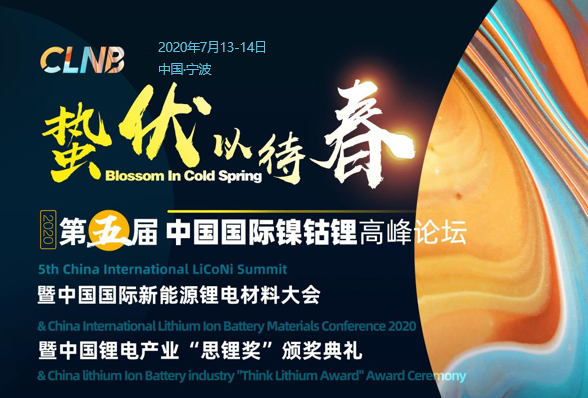
Click to register: "2020 (Fifth) China International Nickel, Cobalt and Lithium Summit Forum"
To sign up for the Nickel-Cobalt-Lithium Summit or apply to join the SMM New Energy vehicle / Cobalt-Lithium Industry Exchange Group, please scan the QR code below:

Data Source Statement: Except for publicly available information, all other data are processed by SMM based on publicly available information, market communication, and relying on SMM's internal database model. They are for reference only and do not constitute decision-making recommendations.

For any inquiries or for more information, please contact: lemonzhao@smm.cn
For more information on how to access our research reports, please contact:service.en@smm.cn
Related News
[SMM Chromium Flash] Odisha Blockade Threat Over Mining Law Puts India's Chromite Hub at Risk
14 mins ago
[SMM Chromium Flash] Odisha Blockade Threat Over Mining Law Puts India's Chromite Hub at Risk
Read More
[SMM Chromium Flash] Odisha Blockade Threat Over Mining Law Puts India's Chromite Hub at Risk
[SMM Chromium Flash] Odisha Blockade Threat Over Mining Law Puts India's Chromite Hub at Risk
India's Odisha state, the country's largest mineral producer and a major source of chromite ore, is facing potential disruption to mineral transportation after opposition parties announced plans for economic blockades in response to the Mines and Minerals (Development and Regulation) Amendment Act, 2026. The Biju Janata Dal (BJD), Odisha's main opposition party, held a public demonstration in Bhubaneswar on September 28 and said it would launch a district-level campaign, followed by an economic blockade halting mineral transportation, if the amended law is not withdrawn. The Congress party separately announced a seven-day economic blockade and state-wide shutdown planned for after the Dussehra festival, calling for mining, extraction and transportation of minerals to be stopped during that period. At issue is the division of tax authority over mineral rights between states and the central government. Following a 2024 Supreme Court ruling that affirmed states' power to tax mineral rights and mineral-bearing land, with related dues payable in instalments from April 2026, Odisha's opposition parties say the newly amended MMDR Act alters that expected framework and could reduce the state's mineral-related tax revenue. A BJD legislator estimated the state could lose approximately ₹12,000 crore annually in mineral-related revenue, with a potential further shortfall exceeding ₹1 trillion in dues the state had expected to recover. Odisha's mineral revenue reached ₹51,127 crore in the 2025-26 fiscal year, accounting for roughly 75 to 80% of the state's own non-tax revenue, against a 2026-27 target of around ₹53,000 crore. For the chromium market, the relevance lies in Odisha's position as India's dominant chromite-producing state. According to the state's Directorate of Mines, Odisha produced 474.17 million mt of minerals in 2024-25, representing about 43.7% of India's total major mineral output, including 3.19 million mt of chromite. The state's Sukinda Valley hosts a significant share of India's chromite reserves and is home to Indian Metals & Ferro Alloys' (IMFA) captive chrome ore mines and ferrochrome smelting operations at Therubali, Choudwar and Kalinganagar, the site of IMFA's ongoing capacity expansion. Should the threatened blockades proceed and extend to mineral transportation as announced, chrome ore movement and ferrochrome production in Odisha could face disruption, adding a fresh source of supply-side uncertainty to India's ferrochrome sector at a time when domestic capacity is actively expanding. No date has been confirmed for when a blockade, if it proceeds, would begin beyond the post-Dussehra timeframe referenced by Congress.
14 mins ago
[Flash | Antofagasta's Centinela Faces Strike Threat Over Labor Dispute]
1 hour ago
[Flash | Antofagasta's Centinela Faces Strike Threat Over Labor Dispute]
Read More
[Flash | Antofagasta's Centinela Faces Strike Threat Over Labor Dispute]
[Flash | Antofagasta's Centinela Faces Strike Threat Over Labor Dispute]
Recently, Centinela, a core Antofagasta mine, faced severe labor challenges. On September 28, its Minera Esperanza and Distrito Centinela unions voted 98.73% in favor of a strike over compensation discrepancies, rejecting management's contract offer. As an important associated molybdenum source, Centinela's H1 2026 molybdenum output fell ~17.6% year-on-year to 1,400 tonnes. The strike vote threatens further supply stability. While production continues pending mediation results, the potential impact on operations and long-term project progress requires close monitoring.
1 hour ago
Pre-holiday stockpiling momentum remains weak; titanium dioxide market consolidates [SMM Titanium Spot Express]
1 hour ago
Pre-holiday stockpiling momentum remains weak; titanium dioxide market consolidates [SMM Titanium Spot Express]
Read More
Pre-holiday stockpiling momentum remains weak; titanium dioxide market consolidates [SMM Titanium Spot Express]
[SMM Titanium Spot Express: Pre-holiday stockpiling momentum weak, titanium dioxide market consolidates] The titanium dioxide market remains stable, with enterprises mainly fulfilling earlier orders. Raw material declines combined with cut-throat competition in the industry mean sulphuric acid process enterprises still face low-price selling due to inventory and capital pressures, while the chloride process highlights cost-related risk resistance advantages. In the short term, the market lacks upward momentum and maintains a fluctuating trend.
1 hour ago