[SMM analysis] the downstream export problem continues to ferment, and the situation of brass rods is not optimistic.

Published: May 15, 2020 21:06 (GMT+8)

SMM5 March 15:

In April, the average operating rate of brass rod enterprises was 66.06%, down 7.88 percentage points from the previous month and 13.59 percentage points from the same period last year. The main reason is that downstream orders such as plumbing and plumbing of brass rods have been plagued by the overseas epidemic.
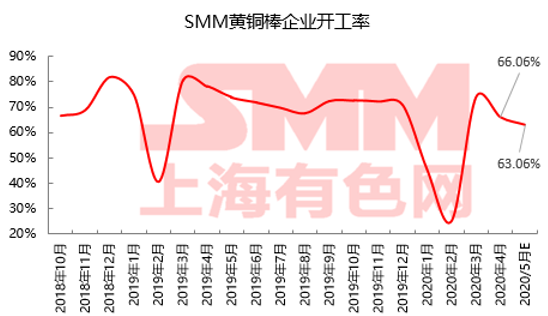
 

Separately, the operating rate of large enterprises (annual production capacity ≥ 50,000 tons) is 70.99%, down 2.73 percentage points compared with the previous month. There are more types of products, and the demand for high-end products, medical treatment, 5G communications and other sectors has increased against the trend, offsetting the weakening of orders in the downstream of some plumbing and sanitary ware, and the overall operating rate is more than 70%.

The operating rates of medium-sized enterprises (20,000 tons ≤ annual production capacity < 50,000 tons) and small enterprises (annual production capacity < 20,000 tons) were 64.94% and 55.28%, respectively, down 11.88 and 7.42 percentage points compared with the previous month. The downstream of small and medium-sized enterprises is mainly plumbing and sanitary ware, the direct impact of poor export orders on enterprises is greater, and the survival situation of individual small enterprises mainly engaged in export is more severe.

From the perspective of inventory, the inventory level of waste brass raw materials in different enterprises is different, and the production inventory is from one week to more than a month, but the enterprise as a whole feels that the waste copper raw materials are still difficult to supplement from the market; at the same time, the tax price of waste copper is on the high side, directly chasing electrolytic copper, which also leads to some brass rod enterprises mainly purchasing electrolytic copper with zinc ingots for production. Due to the variety of raw materials that can be used, the shortage of scrap copper supply does not have much impact on the normal production of enterprises, which is far less severe than the waste copper rod industry.

The operating rate of brass rod enterprises is expected to be 63.06% in May, down 3 percentage points from April and 13.82 percentage points from a year earlier.

Judging from the expected orders of enterprises, some of the orders accumulated as a result of the epidemic still need to be completed, which will boost production, but it is generally believed that it is difficult to improve overseas orders in May, and copper bars are gradually entering the traditional off-season of consumption. I am worried that copper bar orders will deteriorate from May to June. In addition, according to SMM, environmental protection during the epidemic this year did not do much inspection, but last month basically returned to normal, did not see the local government issued a new policy, but only to be more and more stringent.

 

Data Source Statement: Except for publicly available information, all other data are processed by SMM based on publicly available information, market communication, and relying on SMM's internal database model. They are for reference only and do not constitute decision-making recommendations.

For any inquiries or for more information, please contact: lemonzhao@smm.cn
For more information on how to access our research reports, please contact:service.en@smm.cn
Related News
[SMM Analysis] Does Importing Bare Bright Copper Pay? SMM Launches a New Import Profit/Loss Dashboard
11 hours ago
[SMM Analysis] Does Importing Bare Bright Copper Pay? SMM Launches a New Import Profit/Loss Dashboard
Read More
[SMM Analysis] Does Importing Bare Bright Copper Pay? SMM Launches a New Import Profit/Loss Dashboard
[SMM Analysis] Does Importing Bare Bright Copper Pay? SMM Launches a New Import Profit/Loss Dashboard
[SMM Analysis: Does Importing Bare Bright Copper Pay? SMM Launches a New Import Profit/Loss Dashboard] Imported secondary copper feedstock has long been an important supplement to China’s copper supply, providing smelters and processors with an additional source of raw materials. As copper concentrate supply comes under pressure, this channel has become even more important. To make that easier to track, SMM Market Watch has added a Bare Bright Copper Import Profit/Loss dashboard.
11 hours ago
【Flash | Victorio Molybdenum Resource Expands Ahead of New Economic Assessment】
11 hours ago
【Flash | Victorio Molybdenum Resource Expands Ahead of New Economic Assessment】
Read More
【Flash | Victorio Molybdenum Resource Expands Ahead of New Economic Assessment】
Spartan Metals Corp. released an updated mineral resource estimate for the Victorio tungsten-molybdenum project in New Mexico. Measured and indicated resources total 84.54 million short tons grading 0.09% molybdenum, containing 147.85 million lb (about 67,064 tonnes) of molybdenum. Inferred resources total 101.84 million short tons grading 0.06%, containing 130.02 million lb (about 58,976 tonnes). At a US$50-per-short-ton gross metal value cutoff, the two categories increased 9.5% and 31.9%, respectively, from the historical 2012 estimate. The update will support a preliminary economic assessment expected in the fourth quarter of 2026. These are in-situ resources, not reserves or recoverable production; the project has no current supply impact.
11 hours ago
【Flash | Strike Begins at Highland Valley Copper as Operations Fall to Reduced Capacity】
12 hours ago
【Flash | Strike Begins at Highland Valley Copper as Operations Fall to Reduced Capacity】
Read More
【Flash | Strike Begins at Highland Valley Copper as Operations Fall to Reduced Capacity】
Teck Resources confirmed that United Steelworkers Local 7619 has begun strike action at the Highland Valley Copper operation in Canada, with the mine continuing to operate at reduced capacity. The operation’s existing 2026 molybdenum production guidance is 1,500–1,800 tonnes, against approximately 700 tonnes produced in the first half. Teck said the impact on overall production will depend on the duration of the labour action. The company has not disclosed the scale of the operating reduction, quantified any molybdenum production loss or revised its annual guidance. Attention has therefore shifted from whether the strike would begin to how long reduced operations may continue.
12 hours ago