Reduced use of steel scrap to accelerate decline in crude steel output in February

Published: Feb 14, 2020 14:35 (GMT+8)
Supply tightness still dominates the steel scrap market, as the epidemic prevented some scrap processing companies from returning operations

SHANGHAI, Feb 14 (SMM) – As the coronavirus (COVID-19) outbreak disrupted shipments from steel mills and trigger production cuts or maintenance, shortage of steel scrap may expand the cutback and result in a significant decline in crude steel output in February. 


An SMM survey indicates that the amount of molten iron daily production affected by cutback and maintenance at steelmakers has increased from less than 100,000 mt on January 23 to nearly 300,000 mt as of February 13. 


China has a total amount of scrap steel resources of 240 million mt in 2019, up 9% from a year earlier, showed statistics of the China Association of Metal Scrap Utilisation. But currently supply tightness still dominates the steel scrap market, according to SMM survey, as the epidemic prevented some scrap processing companies from returning operations, and transportation curbs disrupted purchases of some steel mills. 


Some steelmakers have halted procurement of scrap and turned to produce scarp on their own. They also reduced the proportion of steel scrap used in raw materials, which is set to weigh on their near-term production. 


A steel plant in central China has cut its monthly production of hot-rolled coils from the previous 400,000 mt to 290,000 mt, due to disrupted supply of steel scrap. 


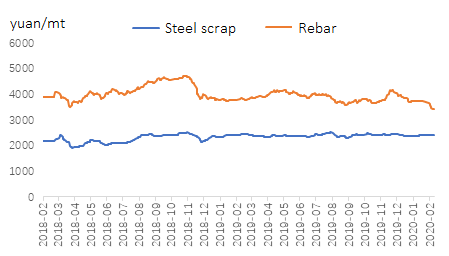
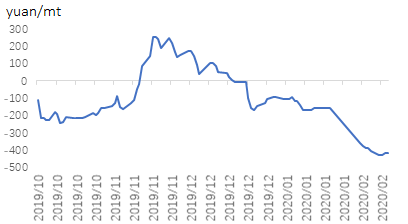
Prices of steel scrap have slipped 1.7% from the pre-holiday levels, SMM assessed as of February 13. This, compared with a drop of 8.3% in rebar prices, squeezed margins at electrical arc furnace (EAF) steelmakers. Losses at EAF steel mills have widened to 417 yuan/mt from 157 yuan/mt before the holidays, and this accounted for the recent shutdown of a slew of producers. 


Steel scrap prices held relatively firm (Source: SMM)
 

Profits at EAF steelmakers slipped (Source: SMM)
 

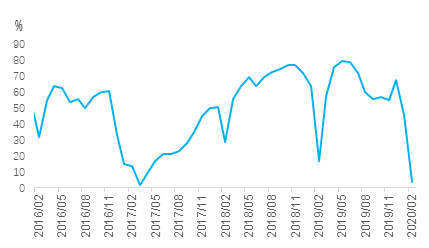
Operating rates of scrap-using steel mills fell to low levels (Source: SMM)


With the increase in steel scrap usage in steelmaking over the recent years, steel scrap has accounted for around 20% of the crude steel production. SMM calculates that a reduction of 1% in the proportion of steel scrap in raw materials mix will cause a decline in crude steel output by 15 million mt. 


SMM expects steel scrap shortage and elevated in-plant inventories will likely expand the maintenance or production cut at steelmakers. 


Data Source Statement: Except for publicly available information, all other data are processed by SMM based on publicly available information, market communication, and relying on SMM's internal database model. They are for reference only and do not constitute decision-making recommendations.

For any inquiries or for more information, please contact: lemonzhao@smm.cn
For more information on how to access our research reports, please contact:service.en@smm.cn
Related News
[SMM Steel] India Domestic Steel Sentiment Mildly Positive Amid Power Cuts
10 hours ago
[SMM Steel] India Domestic Steel Sentiment Mildly Positive Amid Power Cuts
Read More
[SMM Steel] India Domestic Steel Sentiment Mildly Positive Amid Power Cuts
[SMM Steel] India Domestic Steel Sentiment Mildly Positive Amid Power Cuts
[India Domestic] India’s domestic steel market sentiment remained mildly positive with Power cuts in Punjab and Raipur are disrupting furnace and rolling mill operations, leading to lower steel output and tighter supply. This may provide support to billet and rebar prices in the near term, while prolonged power shortages could put further upward pressure on prices. Oct 7, prices were mostly stable, while Raipur rebar, sponge iron increased slightly showing some upward pressure on prices. Mandi HMS 1&2 (80:20) unchanged at 410 USD/tonne (39,700 INR/tonne) delivered Mandi. Mumbai Rebar unchanged at 555 USD/tonne (53,700 INR/tonne) EXW Mumbai. While, Raipur rebar increased 8 USD/tonne (800 INR/tonne) to 547 USD/tonne (53,000 INR/tonne) EXW Raipur. Sponge iron PDRI rose 2 USD/tonne (200 INR/tonne) to rose 310 USD/tonne (30,000 INR/tonne) EXW Raipur. Mandi ingot flat at 503 USD/tonne (48,700 INR/tonne) EXW Mandi. Durgapur Billet up 1 USD/tonne (100 INR/tonne) to 467 USD/tonne (45,200 INR/tonne) delivered Durgapur.
10 hours ago
[SMM Steel] India Domestic Steel Prices Mostly Stable
Oct 06, 2026 16:26 (GMT+8)
[SMM Steel] India Domestic Steel Prices Mostly Stable
Read More
[SMM Steel] India Domestic Steel Prices Mostly Stable
[SMM Steel] India Domestic Steel Prices Mostly Stable
[India Domestic] India’s domestic prices were mostly stable on Oct 6 with only a few prices edged up across key markets. Market activity remained moderate. Unscheduled power cuts in several regions are affecting industrial operations and reducing production. The disruptions are particularly impacting steel mills with some producers facing lower output due to limited power availability. The lower production may tighten spot supply in the steel market and may provide support to steel prices. Mandi HMS 1&2 (80:20) unchanged at 412 USD/tonne (39,700 INR/tonne) delivered Mandi. Mumbai HMS 1&2 (80:20) flat at 384 USD/tonne (37,000 INR/tonne) delivered Mumbai. Sponge iron PDRI unchanged at 309 USD/tonne (29,800 INR/tonne) EXW Raipur for the second consecutive day on moderate demand. Mumbai Rebar unchanged at 557 USD/tonne (53,700 INR/tonne) EXW Mumbai. Meanwhile, rebar remained unchanged 541 USD/tonne (52,200 INR/tonne) EXW Raipur. Mandi ingot flat at 505 USD/tonne (48,700 INR/tonne) EXW Mandi. Durgapur Billet up 1 USD/tonne (100 INR/tonne) to 468 USD/tonne (45,100 INR/tonne) delivered Durgapur.
Oct 06, 2026 16:26 (GMT+8)
South Africa Moves to Tighten Scrap-Metal Rules, Mandating Electronic Payments for Controlled Metals
Oct 06, 2026 10:13 (GMT+8)
South Africa Moves to Tighten Scrap-Metal Rules, Mandating Electronic Payments for Controlled Metals
Read More
South Africa Moves to Tighten Scrap-Metal Rules, Mandating Electronic Payments for Controlled Metals
South Africa is advancing amendments to its Second-Hand Goods Act that would further tighten controls on scrap trading, including copper, brass, bronze, aluminium, zinc, lead, nickel, tin and cobalt. Under the proposed framework, recyclers acquiring controlled metals from individuals would be explicitly required to make electronic payments and maintain detailed transaction records, while purchases from scrap-metal waste pickers would require names and identification numbers to be recorded. Public comments on the bill remain open until November 2. The legislation targets widespread cable and infrastructure theft, with copper cable theft alone estimated to cost Eskom around R5–7 billion annually, plus roughly R2 billion in replacement costs. While South Africa has already been moving toward cashless scrap transactions, the amendment would strengthen the statutory framework around traceable electronic payments, seller identification and transaction records. If enacted, compliance requirements across South Africa's copper scrap collection, recycling and trading chain would tighten further, potentially restricting the flow of anonymous or informal material into the legitimate market.
Oct 06, 2026 10:13 (GMT+8)