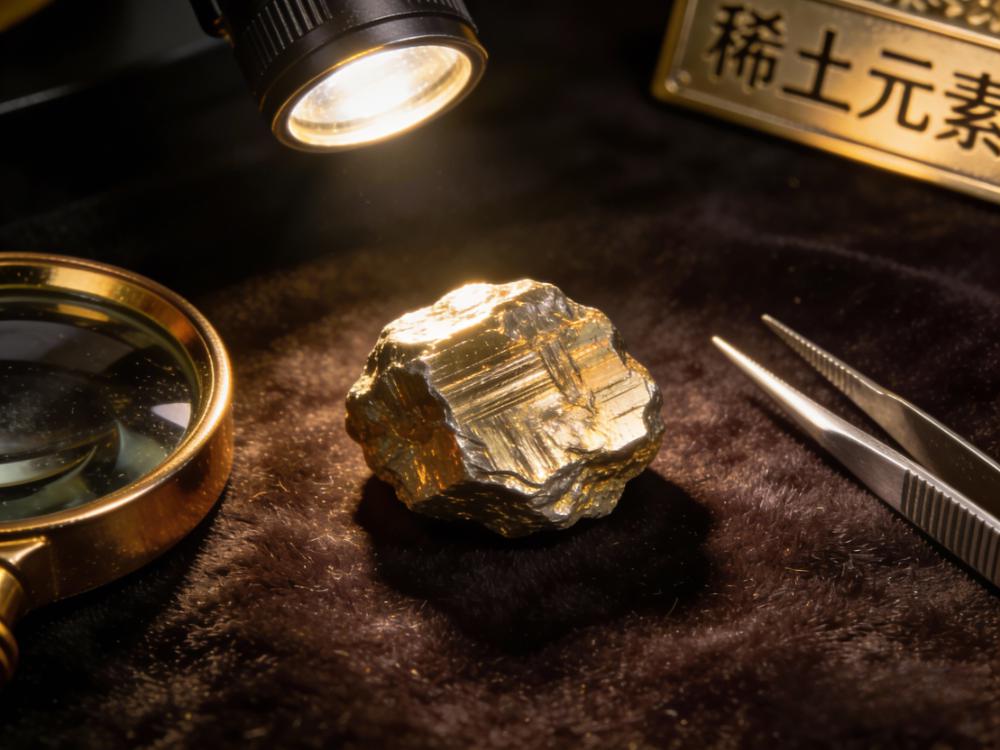
Myanmar banned rare earth exports to China

Published: Dec 16, 2019 16:59
This is set to boost prices of medium-to-heavy rare earth products significantly in the new year

SHANGHAI, Dec 16 (SMM) – Myanmar has closed the border to China to suspend rare earth ore exports to the top rare earth processor, in view of the environmental damage and conflicts caused by Chinese miners’ unregulated operations, SMM learned.

The border will remain closed until mining operations are rectified, which grows concerns about supply of ion-type rare earth ores, feedstock for medium-to-heavy rare earth products.

This is set to boost prices of medium-to-heavy rare earth products significantly in the new year, when demand recovers from year-end cash flow pressure.

SMM assessed terbium oxide at 3,495 yuan/kg as of December 16, up 70 yuan/kg from the end of November. The price of dysprosium oxide rose 100 yuan/mt during the same period to 1,730 yuan/kg.

Myanmar’s latest move came after China in late September reopened the Tengchong Yunnan/Myanmar port, which has been the main boarder crossing point for rare earth ores and concentrates to end a four-month closure.

The previous ban on imports of rare earth ores to China through the Tengchong Yunnan/Myanmar port, starting from the middle of May after a six-month winding-down period agreed in late 2018, led to a jump in prices of medium-to-heavy rare earth products.

In June, prices of terbium oxide peaked 4,225 yuan/mt, up about 45% from lows seen at the start of the year, while prices of dysprosium oxide climbed more than 70% to a high of 2,000 yuan/kg.

China set its annual rare-earth mining quota in November, indicating an increase for light rare earths but no change to the quota for ion-type ores.
Data Source Statement: Except for publicly available information, all other data are processed by SMM based on publicly available information, market communication, and relying on SMM‘s internal database model. They are for reference only and do not constitute decision-making recommendations.

For any inquiries or to learn more information, please contact: lemonzhao@smm.cn
For more information on how to access our research reports, please contact:service.en@smm.cn
Related News
Japan's Deep-Sea Drilling Vessel Successfully Trial Mines Rare Earth Mud from 6,000-Meter Depth
18 hours ago
Japan's Deep-Sea Drilling Vessel Successfully Trial Mines Rare Earth Mud from 6,000-Meter Depth
Read More
Japan's Deep-Sea Drilling Vessel Successfully Trial Mines Rare Earth Mud from 6,000-Meter Depth
The deep-sea drilling vessel "Chikyu" successfully extracted rare earth-containing mud at a depth of 6,000 meters in the waters near Minamitorishima. The project leader indicated that this initiative aims to promote diversification of rare earth sources and reduce external dependence, with commercial mining expected to commence in February 2027. However, Japanese media pointed out that deep-sea mining faces technical and economic challenges: the 6,000-meter deep-sea environment is equivalent to 550 atmospheres of pressure, posing high risks of equipment failure; mining costs are more than 10 times those of land-based rare earths, the commercialization cycle may exceed 10 years, and ecological risks are irreversible.
18 hours ago
Trump Launches $12B Critical Minerals Reserve to Secure US Supply Chains
18 hours ago
Trump Launches $12B Critical Minerals Reserve to Secure US Supply Chains
Read More
Trump Launches $12B Critical Minerals Reserve to Secure US Supply Chains
To protect manufacturers from supply disruptions, US President Trump is preparing to launch a critical minerals strategic reserve plan with a total investment of $12 billion. The White House confirmed on Monday the launch of "Project Vault," with $1.67 billion coming from private investment and $10 billion from loans provided by the US Export-Import Bank (EXIM). These funds will be used to purchase and stockpile minerals required by the automotive industry, high-tech enterprises, and other industrial users. This model draws on the US Strategic Petroleum Reserve approach but focuses on stockpiling materials needed for products ranging from mobile phones to jet engines, such as gallium and cobalt.
18 hours ago
Trading Perspective: The U.S. $12 Billion Project Vault – A National-Level Risk Hedging for the EV Supply Chain
Feb 3, 2026 11:35
Trading Perspective: The U.S. $12 Billion Project Vault – A National-Level Risk Hedging for the EV Supply Chain
Read More
Trading Perspective: The U.S. $12 Billion Project Vault – A National-Level Risk Hedging for the EV Supply Chain
For NEVs, the core impact of Project Vault does not lie in how much it drives up mineral prices in the short term, but in the following: improved certainty of subsidy compliance, reduced supply disruption risks at key nodes, and the formation of a more stable structural price spread between the compliant and non-compliant supply chains.
Feb 3, 2026 11:35