LME WEEK 2019: Fundamentals remain supportive of copper prices

Published: Oct 30, 2019 14:54 (GMT+8)
Copper tightness should feed through quickly to prices if demand picks up

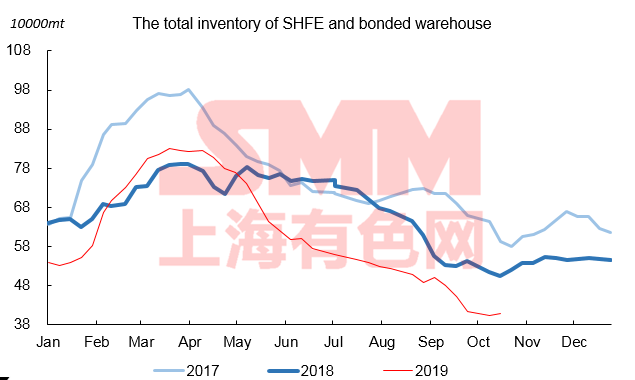
LONDON, Oct 30 (SMM) – Copper fundamentals look very supportive as supply remained tight on the raw materials front and refined inventory also stood at lows through the chain, despite weak demand year to date, said Ian Roper, general manager of SMM Singapore.

“If demand picks up, copper tightness should feed through quickly to prices,” Roper shared his insights at the SMM London Metals Seminar on Tuesday October 29. “However in the absence of any recovery in demand from consumer-driven sectors, prices will likely continue to be buffeted by macro for the rest of the year.” 

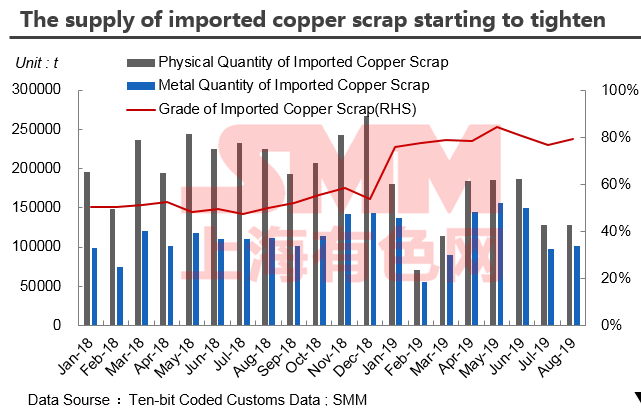
On scrap, some proportion of high-quality copper scrap is very likely to be reclassified as a resource before the import of copper scrap was banned by end 2020, Roper said. But the key question is at what cutoff grade this will be, and clarity on this is unlikely to be seen in 2019, he added. 
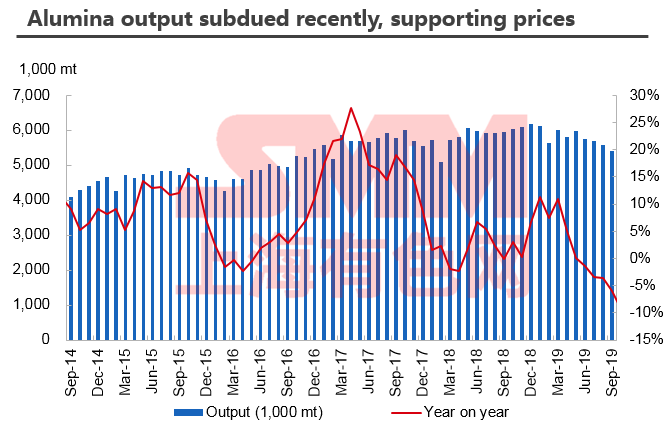
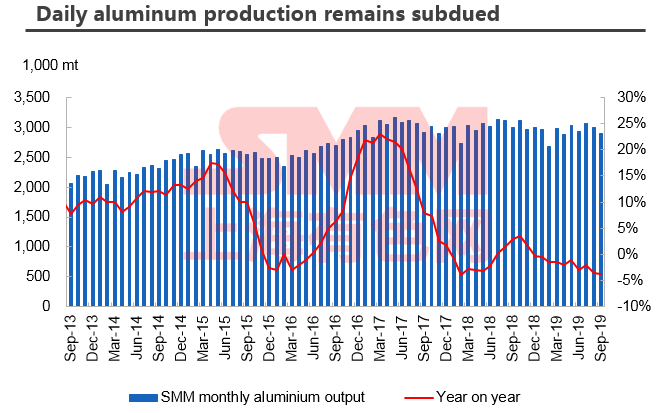
For the prospect of other base metals, Roper expected the ramp-up of new and idled capacity in the fourth quarter on positive margins to limit the upside potential of aluminium prices, even if the macro demand situation improved.

With domestic refinery closures, alumina prices have found a floor around 2,600 yuan/mt ($280-320/mt import equivalent). “As we have long expected, this should put an end to the cost compression story globally,” Roper said.
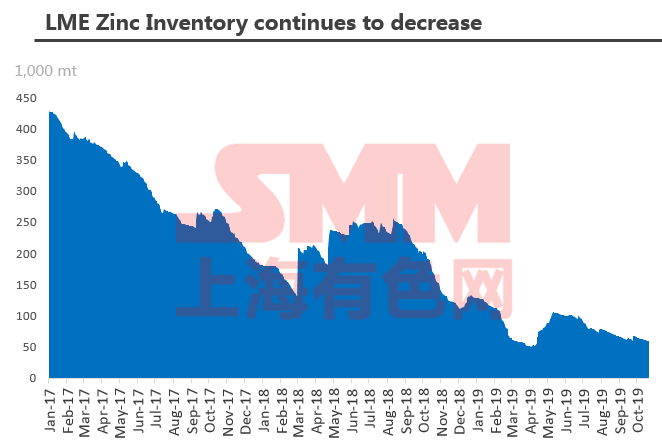
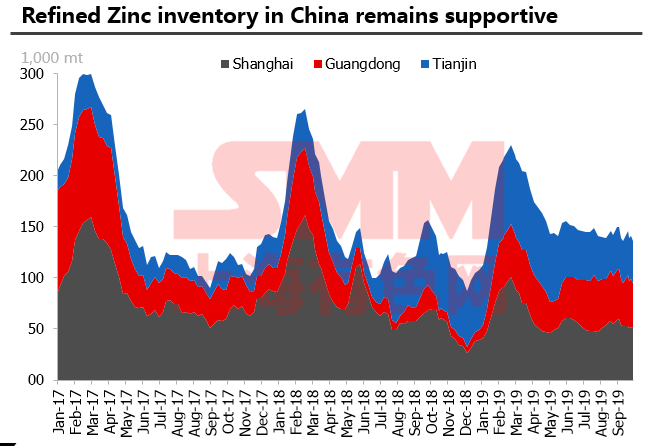
Speaking about zinc, Roper said,  "Prices have fallen back to the levels we forecasted at the start of the year as the Chinese smelters finally raised output since May.” 

Roper saw zinc prices likely overshooting to the downside if refined inventory starts to lift, but “equally any auto stimulus would likely be more positively reflected in zinc prices given the metals reliance on that sector.”
On the looming ore supply disruption from Indonesia, Chinese NPI output will drop from 550,000 mt this year, to around 400,000 mt, Roper estimated, adding that the swing factor will be how much Philippine ore can recover in a high price environment.

“Indonesian NPI output should lift to as high as 500,000 mt next year from 300,000 mt this year, leaving the nickel market reasonably tight, supporting medium-term prices around $15,000/mt to incentivise more supply.”


 

Data Source Statement: Except for publicly available information, all other data are processed by SMM based on publicly available information, market communication, and relying on SMM's internal database model. They are for reference only and do not constitute decision-making recommendations.

For any inquiries or for more information, please contact: lemonzhao@smm.cn
For more information on how to access our research reports, please contact:service.en@smm.cn
Related News
Tanzania’s Imwelo selects processing route after gold recovery rises to 84.5%
Sep 25, 2026 16:02 (GMT+8)
Tanzania’s Imwelo selects processing route after gold recovery rises to 84.5%
Read More
Tanzania’s Imwelo selects processing route after gold recovery rises to 84.5%
[SMM Gold Flash] Lake Victoria Gold reported new metallurgical testwork for weathered ore at Area C of its fully permitted Imwelo Gold Project in Tanzania. Attrition scrubbing followed by desliming increased 24-hour gold extraction from 49.99% to 84.54% in agitated-leach testing. Bottle-roll recovery reached 88.15% after pretreatment, while gravity-recoverable gold also increased. The work was conducted by Nesch Mintech Tanzania in Mwanza. The company has identified attrition scrubbing and desliming as the preferred pretreatment route for further optimisation of the clay-rich near-surface material. Lake Victoria Gold says the results complement earlier work on deeper material, where recoveries of approximately 96–97% were reported. Importantly, the reported recoveries relate to tested pretreated fractions and do not yet represent overall whole-ore plant recovery; further mass-balance and optimisation work is planned.
Sep 25, 2026 16:02 (GMT+8)
Aurum drilling delivers 155 g/t gold hit at Côte d’Ivoire’s Boundiali
Sep 25, 2026 15:58 (GMT+8)
Aurum drilling delivers 155 g/t gold hit at Côte d’Ivoire’s Boundiali
Read More
Aurum drilling delivers 155 g/t gold hit at Côte d’Ivoire’s Boundiali
[SMM Gold Flash] Aurum Resources reported new assay results from 22 diamond holes totalling 6,172.8 metres at the BST1 deposit at its Boundiali Gold Project in Côte d’Ivoire. The results include 2.63 metres at 76.74 g/t gold from 195.2 metres, including 1.3 metres at 155 g/t, together with 24 metres at 6.31 g/t from 108 metres, including 7 metres at 19.25 g/t. Several intersections extend beyond the existing BST1 resource envelope. The results will feed into Aurum’s planned Boundiali Mineral Resource update targeted for early Q4 2026. The company says mineralisation remains open along strike and at depth, while drilling continues across the project. The results are therefore an exploration and resource-growth development rather than additional production. Boundiali currently has a 3.22-million-ounce JORC Mineral Resource, while Aurum is advancing a definitive feasibility study.
Sep 25, 2026 15:58 (GMT+8)
Platinum Shows Stronger Inflation and Real-Rate Linkages Than Gold, Study Finds
Sep 25, 2026 15:52 (GMT+8)
Platinum Shows Stronger Inflation and Real-Rate Linkages Than Gold, Study Finds
Read More
Platinum Shows Stronger Inflation and Real-Rate Linkages Than Gold, Study Finds
[SMM Gold & PGM Flash] A new study published in the Journal of Commodity Markets finds that platinum has exhibited broader and more persistent co-movement with inflation and real interest rates than gold. Researchers Arusha Cooray and İbrahim Özmen examined monthly data from July 1999 through December 2024 across the US, Germany, Italy, France, Switzerland and the Netherlands, using turning-point analysis, wavelet coherence and time-varying Granger-causality methods. The study found gold’s macroeconomic relationships were comparatively weaker and more fragmented, while platinum and silver showed broader synchronization, particularly in the US and Germany.​ The researchers attribute platinum’s stronger macroeconomic sensitivity in part to its substantial industrial exposure, meaning its price reflects not only monetary conditions but also manufacturing activity, investment and supply constraints. The findings do not establish platinum as a universally superior inflation hedge: the relationships varied across countries, periods and monetary-policy regimes. Instead, the study highlights a fundamental difference between the metals, with gold’s broader monetary and defensive role producing a different response to inflation and real-rate conditions.
Sep 25, 2026 15:52 (GMT+8)