Baosteel to purchase 800 mt manganese metal at 14,200 yuan/mt

Published: Jul 11, 2019 12:48 (GMT+8)
This is down 100 yuan/mt from its tender for Jun

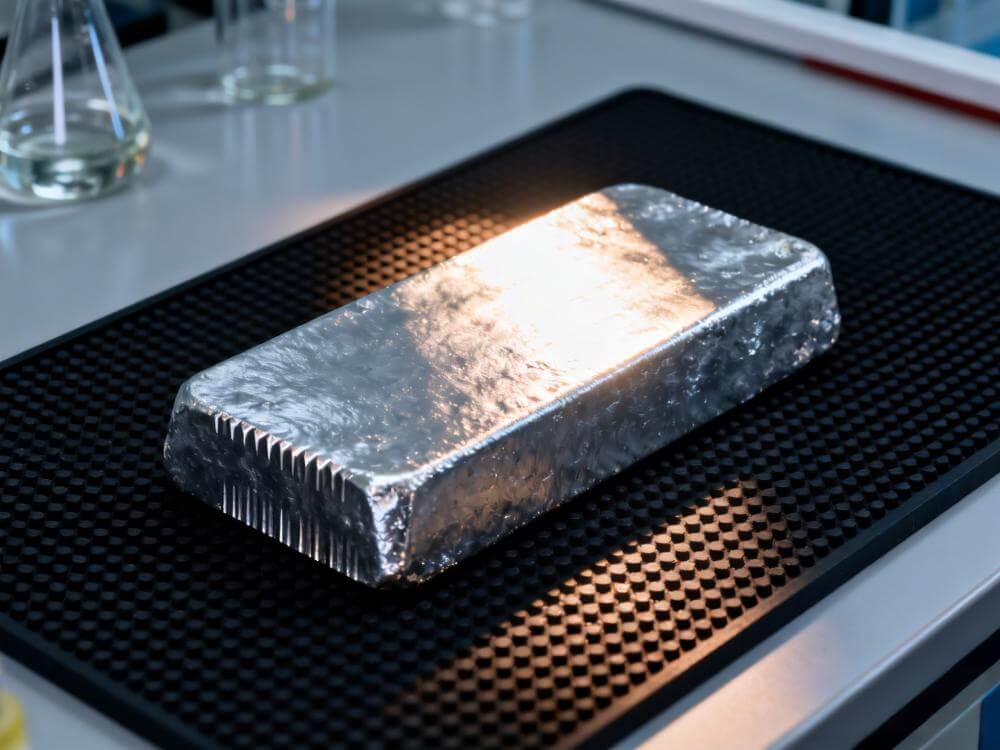
SHANGHAI, Jul 11 (SMM) – Baoshan Iron and Steel, also known as Baosteel, will purchase 800 mt of manganese metal at 14,200 yuan/mt in convertible notes, including tax and transport costs, in its tender for July, SMM learned.

This is down 100 yuan/mt from its tender for June.

Most steelmakers in China lowered purchasing prices for manganese in their latest tenders, by 100-230 yuan/mt from the prior month, which is likely to keep the manganese market weak in the short term.

SMM assessments showed that prices of manganese across major producing regions remained unchanged at 13,100-13,200 yuan/mt as of Thursday July 11.

Poor demand will keep major producers focused on long-term supply contracts.

Data Source Statement: Except for publicly available information, all other data are processed by SMM based on publicly available information, market communication, and relying on SMM's internal database model. They are for reference only and do not constitute decision-making recommendations.

For any inquiries or for more information, please contact: lemonzhao@smm.cn
For more information on how to access our research reports, please contact:service.en@smm.cn
Related News
【Flash | Mexico’s Molybdenum Output Extends Decline as Jan–Jul Supply Falls 8.3%】
44 mins ago
【Flash | Mexico’s Molybdenum Output Extends Decline as Jan–Jul Supply Falls 8.3%】
Read More
【Flash | Mexico’s Molybdenum Output Extends Decline as Jan–Jul Supply Falls 8.3%】
Mexico’s National Institute of Statistics and Geography (INEGI) reported mine-metallurgical molybdenum output of 1,329 tonnes in July 2026, down 2.6% MoM and 6.3% YoY, marking a second consecutive monthly decline. Jan–Jul production totaled 9,281 tonnes, 835 tonnes lower than the 10,116 tonnes recorded a year earlier, representing an 8.3% YoY decrease. The renewed July contraction indicates that Mexico’s cumulative molybdenum supply remains below 2025 levels. The 2026 figures are preliminary, while the 2025 data are final.
44 mins ago
【Flash | Will Indium Phosphide Enter Today’s US-China Summit Agenda?】
48 mins ago
【Flash | Will Indium Phosphide Enter Today’s US-China Summit Agenda?】
Read More
【Flash | Will Indium Phosphide Enter Today’s US-China Summit Agenda?】
Could indium phosphide become a minor-metal issue with major implications at today’s U.S.-China summit? China introduced export controls and licensing requirements for indium-related items in February 2025, while expanding AI datacenter optical connectivity continues to lift demand for Indium Phosphide (InP) wafers, epiwafers and lasers. Following the leaders’ May summit, the White House listed indium among the critical-mineral shortages China would address, without announcing removal of existing controls. Whether today’s meeting will produce further clarity on InP export licensing remains uncertain. SMM believes an improved licensing process could ease overseas supply uncertainty; without progress, tension between rising AI optical demand and constrained material flows may persist.
48 mins ago
[SMM Chromium Flash] Rising Attacks on Pakistan's Balochistan Mining Routes Threaten Chromite Supply Chain
14 hours ago
[SMM Chromium Flash] Rising Attacks on Pakistan's Balochistan Mining Routes Threaten Chromite Supply Chain
Read More
[SMM Chromium Flash] Rising Attacks on Pakistan's Balochistan Mining Routes Threaten Chromite Supply Chain
[SMM Chromium Flash] Rising Attacks on Pakistan's Balochistan Mining Routes Threaten Chromite Supply Chain
Attacks linked to extractive operations in Pakistan's resource-rich Balochistan province are increasing, with the Armed Conflict Location & Event Data Project (ACLED) recording 38 incidents connected with extractive activities between January and September 2026, taking the three-year total above 130. Chromite is among the minerals extracted in the province, and ACLED data show that nearly 90% of attacks linked to mineral projects occur along roads, where militants target vehicles transporting minerals and supplies rather than directly attacking heavily secured mine sites. The security situation could add pressure to Pakistan's chromite supply and logistics chain, particularly as Balochistan's limited road and rail infrastructure leaves mineral producers dependent on key transport corridors. Earlier this year, the Balochistan Goods Truck Owners Association also announced a strike over attacks on trucks carrying chromite and other minerals, highlighting the direct logistics risk to the sector. With Pakistan seeking to develop its mineral resources and attract international investment, continued disruption along mining routes could increase transportation costs and complicate the movement of chromite from producing areas to processing and export hubs.
14 hours ago