Poly Xiexin Energy subsidiary plans to sell 31.5 per cent stake in Xinjiang Xiexin for 2.491 billion yuan

Published: Jul 01, 2019 16:30 (GMT+8)
Source: SMM
Poly Xiexin Energy announced that on June 26, 2019, Jiangsu Zhongneng Silicon Technology Development Co., Ltd., an indirect non-wholly owned subsidiary of the company, entered into a share purchase agreement with Xuzhou Zhongping Xiexin Industrial upgrade Equity Investment Fund (Limited Partnership) (buyer) and Xinjiang Xiexin New Energy Materials Technology Co., Ltd., in exchange for a consideration of about 2.491 billion yuan.

SMM News: Poly Xiexin Energy announced that on June 26, 2019, Jiangsu Zhongneng Silicon Technology Development Co., Ltd., an indirect non-wholly owned subsidiary of the company, entered into a share purchase agreement with Xuzhou Zhongping Xiexin Industrial upgrade Equity Investment Fund (limited partnership) (buyer) and Xinjiang Xiexin New Energy material Technology Co., Ltd., in exchange for a consideration of about 2.491 billion yuan.

The net proceeds from the sale, which are about 2.4 billion yuan, are intended to be used to repay bank loans and working capital, the statement said.

It is reported that the buyer was established to promote the industrial transformation and upgrading of Jiangsu Zhongneng and enhance the competitiveness of Xuzhou enterprises in photovoltaic and other clean energy industries. As at the date of announcement, Jiangsu Zhongneng is a limited partner of the buyer and will invest RMB 1.35 billion in the buyer and has no control over the buyer.

Xinjiang Xiexin is mainly engaged in the production and sale of polysilicon products. On December 31, 2018, Xinjiang Xiexin had a net worth of about 1.444 billion yuan.
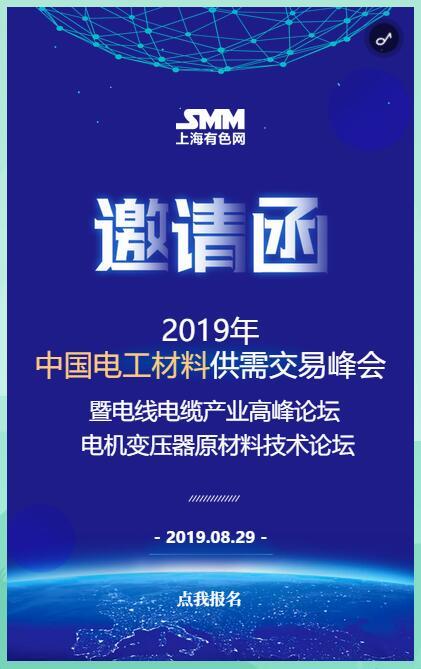
 

Click to sign up for this summit

"Click to sign up for this summit

Scan QR code and apply to join SMM metal exchange group, please indicate company + name + main business
 

Data Source Statement: Except for publicly available information, all other data are processed by SMM based on publicly available information, market communication, and relying on SMM's internal database model. They are for reference only and do not constitute decision-making recommendations.

For any inquiries or for more information, please contact: lemonzhao@smm.cn
For more information on how to access our research reports, please contact:service.en@smm.cn
Related News
[SMM Chromium Flash] Outokumpu Unveils EvoMaterials Technology to Boost Ferrochrome's Chromium Content
10 mins ago
[SMM Chromium Flash] Outokumpu Unveils EvoMaterials Technology to Boost Ferrochrome's Chromium Content
Read More
[SMM Chromium Flash] Outokumpu Unveils EvoMaterials Technology to Boost Ferrochrome's Chromium Content
[SMM Chromium Flash] Outokumpu Unveils EvoMaterials Technology to Boost Ferrochrome's Chromium Content
Outokumpu has unveiled EvoMaterials, a proprietary sulfidation-based technology platform designed to increase the chromium content and chromium-to-iron ratio of ferrochrome, with potential to extend to nickel, molybdenum, and metals recovered from waste streams. The company said its Kemi mine in Finland, the EU's only operating chrome mine, gives EvoMaterials a strategic starting point in enriched ferrochrome and chromium metal aimed at space, aviation and defense applications, and that over the longer term the technology could help establish a fully Western supply chain for critical chromium materials, while also being economically competitive against conventional production routes. Development began in the US in 2021, supported in part by a non-exclusive MIT patent license. Outokumpu CTO Stefan Erdmann said the process can recover critical materials from resources previously treated as waste. Testing is under way at a Massachusetts lab, with a pilot plant in New Hampshire set to scale the technology from 1 kg to 1 mt by early 2027, ahead of a targeted industrial-scale plant in 2030 at a US or European site still to be decided. CEO Kati ter Horst framed the platform as addressing the need for supply chains that are lower-carbon, geopolitically resilient and economically competitive at once.
10 mins ago
【Flash | InP-Integrated AI Optical Engines Enter Volume Shipments】
53 mins ago
【Flash | InP-Integrated AI Optical Engines Enter Volume Shipments】
Read More
【Flash | InP-Integrated AI Optical Engines Enter Volume Shipments】
NewPhotonics and Tower Semiconductor announced high-volume shipments of laser-integrated optical engines for AI infrastructure. The 800G and 1.6T PICs use Tower’s PH18DA silicon-photonics platform with heterogeneously integrated InP components, enabling lasers, SOAs, modulators and photodetectors on one chip. Volume shipments of 6.4T NPO chipsets are planned for H1 2027. SMM believes this signals that AI optical-interconnect demand is translating into InP device demand, supporting high-purity indium consumption. However, shipment volumes and InP intensity were not disclosed, so the near-term indium uplift cannot yet be quantified.
53 mins ago
[SMM Chromium Flash] India's Chrome Ore Output Rises 12% to 3.53 Mt in FY2025-26, IFAPA Data Shows
20 hours ago
[SMM Chromium Flash] India's Chrome Ore Output Rises 12% to 3.53 Mt in FY2025-26, IFAPA Data Shows
Read More
[SMM Chromium Flash] India's Chrome Ore Output Rises 12% to 3.53 Mt in FY2025-26, IFAPA Data Shows
[SMM Chromium Flash] India's Chrome Ore Output Rises 12% to 3.53 Mt in FY2025-26, IFAPA Data Shows
India's chrome ore production rose 12% year-on-year to 3.53 million mt in fiscal year 2025-26, while ferrochrome production increased 10% to 1.49 million mt, according to data presented by the Indian Ferro Alloy Producers' Association (IFAPA) at the 6th International Ferro Alloys Conference (IFAC 2026) in Goa. The figures were released alongside data showing India's manganese ore imports rose 27% year-on-year to 4.03 million mt in the first half of 2026, underscoring a raw-material picture IFAPA described as mixed: rising domestic chrome ore and ferrochrome output on one hand, alongside deepening import reliance for manganese on the other. The data was presented against the backdrop of India's expanding steel sector, which IFAPA said is creating a new growth runway for domestic ferro-alloy producers. India's crude steel production reached approximately 165 million mt in calendar year 2025, up more than 10% year-on-year, with demand expected to continue growing at around 7% annually. India is targeting roughly 300 million mt of steelmaking capacity by fiscal year 2031, a scale IFAPA said would significantly widen the opportunity for chromium, manganese, silicon and other alloying inputs. The association also noted that India's per-capita steel consumption has risen from around 24 kg in 1991 to about 109 kg in 2025, a threshold it said could support a further phase of consumption growth. IFAPA Chairman Manish Sarda called for faster exploration and development of domestic chrome, manganese and other critical minerals to reduce import dependence, arguing that auction frameworks for mineral resources should be structured to encourage actual mine development rather than simply rewarding the highest bid. He said several manganese ore mines auctioned at high premiums remain non-operational because the underlying economics are unviable, a dynamic he said applies more broadly to securing indigenous raw-material supply for India's ferro-alloy sector under the government's Aatmanirbhar Bharat, or self-reliance, policy. IFAPA separately called for competitive power costs and rationalization of electricity-related charges and levies for energy-intensive ferro-alloy producers, alongside zero import duties on raw materials for which adequate domestic grades are unavailable.
20 hours ago