[SMM Analysis] consumption support is weak and pressure on Brass Bar Enterprises soars in May

Published: Jun 16, 2019 18:13 (GMT+8)
According to SMM survey data, the average operating rate of brass rod enterprises in May was 73.94 per cent. It was down 5.71 percentage points from the previous month. Among them, the starting rate of large enterprises (annual capacity ≥ 50,000 tons) was 69.08%, down 5.09 percentage points from the previous month, and that of medium-sized enterprises (20,000 tons ≤ annual production capacity < 50,000 tons) was 76.81%, 5.86 percentage points lower than that of the previous month. The starting rate of small enterprises (annual production capacity < 20,000 tons) was 91.01%, a decrease of 8.76 percentage points compared with the previous month.

SMM, June 16 / PRNewswire-Asianet /-

The opening rate of brass bar enterprises in May was 73.94%.

According to SMM survey data, the average operating rate of brass rod enterprises in May was 73.94 per cent. It was down 5.71 percentage points from the previous month. Among them, the starting rate of large enterprises (annual capacity ≥ 50,000 tons) was 69.08%, down 5.09 percentage points from the previous month, and that of medium-sized enterprises (20,000 tons ≤ annual production capacity < 50,000 tons) was 76.81%, 5.86 percentage points lower than that of the previous month. The starting rate of small enterprises (annual production capacity < 20,000 tons) was 91.01%, a decrease of 8.76 percentage points compared with the previous month.


In May, the global trade environment continued to deteriorate, the export of copper rod downstream enterprises was hit hard, Zhejiang, Guangdong and other copper rod production concentrated exports were reduced. In addition, under the influence of the state's resolute implementation of "housing without speculation" this year, the negative effects of the decline in the housing reform plan in 2019 have gradually emerged, and the cooling of the real estate industry has led to a weakening of demand for copper bars in the market. At the same time, the overall consumption situation of the market also has a trend of entering the off-season, and the domestic production orders of enterprises have declined obviously. In addition to signs of weakness on the demand side, the import policy of "scrap six categories" has been implemented since July 1. According to SMM, some copper rod processing enterprises have suspended the import of scrap copper since May, fearing that the source of imports to Hong Kong in July will be affected by the import approval. Therefore, in the case of the continuous decline in copper prices in May, the gap between refined scrap prices has narrowed, and the market supply of scrap copper has been tightened, resulting in an increase in the production costs of copper scrap treatment enterprises, especially for some small enterprises. Capital pressure led to some enterprises forced to reduce production.


The opening rate of brass bar enterprises is expected to be 71.82% in June.

According to SMM research companies expect orders, the brass bar enterprise operating rate is expected to be 76.88% in June, down 2.12% from May. The starting rate continued to decline in June, and it was difficult for consumption in the off-season to promote construction, and copper scrap factors and strict environmental protection even affected enterprise production. Some enterprises in Zhejiang, which do import scrap copper business, said that there was an abundant supply of scrap copper to Hong Kong in June, but the market entered the situation of light demand, and some enterprises are expected to face high inventory pressure next month. (research enterprises: 28, production capacity: 1.02 million tons). No, no.

(research enterprises: 28, production capacity: 1.02 million tons).
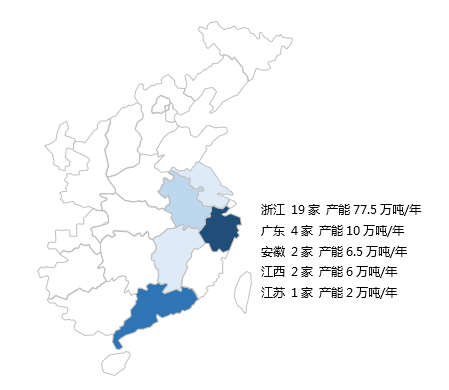
 

(SMM Kwong Tze-si)

Data Source Statement: Except for publicly available information, all other data are processed by SMM based on publicly available information, market communication, and relying on SMM's internal database model. They are for reference only and do not constitute decision-making recommendations.

For any inquiries or for more information, please contact: lemonzhao@smm.cn
For more information on how to access our research reports, please contact:service.en@smm.cn
Related News
What Could a Cobre Panamá Restart Mean for Global Copper Supply? [SMM Analysis]
9 hours ago
What Could a Cobre Panamá Restart Mean for Global Copper Supply? [SMM Analysis]
Read More
What Could a Cobre Panamá Restart Mean for Global Copper Supply? [SMM Analysis]
Cobre Panamá could again become a major source of global copper supply if Panama and First Quantum agree on a new operating framework. The mine produced 330.9 kt of copper in 2023 and historically supplied around 1% of global output. While stockpile processing has resumed, fresh mining remains suspended. Any restart would likely be phased, with timing dependent on negotiations, legal conditions and operational remobilisation.
9 hours ago
Vedanta Plans $2.3 Billion Expansion in India and Saudi Arabia, and Advances Tuticorin Smelter Restart
14 hours ago
Vedanta Plans $2.3 Billion Expansion in India and Saudi Arabia, and Advances Tuticorin Smelter Restart
Read More
Vedanta Plans $2.3 Billion Expansion in India and Saudi Arabia, and Advances Tuticorin Smelter Restart
Vedanta has unveiled a major investment plan, under which Vedanta Copper intends to invest $2.3 billion in India and Saudi Arabia over the next three to four years, targeting annual copper production of more than 1 million tonnes by 2030. The company aims to produce 500,000 tonnes annually in both India and Saudi Arabia, alongside existing production of 100,000 tonnes in Fujairah, UAE. Around $2 billion will be invested in Saudi copper mining, smelting and rod projects, with an investment decision on the proposed Saudi copper smelter expected this quarter. Vedanta is also seeking to restart its Tuticorin copper smelter in India, which has been closed since 2018. The company expects a court ruling within three months and, subject to approval, plans to invest $250 million in refurbishing the facility, targeting a restart within eight to nine months and annual copper output of 250,000 tonnes. Meanwhile, its Silvassa facility is operating at around 95% capacity, with annualised copper cathode production exceeding 245,000 tonnes.
14 hours ago
London BTC flags copper and antimony at Nevada Black Star
16 hours ago
London BTC flags copper and antimony at Nevada Black Star
Read More
London BTC flags copper and antimony at Nevada Black Star
London BTC Company Limited (LSE:BTC, OTCQB:VINZF) announced on 5 October 2026 initial on-site pXRF results from its Black Star gold-critical minerals project in Pershing County, Nevada. A maiden programme collected 69 rock-chip samples along a 2.5km corridor between the Western and Eastern targets. pXRF readings showed antimony up to 0.44% Sb, copper up to 30.0% Cu, bismuth up to 0.73% Bi and silver up to 811 ppm Ag, with the antimony-copper association appearing at both ends of the corridor. The signature mirrors a historical 1985 sample 120m south of the claims (>1% Sb, 2% Cu, 700 ppm Ag). Earlier due-diligence sampling returned up to 16.23 g/t gold and 50.5 g/t silver. Samples are now with MSALABS for laboratory assays, with full multi-element geochemistry including antimony, tungsten and copper to follow. Copper, as a by-product credit, adds strategic appeal under US critical-minerals policy, though results remain preliminary field readings.
16 hours ago