[SMM data] lead consumption diverts recycled lead, social inventory of lead ingots increases

Published: Jun 14, 2019 19:00


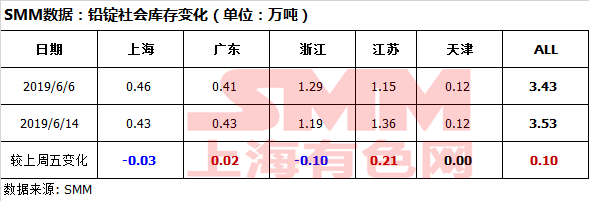
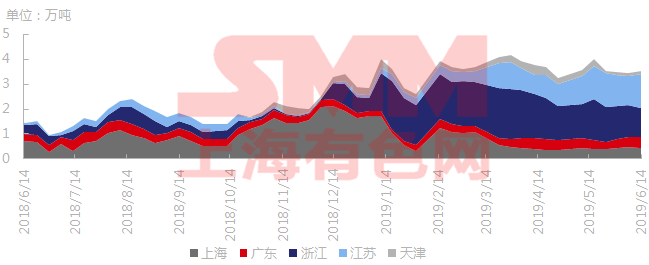
SMM6 14 news: this week lead ingots in Shanghai and Guangdong social stocks fell slightly from last Friday to 8600 tons, while the overall social inventory increased by nearly 1,000 tons to 35200 tons. According to SMM, due to the poor terminal consumption in the lead battery market, the inventory of finished products in storage enterprises is on the high side, and the production is further reduced. The lead ingots of some storage enterprises can meet the current production, and their purchasing enthusiasm is poor. This week, with the increase in the supply of recycled lead (including the restoration of environmental protection and the new production line in June), the reclaimed refined lead sticker has obviously expanded. As of Friday, the average price of regenerated refined lead to SMM1# electrolytic lead was 150 to 100 yuan / ton, and once within a week it was as low as 200 yuan / ton, resulting in a diversion of limited lead demand to recycled lead, as well as a slight accumulation of primary lead in the refinery during the Dragon Boat Festival period. Therefore, under the condition of continuous maintenance of primary lead smelting enterprises, There is still an increase in the social inventory of lead ingots.

Next week, lead consumption is not expected to improve, the supply of recycled lead is normal, while the maintenance of primary lead refineries is still increasing, and social inventory is expected to be basically stable.
Data Source Statement: Except for publicly available information, all other data are processed by SMM based on publicly available information, market communication, and relying on SMM‘s internal database model. They are for reference only and do not constitute decision-making recommendations.

For any inquiries or to learn more information, please contact: lemonzhao@smm.cn
For more information on how to access our research reports, please contact:service.en@smm.cn
Related News
On 27th Jan, Kim Long Motor and BYD entered into strategic partnership, opening BYD’s first EV battery plant in Vietnam
4 hours ago
On 27th Jan, Kim Long Motor and BYD entered into strategic partnership, opening BYD’s first EV battery plant in Vietnam
Read More
On 27th Jan, Kim Long Motor and BYD entered into strategic partnership, opening BYD’s first EV battery plant in Vietnam
Under the agreement, China’s BYD Battery, a global leader in green vehicles, will transferring technical expertise and transfer battery technology for the project while Vietnam’s Kim Long Motor will in charge of financing and developing energy battery manufacturing plant. The project is intended to help Vietnamese companies progressively develop their own battery production capabilities. After completion, the BYD battery facility is projected to enable Kim Long Motor to raise its localization rate to more than 80% by Q2 2026.
4 hours ago
Data: SHFE, DCE market movement (Mar 16)
7 hours ago
Data: SHFE, DCE market movement (Mar 16)
Read More
Data: SHFE, DCE market movement (Mar 16)
The following table shows the ferrous and nonferrous metals movement on the SHFE and DCE on 16 Mar , 2026
7 hours ago
Overview of the new tax rebates for battery exports from China, effective from 1 April 2026.
7 hours ago
Overview of the new tax rebates for battery exports from China, effective from 1 April 2026.
Read More
Overview of the new tax rebates for battery exports from China, effective from 1 April 2026.
On 9 January, China’s Ministry of Finance and the State Taxation Administration released a new export tax rebate policy. From 1 April 2026, China’s export tax rebates of up to 13% for solar battery panels will be rolled back, while the rebate rate for battery products will be reduced from 9% to 6%. The complete phase-out of tax rebates for the above-listed products is scheduled for 1 January 2027. This policy aims to negate price distortions emerged in overseas battery markets, which have long affected the profit margins of domestic manufacturers.
7 hours ago