
Sep operating rates at silicon plants up post-maintenance

Published: Oct 17, 2018 16:13
Rates picked up in September as production resumed in Yunnan, Inner Mongolia, Chongqing, and Hunan after maintenance

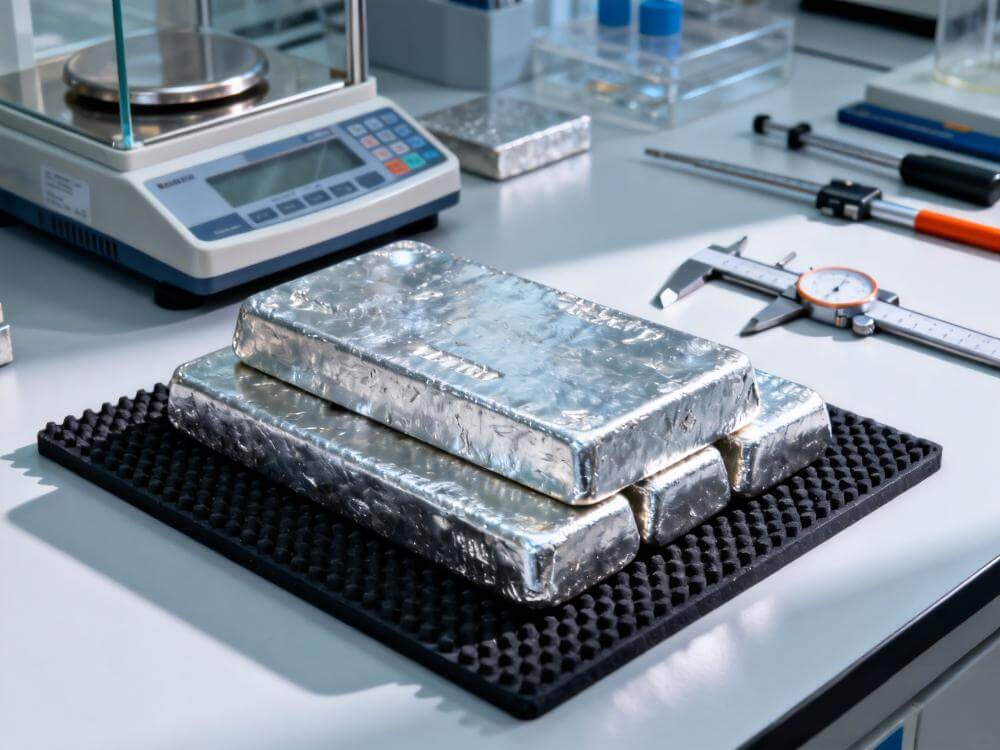
SHANGHAI, Oct 17 (SMM) – Operating rates across domestic silicon plants picked up in September as production resumed in Yunnan, Inner Mongolia, Chongqing, and Hunan after maintenance. 

The rate came in at 56.1% in September, up 4.3 percentage points from August and up 6.8 percentage points from a year ago, SMM research found. Production of silicon metal stood at 269,000 mt last month, up 2.4% from August and up 11.5% from last year. This brought silicon output in January-September 17.7% higher from 2017, standing at 2.023 million mt. 

Production costs at silicon plants in southern areas such as Sichuan province and Nujiang of Yunnan province will rise in the upcoming dry season in November, when electricity prices will be raised by 0.05-0.06 yuan/kWh. Higher electricity fees will push some plants into suspension as they already faced lower efficiency and equipment issues after four consecutive months of production. 

Unlike previous years, power shortages occurred across industrial users in hydropower-rich areas of Sichuan and Chongqing from the start of this year. Emerging virtual currency mining machines consumed much electricity, and this accounted for the tight supplies of energy for traditional industries in the rainy season. 

Dehong area of Yunnan plans to raise electricity prices in early November, nearly a month earlier from previous years. Almost half of the local silicon plants will cut production or suspend when higher prices set in. SMM expects the operating rate of silicon producers will dip to 55% in October.
Data Source Statement: Except for publicly available information, all other data are processed by SMM based on publicly available information, market communication, and relying on SMM's internal database model. They are for reference only and do not constitute decision-making recommendations.

For any inquiries or for more information, please contact: lemonzhao@smm.cn
For more information on how to access our research reports, please contact:service.en@smm.cn
Related News
【Flash | Sierra Gorda H1FY2026 Molybdenum Output Rises 6% on Higher Recovery】
3 hours ago
【Flash | Sierra Gorda H1FY2026 Molybdenum Output Rises 6% on Higher Recovery】
Read More
【Flash | Sierra Gorda H1FY2026 Molybdenum Output Rises 6% on Higher Recovery】
KGHM Polska Miedź (KGHM) reported H1FY2026 molybdenum output at Sierra Gorda of 1.8 million lb (about 816 tonnes) on its 55% attributable basis, equivalent to roughly 1,484 tonnes on a 100% mine basis, up 6% YoY. Q2 output was 0.9 million lb (about 408 tonnes), equivalent to around 742 tonnes on a 100% basis, down 25% YoY. Higher molybdenum recovery offset lower ore grades and reduced throughput. KGHM set Sierra Gorda’s FY2026 molybdenum production budget at 2.1 million lb (about 953 tonnes) on the same 55% basis, equivalent to about 1,732 tonnes at 100%. With 1.8 million lb already produced in H1FY2026, the mine had achieved about 86% of its full-year molybdenum budget.
3 hours ago
[SMM Chromium Flash] $108m in Investment Zimbabwe's Midlands Province, With Captive Power Targeting Ferrochrome Smelters
20 hours ago
[SMM Chromium Flash] $108m in Investment Zimbabwe's Midlands Province, With Captive Power Targeting Ferrochrome Smelters
Read More
[SMM Chromium Flash] $108m in Investment Zimbabwe's Midlands Province, With Captive Power Targeting Ferrochrome Smelters
[SMM Chromium Flash] $108m in Investment Zimbabwe's Midlands Province, With Captive Power Targeting Ferrochrome Smelters
Zimbabwe's Midlands Province attracted US$108 million in investment during the second quarter of 2026, spanning cement, fertiliser and energy projects, according to Minister of State for Midlands Provincial Affairs and Devolution Owen Ncube, speaking at a business conference in Gweru. Ncube said the inflows, drawn from both domestic and foreign investors, reflect the province turning mineral wealth into factories, jobs and power rather than continuing to export raw materials, framing the investment within Zimbabwe's Vision 2030 industrialization agenda. The energy component of the package is the most directly relevant to the chrome sector: new captive solar and thermal power plants are being built specifically to supply high-energy industrial consumers, with ferrochrome processing plants singled out as a priority beneficiary. Midlands hosts several of Zimbabwe's major ferrochrome producers, and unreliable, costly grid power has been a persistent constraint on smelter operations nationally. Ncube said the new capacity is intended to give manufacturers fewer outages, lower costs and the ability to plan production around a consistent energy supply, addressing what he described as one of industrialization's longstanding bottlenecks. The energy and ferrochrome angle sat alongside a broader beneficiation narrative in the announcement, with Ncube also citing Dinson Iron and Steel's investment in Manhize and lithium processing commitments from Zheli Lithium and Sandawana Mines in Chirumanzu, Zvishavane and Mberengwa as evidence of the province moving up the value chain. Investors quoted at the conference, including businessman Dr. Tinashe Manzungu, pointed to policy consistency and political stability, including the Presidential assent to Constitutional Amendment Act Number 3 of 2026, as key factors underpinning the inflows, with Manzungu suggesting the current environment could support a further US$500 million in investment. The ministerial announcement did not break out how much of the US$108 million was allocated specifically to ferrochrome-related power capacity versus the province's other cement and fertilizer projects, leaving the scale of the direct benefit to smelters still to be clarified as individual projects come online.
20 hours ago
[SMM Chromium Flash] Zimbabwe's Artisanal Mining Deadline Extension Comes as Chrome Features in Fresh Smuggling Count
20 hours ago
[SMM Chromium Flash] Zimbabwe's Artisanal Mining Deadline Extension Comes as Chrome Features in Fresh Smuggling Count
Read More
[SMM Chromium Flash] Zimbabwe's Artisanal Mining Deadline Extension Comes as Chrome Features in Fresh Smuggling Count
[SMM Chromium Flash] Zimbabwe's Artisanal Mining Deadline Extension Comes as Chrome Features in Fresh Smuggling Count
Zimbabwe's Ministry of Mines and Mining Development has granted small and medium-scale miners a final extension to December 31, 2026, to regularize their operations, moving the compliance cut-off from an original August 30 deadline after a request from the Zimbabwe Miners Federation. The government has stated explicitly that no further extension will be considered. Regularization requires operators to hold valid title, settle outstanding obligations to the state, and comply with environmental and safety rules attached to a claim, addressing a longstanding gap in which many small-scale operators work ground they do not formally hold. The extension landed in the same week Parliament was told that 18 suspected cases of mineral smuggling and irregular movement had been recorded between January and August 2026, totaling 2,658.88 tonnes of material, with lithium, chrome and silica dominating the tonnage. MP Bridget Nyandoro described mineral leakage as a matter of national economic security and called for stiffer penalties alongside a fully traceable, AI-supported mine-to-market tracking system. She noted the figures represent only detected cases rather than an estimate of total leakage. The Zimbabwe Artisanal Miners Association had pushed for a longer runway, requesting an extension to February 28, 2027, and warning that a deadline arriving faster than the paperwork could allow could push operators back into informality rather than draw them into the formal system. The ministry granted four months rather than the six requested, leaving the same shortage of registration capacity that contributed to the original deadline being missed. With small-scale and artisanal operations forming a substantial share of Zimbabwe's mineral output, including chrome, how many operations achieve registration between now and December will serve as the clearest test of whether the extension succeeds where the original deadline did not.
20 hours ago