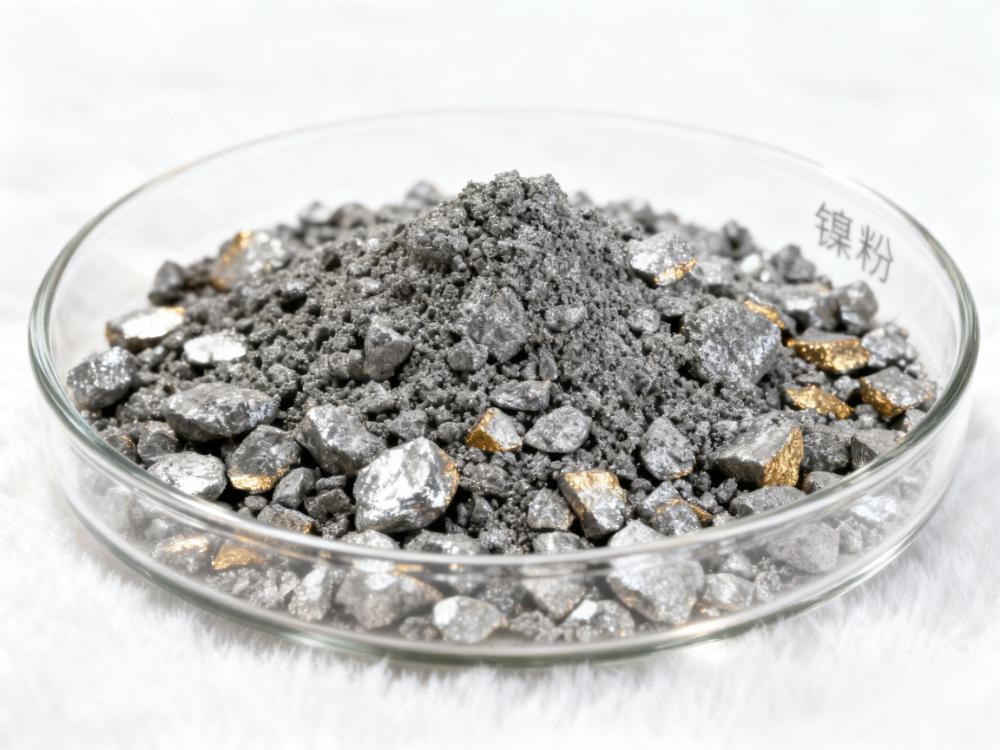
Nickel inventory in Shanghai bonded areas down 14% on the week

Published: Aug 24, 2018 14:41
Nickel stocks in Shanghai bonded warehouses dipped 14% from a week ago to 51,300 mt as of Friday Aug 24

SHANGHAI, Aug 24 (SMM) – Nickel stocks in Shanghai bonded warehouses dipped 14% from a week ago to 51,300 mt as of Friday August 24, SMM data showed. New arrivals from overseas continued to stand lower than the amount that moved from bonded areas to the domestic market. 

Large amounts of Norilsk nickel moving from bonded areas to the domestic market amid an open import window accounted for the decline, SMM learned. The decline was faster from a week-on-week drop of 4% last Friday. 

With shipment periods of about a month, forward cargoes are only expected to begin to grow bonded area stocks between late August and early September.  

Data Source Statement: Except for publicly available information, all other data are processed by SMM based on publicly available information, market communication, and relying on SMM's internal database model. They are for reference only and do not constitute decision-making recommendations.

For any inquiries or for more information, please contact: lemonzhao@smm.cn
For more information on how to access our research reports, please contact:service.en@smm.cn
Related News
[SMM Stainless Steel Flash] Šefčovič Confirms in Writing: SMEs Must Pay for EU Steel Regulation to Work
32 mins ago
[SMM Stainless Steel Flash] Šefčovič Confirms in Writing: SMEs Must Pay for EU Steel Regulation to Work
Read More
[SMM Stainless Steel Flash] Šefčovič Confirms in Writing: SMEs Must Pay for EU Steel Regulation to Work
[SMM Stainless Steel Flash] Šefčovič Confirms in Writing: SMEs Must Pay for EU Steel Regulation to Work
EU Trade Commissioner Šefčovič responded on September 1 to a written parliamentary question asking why SMEs were not exempted from the dual burden of CBAM and the Steel Regulation, stating explicitly: "As SMEs represent a significant share of EU operators active in the steel sector, it is not possible to exempt them from the application of the Steel Regulation. This would otherwise undermine the effectiveness of the Steel Regulation." This means small and mid-sized stainless steel importers, processors, and distributors must simultaneously bear the 50% out-of-quota steel tariff and CBAM carbon costs, with the Commission explicitly framing the economic burden on SMEs as a necessary feature, not a flaw, of the policy design. Eurostat data shows large enterprises accounted for 61% of steel import value in 2023, with SMEs at 38.6%, yet no full cumulative impact assessment for SMEs has been published. Critics note the 50-tonne CBAM threshold effectively covers only occasional importers rather than genuine steel traders, and that exceeding the threshold triggers liability on the full annual import volume.
32 mins ago
[SMM Stainless Steel Flash] Spanish Exporters Call to Suspend ETS and CBAM Amid Rising Steel Cost Pressures
37 mins ago
[SMM Stainless Steel Flash] Spanish Exporters Call to Suspend ETS and CBAM Amid Rising Steel Cost Pressures
Read More
[SMM Stainless Steel Flash] Spanish Exporters Call to Suspend ETS and CBAM Amid Rising Steel Cost Pressures
[SMM Stainless Steel Flash] Spanish Exporters Call to Suspend ETS and CBAM Amid Rising Steel Cost Pressures
Spain's Club de Exportadores e Inversores Españoles published a technical note calling for the suspension of EU ETS and CBAM and alignment of carbon prices with levels faced by competitors. The report identifies ETS and CBAM together as acting like an "internal tariff" on European production, with costs passed through electricity, steel, and aluminum prices to downstream processors, while offering no protection to European exporters in third-country markets. For the stainless steel industry, the impact is particularly pronounced: the EU's 50% out-of-quota steel tariff combined with halved quotas has added approximately €1,654 to the average vehicle's steel costs, while hot-rolled coil prices have risen more than 35% since October 2025, far exceeding the Commission's own impact assessment assumption of a 3.25% increase. With CBAM set to expand to 150–180 additional CN codes, compliance cost pressures on the stainless steel supply chain will intensify further, disproportionately burdening small and mid-sized processors and distributors while large steel producers buffer the impact with decades of accumulated free ETS allowances.
37 mins ago
[SMM Stainless Steel Flash] EU Stainless Slab Imports Bypass Tariffs; ArcelorMittal Ends Duisburg Steelmaking
42 mins ago
[SMM Stainless Steel Flash] EU Stainless Slab Imports Bypass Tariffs; ArcelorMittal Ends Duisburg Steelmaking
Read More
[SMM Stainless Steel Flash] EU Stainless Slab Imports Bypass Tariffs; ArcelorMittal Ends Duisburg Steelmaking
[SMM Stainless Steel Flash] EU Stainless Slab Imports Bypass Tariffs; ArcelorMittal Ends Duisburg Steelmaking
The EU's steel safeguard measures impose a 50% out-of-quota duty on finished stainless steel imports, but semi-finished slabs remain largely outside their scope, creating a significant gap. Indonesian stainless steel slabs continue to flow into Europe in large volumes: Indonesia exported approximately 330,000 tonnes of stainless steel slabs to Italy in 2025, with EU-bound shipments already exceeding 123,000 tonnes this year, as European mills, particularly in Italy, import Indonesian semi-finished slabs for local rolling and processing to bypass the tariff burden on direct finished product imports. Meanwhile, Eurostat data shows EU stainless steel flat product imports fell 35% YoY in H1 2026, with overall stainless imports down 21%, as market uncertainty created by protectionist policies dampened buying appetite. ArcelorMittal's announcement of crude steel production closure at Duisburg further highlights the double standard in EU steel policy — European major producers simultaneously lobbying for finished product protection while importing large volumes of semi-finished material to circumvent the very quotas and tariffs created for their benefit, with the Commission turning a blind eye. Critics note that the melt-and-pour rule taking effect October 1 may be the first genuine policy tool capable of closing this loophole, by requiring traceability back to the original melting location regardless of where subsequent processing occurs.
42 mins ago