Chile Copper Export Earnings Fall in July, Copper Takes 90% in Chile Mining Investment in Next 10 Years

Published: Aug 8, 2017 10:31
Chile’s earnings from copper exports totaled $2.45 billion, lower than the $2.69 billion in June, according to Chile government.

SHANGHAI, Aug. 8 (SMM) - Chile’s earnings from copper exports totaled $2.45 billion, lower than the $2.69 billion in June, according to Chile government.

One China Copper Smelter Adds 150,000-tpy Copper Smelting Capacity, SMM Reports

Chile’s export value was $5.22 billion in June, and import value was $4.99 billion, leaving $231 million surplus.

Peru 7 Metals Output Increases in June

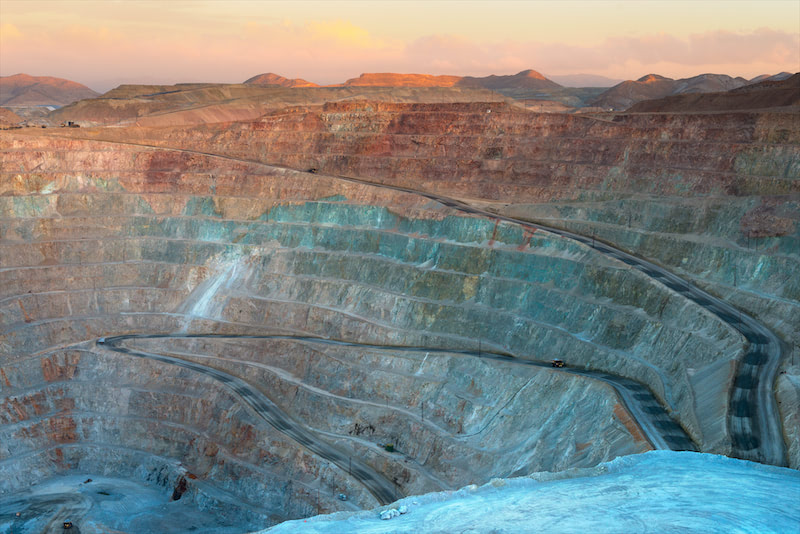
Chile government said the country plans to invest about $ 65 billion in mining industry in the next 10 years. Of the investment, over 90% will be copper projects. 

The article is edited by SMM and is provided for information purpose only. SMM assumes no liability and does not warrant the accuracy, reliability or completeness of information contained or quoted in the article, either express or implied. SMM further disclaims any liability for losses in connection with the information contained or quoted in the article.

For news cooperation, please contact us by email: sallyzhang@smm.cn or service.en@smm.cn. 

Data Source Statement: Except for publicly available information, all other data are processed by SMM based on publicly available information, market communication, and relying on SMM's internal database model. They are for reference only and do not constitute decision-making recommendations.

For any inquiries or for more information, please contact: lemonzhao@smm.cn
For more information on how to access our research reports, please contact:service.en@smm.cn
Related News
[SMM Analysis]From Aurubis to Nexans and Wieland: Why Are European and US Copper Companies Expanding Recycling Capacity?
3 mins ago
[SMM Analysis]From Aurubis to Nexans and Wieland: Why Are European and US Copper Companies Expanding Recycling Capacity?
Read More
[SMM Analysis]From Aurubis to Nexans and Wieland: Why Are European and US Copper Companies Expanding Recycling Capacity?
[SMM Analysis]From Aurubis to Nexans and Wieland: Why Are European and US Copper Companies Expanding Recycling Capacity?
[SMM Analysis: From Aurubis to Nexans and Wieland: Why Are European and US Copper Companies Expanding Recycling Capacity?]European and US copper companies have accelerated investment in recycled raw materials. Copper scrap is therefore becoming more than a supplement to primary copper. It is increasingly viewed as a strategic resource that can improve raw material security, diversify earnings and reduce product carbon footprints.
3 mins ago
Tertiary Minerals Discovers New Shallow Copper Zone at Mushima North, Expanding Project Footprint
8 mins ago
Tertiary Minerals Discovers New Shallow Copper Zone at Mushima North, Expanding Project Footprint
Read More
Tertiary Minerals Discovers New Shallow Copper Zone at Mushima North, Expanding Project Footprint
Tertiary Minerals has identified a new shallow copper-mineralised zone at its Mushima North project in Zambia, extending the project's mineralisation footprint beyond the area currently covered by its existing Exploration Target.​ Preliminary portable X-ray fluorescence (pXRF) results from scout drill hole 26TMNRC-076 at the newly named Western Zone returned 25 metres grading 0.38% copper from a depth of 19 metres, including 13 metres at 0.53% copper from 29 metres and a higher-grade interval of 3 metres at 0.75% copper from 33 metres. The Western Zone is located approximately 900 metres west-southwest of the existing Discovery Zone at Target A1.​ The results remain preliminary and require confirmation through certified laboratory assays, while the true widths of the mineralised intersections have yet to be established. Nevertheless, the location of the intercept is significant because it lies outside the boundary of the Discovery Zone, where Tertiary previously established an Exploration Target of 15–30 million tonnes grading 40–60 g/t silver equivalent.​ Tertiary has now completed its 39-hole, 3,639-metre Phase 4 drilling programme at Mushima North. Additional pXRF results from seven holes are expected shortly, followed by laboratory assays. The company also plans to begin metallurgical testing and Mineral Resource modelling, targeting a maiden Mineral Resource Estimate for the Discovery Zone before the end of 2026.​ The discovery remains at an early exploration stage and therefore has no immediate impact on Zambia's copper supply. However, the identification of mineralisation nearly one kilometre beyond the existing Discovery Zone suggests potential for a broader mineralised system and could increase the prospective scale of the Mushima North project if subsequent drilling and laboratory assays confirm the preliminary results.
8 mins ago
El Niño Risk Exposes Zambia’s Hydropower Dependence as Copper Expansion Raises Power Demand
36 mins ago
El Niño Risk Exposes Zambia’s Hydropower Dependence as Copper Expansion Raises Power Demand
Read More
El Niño Risk Exposes Zambia’s Hydropower Dependence as Copper Expansion Raises Power Demand
Zambia’s exposure to El Niño-related rainfall weakness is emerging as a renewed risk to the country’s copper-growth ambitions, with hydropower still accounting for the majority of installed electricity capacity while planned mine expansions are expected to require significantly more power.​ The risk had already been flagged domestically in June, when Zambia’s Ministry of Green Economy and Environment highlighted forecasts for a new 2026–27 El Niño season and warned of the potential for drought, water shortages, reduced crop yields and other climate-related challenges. More recent international forecasts have since strengthened the outlook for a significant El Niño event during late 2026 and early 2027.​ According to the Energy Regulation Board’s 2025 Annual Statistical Bulletin, Zambia had 4,118.71 MW of installed electricity generation capacity at the end of 2025. Hydropower accounted for 3,176.14 MW, or 77.11% of total capacity, followed by coal at 8.01%, solar at 7.47%, diesel at 4.73% and heavy fuel oil at 2.67%. This generation mix leaves electricity availability particularly sensitive to rainfall patterns and reservoir inflows.​ The exposure is significant because Zambia’s copper-growth strategy will require substantially more electricity. The country is targeting annual copper production of 3 million tonnes by 2031, supported by mine expansions, new developments and additional processing capacity. Industry estimates indicate that approximately 2,000 MW of additional power capacity will be required to support the expansion of the mining sector and associated industrial demand.​ El Niño therefore presents a potential constraint on both sides of Zambia’s copper-growth equation. While mining investment is increasing future electricity demand, prolonged rainfall weakness could simultaneously restrict output from the hydropower system that currently supplies more than three-quarters of installed generation capacity.​ The experience of the 2023–24 drought illustrates this vulnerability. Weak rainfall and lower reservoir inflows sharply reduced hydroelectric generation, contributing to severe electricity shortages and increased reliance on imports and load-management measures. A repeat of similar conditions during the 2026–27 rainy season could again tighten the power balance as mining demand continues to rise.​ The key issue for Zambia is therefore not simply expanding installed capacity, but increasing the resilience of the electricity system. Continued investment in solar, thermal generation, regional power imports, transmission infrastructure and other non-hydro sources will be increasingly important if the country is to insulate copper production growth from rainfall variability.​ For the copper market, the strengthening El Niño outlook adds a potentially important supply-side risk to Zambia’s medium-term production ambitions. With hydropower still representing 77.1% of installed capacity and the mining sector requiring roughly 2,000 MW of additional power, the ability to diversify electricity supply could become a critical determinant of whether Zambia can translate its expanding project pipeline into the targeted 3 million tonnes of annual copper production.
36 mins ago
Chile Copper Export Earnings Fall in July, Copper Takes 90% in Chile Mining Investment in Next 10 Years - Shanghai Metals Market (SMM)