Peru Mining Industry to Benefit from Lower Air Quality Standards

Published: Jun 8, 2017 10:42
Peru’s President Pedro Pablo Kuczynski announced Wednesday the country will use new air quality standards which are loosened from former standards, wenhua.com reported.

SHANGHAI, Jun. 8 (SMM) - Peru’s President Pedro Pablo Kuczynski announced Wednesday the country will use new air quality standards which are loosened from former standards, wenhua.com reported.

Domestic mining companies will benefit from the new air quality standards. Previous air quality standards have been criticized by the mining industry.

China Copper Output to Rise Remarkably in June after Maintenance Tasks, SMM Reports

According to the new air quality standards, the ceiling limit for sulfide content is lowered, which is the main waste from the smelting process of copper and other metals.

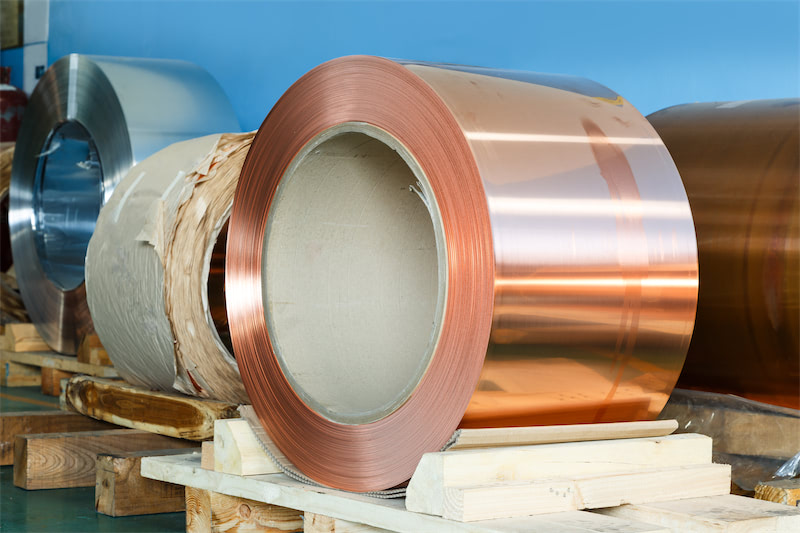
Peru is the second largest copper producing country in the world, with mineral exports claiming 60% of national total.

The article is edited by SMM and is provided for information purpose only. SMM assumes no liability and does not warrant the accuracy, reliability or completeness of information contained or quoted in the article, either express or implied. SMM further disclaims any liability for losses in connection with the information contained or quoted in the article.

For news cooperation, please contact us by email: sallyzhang@smm.cn or service.en@smm.cn. 
Data Source Statement: Except for publicly available information, all other data are processed by SMM based on publicly available information, market communication, and relying on SMM's internal database model. They are for reference only and do not constitute decision-making recommendations.

For any inquiries or for more information, please contact: lemonzhao@smm.cn
For more information on how to access our research reports, please contact:service.en@smm.cn
Related News
Copper Scrap Market Sees Supply Tightness and High Premiums Amid Regulatory Challenges
11 hours ago
Copper Scrap Market Sees Supply Tightness and High Premiums Amid Regulatory Challenges
Read More
Copper Scrap Market Sees Supply Tightness and High Premiums Amid Regulatory Challenges
During the week of July 20-23, the copper scrap market operated under a threefold backdrop: low copper cathode inventory and high premiums, continued compliance restrictions from reverse invoicing, and a deepening high-temperature off-season. The SHFE copper closing price at 11:30 surged from 104,180 yuan/mt to 106,340 yuan/mt, then pulled back slightly to 106,170 yuan/mt by the end of the week
11 hours ago
Copper Price Surge Widens Price Difference Between Copper Cathode and Copper Scrap; Supply-Side Point-Price Shipments Increase, Arbitrage Purchases Dominate Transactions [SMM Analysis]
12 hours ago
Copper Price Surge Widens Price Difference Between Copper Cathode and Copper Scrap; Supply-Side Point-Price Shipments Increase, Arbitrage Purchases Dominate Transactions [SMM Analysis]
Read More
Copper Price Surge Widens Price Difference Between Copper Cathode and Copper Scrap; Supply-Side Point-Price Shipments Increase, Arbitrage Purchases Dominate Transactions [SMM Analysis]
[SMM Analysis: Soaring Copper Prices Widen Price Difference Between Copper Cathode and Copper Scrap; Increased Spot Shipments from Suppliers, Arbitrage Purchases Dominate Transactions] This week (7/20-7/23), the copper scrap market operated under a triple framework of low copper cathode inventory and high premiums, ongoing compliance constraints from reverse invoicing, and a deepening high-temperature off-season. The SHFE copper closing price at 11:30 surged from 104,180 yuan/mt to 106,340 yuan/mt, before pulling back slightly to 106,170 yuan/mt at the end of the week, with a weekly gain of over 2,000 yuan/mt. Driven by the unilateral rise in copper cathode prices and the resilience of copper scrap in holding prices firm, the price difference between copper cathode and copper scrap expanded from 3,218 yuan/mt to 4,545 yuan/mt, briefly reaching a high of 4,800 yuan/mt during the week. The inherent price resilience of copper scrap was the core feature of the supply side this week.....
12 hours ago
Midea Air Conditioning Abandons Traditional Cold Year Opening for Retail-Focused Strategy in 2027
Jul 25, 2026 21:39
Midea Air Conditioning Abandons Traditional Cold Year Opening for Retail-Focused Strategy in 2027
Read More
Midea Air Conditioning Abandons Traditional Cold Year Opening for Retail-Focused Strategy in 2027
According to Yingketong, Midea Air Conditioning officially announced in July 2026 that it will no longer initiate the traditional Cold Year Opening for the 2027 new cooling year, instead fully committing to a new strategy of “battling for retail and competing for end-users.” This decision marks a temporary halt to the near three-decade-old model of “collecting payments in the off-season and chasing volume in the peak season” within the air conditioning industry. The “Cold Year Opening” is a unique business rhythm in the air conditioning sector. Typically, starting from H2 (from July/August to October/November), producers hold openings in batches through policy incentives to attract channel merchants to make advance payments and stockpile goods. Then, in H1 of the following year, they concentrate shipments through various large-scale sales promotions, creating a cycle of “pushing inventory in the off-season and chasing volume in the peak season.” The specific measures for Midea Air Conditioning’s cancellation of the new Cold Year Opening include: no longer holding opening meetings that involve centralized channel payments, policy lock-in, and large-scale stockpiling; abolishing the practice of “mandatory advance payments to lock in annual policies”; and shifting to terminal replenishment based on actual demand, with full-cycle normalized policies implemented.
Jul 25, 2026 21:39