Aluminum-Free Pouches Gradually Replacing Cans, Glass in Asia-Pacific

Published: Jan 20, 2017 09:59
The Asia Pacific region, especially countries such as China and India, has been driving the aluminum-free food pouches market.

by Sohrab Darabshaw on JANUARY 18, 2017

The Asia Pacific region, especially countries such as China and India, has been driving the aluminum-free food pouches market.

A new report said an increasing number of middle class customers with greater spend power, were being attracted toward cost-effective aluminum-free pouches. The high numbers could also be attributed to the large populations of China and India. The APAC region was followed by the European and the North American markets, respectively.

Why Pouches?

The report by Transparency Market Research (TMR) said consumers like the pouches because they are lightweight and easy to handle, in addition to being environmentally friendly, not to mention their low cost compared to the more common aluminum pouches. They also offer flexibility and ensure better shelf visibility.

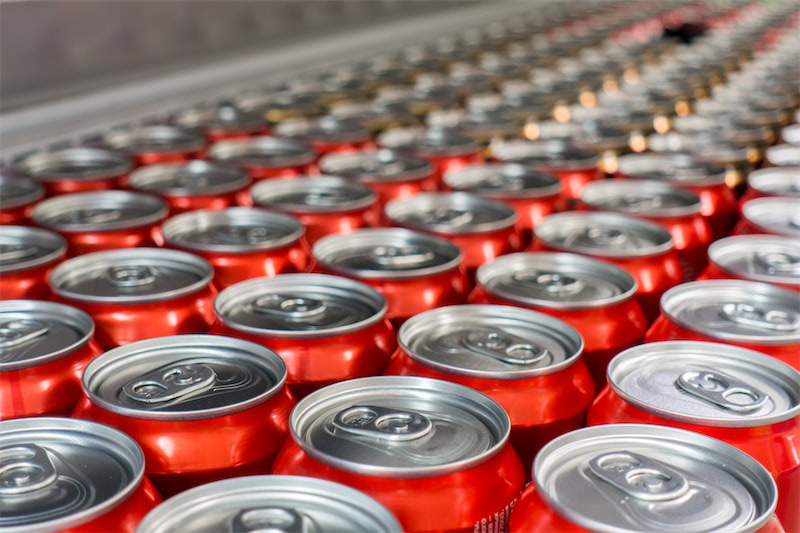
Can aluminum-free pouches replace not only glass and aluminum, but also more common aluminum pouches? Source: AdobeStock/iaremenko.

TMP said many changes were occurring in the food packaging system from the way food is produced to how it was distributed, stored, processed and retailed. Food pouches, used for everyday food products, combine the advantages of traditional, rigid food packaging with modern flexible material.

The aluminum-free food pouch, also known as the alu-free pouch, was designed to have a number of advantages over aluminum including superior barrier property, near-perfect air-tightness, optimal puncture resistance to preserve the organic qualities of the food and diverse options for easy opening.

Aluminum-free pouches are required to be recyclable and easily disposable. Therefore, many companies in the APAC region switched to using them. In Europe and the U.S., a patented Ensobarr barrier coating has replaced the aluminum lamination in packaging boards.

Aluminum vs. Aluminum-Free

Based on consumer feedback, manufacturers in all regions are shifting from rigid packaging options that involve the use of glass and aluminum to more flexible packaging options. One option was the stand-up pouch, currently sees its demand going up due to innovations in their packaging styles using resealable spouts and cap. Near-zero leakage of liquids was another reason behind the high demand.

The report said the aluminum free food pouch market could be segmented on the basis of material type, pouch type, by its application and by region. On the basis of material type, the market was divided into flexible plastic which includes films and sheet, rigid plastic and others. The market can be further segmented into flat pouches, stand up pouches and others, while on the basis of application, it can be classified as vacuum, resealable, retort, spouted and stick market.

Many fresh food packaging companies are also shifting to the aluminum-free food pouch as it offers customization and the scope to create new packaging designs that companies require, rather than a one-size-fits-all can or jar.

Product innovation and expansion are the key strategies adopted by major players in the aluminum-free food pouch market. Some of the key players in this market are Astrapak Limited, Berry Plastic Corporation, Coveris, Mondi Group, and Sonoco. These companies switched to aluminum-free food pouches as they gained expertise and experience in delivering them over the years.

Data Source Statement: Except for publicly available information, all other data are processed by SMM based on publicly available information, market communication, and relying on SMM‘s internal database model. They are for reference only and do not constitute decision-making recommendations.

For any inquiries or to learn more information, please contact: lemonzhao@smm.cn
For more information on how to access our research reports, please contact:service.en@smm.cn
Related News
Fed Governor Milan Pushes for Over 100 Basis Points Cut, Contradicts Barkin on Caution
19 hours ago
Fed Governor Milan Pushes for Over 100 Basis Points Cut, Contradicts Barkin on Caution
Read More
Fed Governor Milan Pushes for Over 100 Basis Points Cut, Contradicts Barkin on Caution
Federal Reserve Governor Milan pointed out that it is necessary for the US Fed to cut interest rates by more than 100 basis points this year. At the same time, he is very much looking forward to the performance of Kevin Warsh as Fed Chairman. However, Richmond Fed President Barkin emphasized that monetary policy must remain cautious until inflation fully pulls back to the target level, thereby ensuring the stability of the labour market.
19 hours ago
Democratic Senators Demand Delay in Fed Nomination Amid Criminal Investigation
19 hours ago
Democratic Senators Demand Delay in Fed Nomination Amid Criminal Investigation
Read More
Democratic Senators Demand Delay in Fed Nomination Amid Criminal Investigation
All 11 Democratic members of the US Senate Banking Committee jointly sent a letter to the committee's chairman, Tim Scott, requesting that all nomination processes for the prospective Fed Chairman, Kevin Warsh, be postponed until the criminal investigation into current Fed Chairman Powell and other board members is concluded. However, Scott stated that Warsh's confirmation was a done deal.
19 hours ago
Fed to Keep Large Banks' Capital Levels Unchanged, Postpones Stress Test Reforms Until 2027
19 hours ago
Fed to Keep Large Banks' Capital Levels Unchanged, Postpones Stress Test Reforms Until 2027
Read More
Fed to Keep Large Banks' Capital Levels Unchanged, Postpones Stress Test Reforms Until 2027
The US Fed has announced that it will maintain the capital levels of large banks unchanged during the upcoming stress test cycle (corresponding to the 2026 cycle). At the same time, the US Fed is planning multidimensional reforms to this annual test, aiming to enhance its transparency. The US Fed's Vice Chair for Supervision, Bowman, revealed that adjustments to the stress capital buffer requirements for large banks will be postponed until 2027. This move is intended to provide the US Fed with sufficient time to evaluate potential flaws that may be exposed in its testing models when assessing banks' financial conditions under simulated economic downturn scenarios.
19 hours ago