Shandong to Ban New Aluminum Capacity by 2020 in Favor of Aluminum Processing

Published: Sep 01, 2015 14:31 (GMT+8)
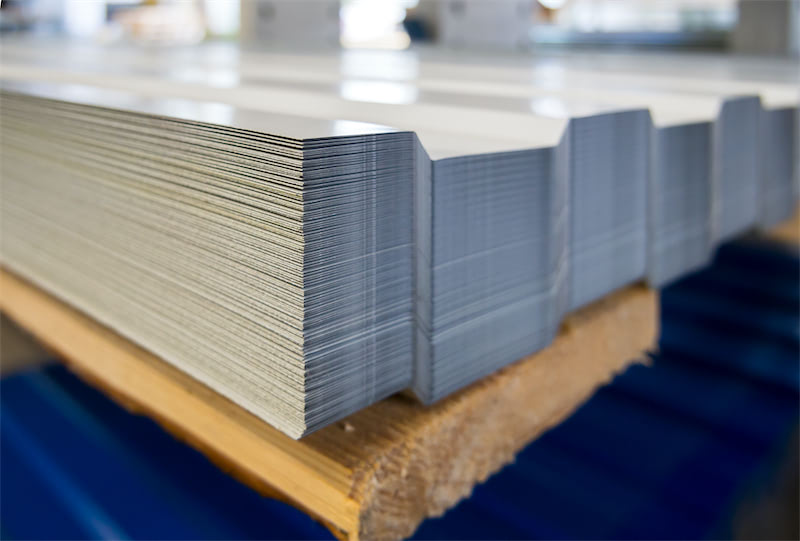
Shandong Province, one of China’s major aluminum producing regions, vows to ban new aluminum capacity by 2020 and focus on high value-added aluminum products, cnmn. com reported.

SHANGHAI, Sept. 1 (SMM) – Shandong Province, one of China’s major aluminum producing regions, vows to ban new aluminum capacity by 2020 and focus on high value-added aluminum products, cnmn. com reported.

Aluminum capacity in the province totals 9.33 million tonnes, while aluminum production is 6.72 million tonnes, leaving an utilization rate of 72.02%, cnmn.com added. 

In response to overcapacity, local aluminum smelters are setting foot into higher value-added products, such as aluminum semis used in aircrafts and cars. 

The article is edited by SMM and is provided for information purpose only. SMM assumes no liability and does not warrant the accuracy, reliability or completeness of information contained or quoted in the article, either express or implied. SMM further disclaims any liability for losses in connection with the information contained or quoted in the article.

For news cooperation, please contact us by email: sallyzhang@smm.cn or service.en@smm.cn.


Data Source Statement: Except for publicly available information, all other data are processed by SMM based on publicly available information, market communication, and relying on SMM's internal database model. They are for reference only and do not constitute decision-making recommendations.

For any inquiries or for more information, please contact: lemonzhao@smm.cn
For more information on how to access our research reports, please contact:service.en@smm.cn
Related News
Institutions: iPhone 18 Pro series first-week sales in China up 12% YoY
19 hours ago
Institutions: iPhone 18 Pro series first-week sales in China up 12% YoY
Read More
Institutions: iPhone 18 Pro series first-week sales in China up 12% YoY
According to Counterpoint Research's China Smartphone Weekly Sales Tracker, China's weekly smartphone sales have maintained a double-digit YoY decline since July. Affected by rising storage costs, consumer demand remains weak, but with the arrival of the September new product launch cycle, the market is expected to see a MoM recovery. Sales of the iPhone 18 Pro series in its first three days of availability (accounting for only three days of Week 38) were up 12% YoY compared with the first-week sales of the iPhone 17 Pro series. Driven by this strong start, Apple topped the weekly sales chart in Week 38, capturing a 33% share of China's smartphone market.
19 hours ago
AI Server Growth Demand Supports Q4 Memory Contract Price Uptrend; Consumer-Side Pressure Persists
19 hours ago
AI Server Growth Demand Supports Q4 Memory Contract Price Uptrend; Consumer-Side Pressure Persists
Read More
AI Server Growth Demand Supports Q4 Memory Contract Price Uptrend; Consumer-Side Pressure Persists
According to TrendForce's latest memory industry research, in Q4 2026, DRAM manufacturers will continue to allocate advanced process capacity to high-performance products for server applications, maintaining an overall undersupply situation. However, the contract price uptrend is slowing down, with Conventional DRAM expected to increase by 10%–15% QoQ. The NAND Flash market is showing a dual-track development of AI acceleration and low consumer demand that nonetheless drives price increases, with overall contract prices expected to rise by 15%–20% QoQ.
19 hours ago
Kimi K3 Integrates with OpenAI Codex, Becoming First Chinese Model in OpenAI's Enterprise Payment System
19 hours ago
Kimi K3 Integrates with OpenAI Codex, Becoming First Chinese Model in OpenAI's Enterprise Payment System
Read More
Kimi K3 Integrates with OpenAI Codex, Becoming First Chinese Model in OpenAI's Enterprise Payment System
Kimi has made another advance in markets outside China. US AI infrastructure company Baseten announced that enterprise users can now use Kimi K3 within OpenAI's coding tool Codex, with related usage fees billed directly against enterprises' existing OpenAI procurement commitment quotas, eliminating the need for new supplier procurement processes. This means Kimi K3 has entered the mainstream paid settlement channel for OpenAI's enterprise clients, and it is also the first time a Chinese open-source model has entered this enterprise procurement system.
19 hours ago