[Steel Im&Ex] Turkish HRC exports dropped further in May: TUIK

Published: Jul 22, 2015 17:36
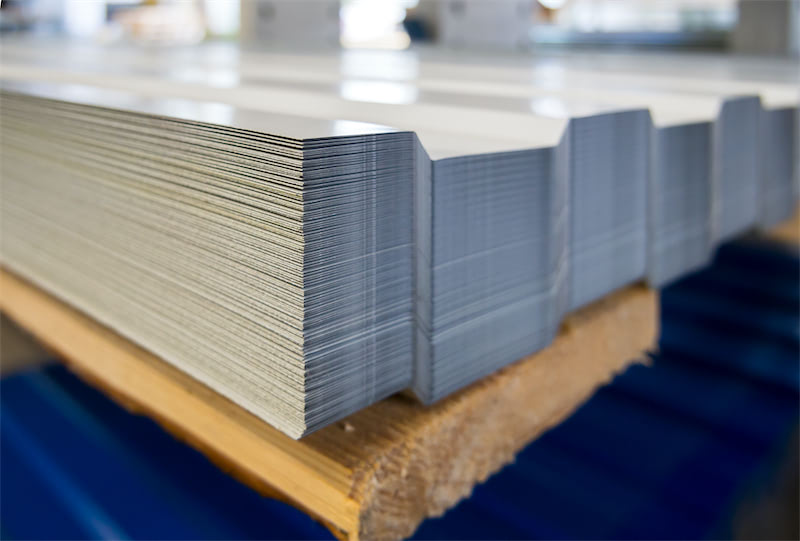
The Turkish export of Hot Rolled Coils (HRCs) continued to decline during the month of May this year.

By  Paul Ploumis 22 Jul 2015  Last updated at  05:46:36 GMT

ANKARA (Scrap Monster): According to statistics released by the Turkish Statistical Institute (TUIK), the country’s exports of Hot Rolled Coils (HRC) declined sharply during the month of May this year.

TUIK data indicates that HRC exports by the country totaled 92,521 tons during the month. This is 50.8% lesser when compared with the exports during the previous month. The exports were down by 12.2% year-on-year. Turkey had exported 105,377 tons of HRC during May 2014.

The HRC exports generated total value of $41.4 million during the month. The export values dropped 33% from the previous year and by 50% from a month ago.

The cumulative HRC exports by the country during the five-month period from January to May this year totaled 536,935 tons. The exports during the period were down 2% when compared with the corresponding five-month period in 2014. The Turkish HRC exports during Jan-May ’14 had totaled 547,893 tons. The largest export destination of Turkey’s Hot Rolled Coil products was the US. The Turkish HRC imports by the US totaled 169,898 tons, accounting for nearly 32% of the total exports by Turkey during the given period of time. In second place was Italy with 80,579 tons.
 

Data Source Statement: Except for publicly available information, all other data are processed by SMM based on publicly available information, market communication, and relying on SMM‘s internal database model. They are for reference only and do not constitute decision-making recommendations.

For any inquiries or to learn more information, please contact: lemonzhao@smm.cn
For more information on how to access our research reports, please contact:service.en@smm.cn
Related News
CAAM, EU Automobile Body Sign MOU on Cross-Border Automotive Data Flows
9 hours ago
CAAM, EU Automobile Body Sign MOU on Cross-Border Automotive Data Flows
Read More
CAAM, EU Automobile Body Sign MOU on Cross-Border Automotive Data Flows
On March 27, at the “Forum on Innovative Development of Cross-Border Data Flows” of the 2026 Zhongguancun Forum Annual Conference, CAAM and the Beijing Representative Office of the European Automobile Manufacturers’ Association signed the Memorandum of Understanding on Promoting Cross-Border Automotive Data Flows and Advancing High-Quality Industry Development. Upholding the principles of complementary advantages, resource sharing, mutually reinforcing development, and win-win cooperation, the two sides will strengthen policy exchanges in the field of cross-border automotive data flows, promote innovative applications of digital technologies to empower cross-border automotive data flows, facilitate positive interaction between regulatory authorities and industry stakeholders, and provide automakers with more opportunities for cooperation and development.
9 hours ago
Data: SHFE, DCE market movement (Mar 27)
11 hours ago
Data: SHFE, DCE market movement (Mar 27)
Read More
Data: SHFE, DCE market movement (Mar 27)
The following table shows the ferrous and nonferrous metals movement on the SHFE and DCE on 27 Mar , 2026
11 hours ago
Chinese Team Sets New Record in CZTSSe Thin-Film PV Tech, Hits 16.6% Efficiency
12 hours ago
Chinese Team Sets New Record in CZTSSe Thin-Film PV Tech, Hits 16.6% Efficiency
Read More
Chinese Team Sets New Record in CZTSSe Thin-Film PV Tech, Hits 16.6% Efficiency
Recently, the team led by Meng Qingbo at the Institute of Physics, Chinese Academy of Sciences, once again set a new record in new-type thin-film PV copper-zinc-tin-sulfur-selenium (CZTSSe) technology, raising the battery’s certified efficiency to 16.6%, marking the technology’s official crossing of the critical threshold for industrialisation from 15 to 16. Composed of common, low-cost elements such as copper, zinc, and tin, CZTSSe materials not only avoid reliance on rare metals but also offer strong resistance to space radiation. At present, the team has also completed the development of high performance flexible batteries and modules, and this technology is expected to achieve large-scale application in fields such as low-Earth-orbit satellite internet, space-based energy bases, and aerospace equipment in the future. This progress not only established China’s internationally leading position in this field, but also opened up strategic, high-value-added application prospects for tin metal in new energy and deep-space exploration.
12 hours ago