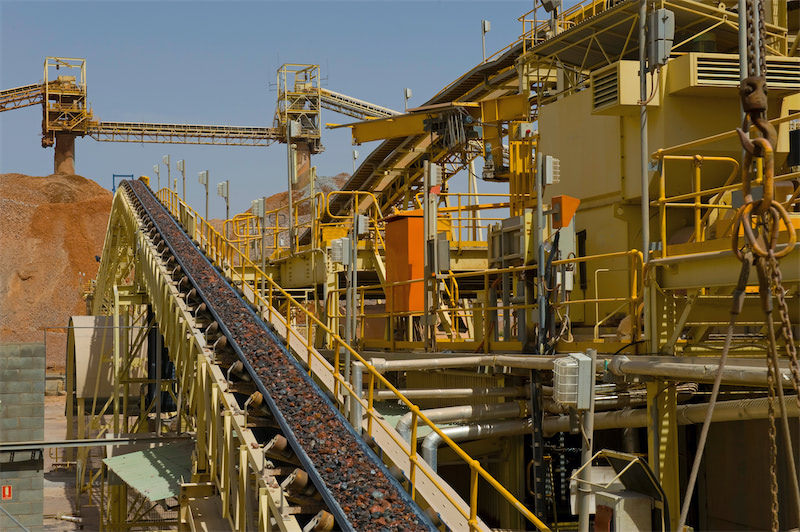
Asanko Sees Mine Becoming One of Africa’s Largest Gold Operations

Published: May 15, 2015 17:11
Asanko Gold Inc. (TSX:AKG,NYSEMKT:AKG) released the results of a Phase 2 expansion prefeasibility study.


Thursday May 14, 2015, 10:28am PDT
Asanko Gold Inc. (TSX:AKG,NYSEMKT:AKG) released the results of a Phase 2 expansion prefeasibility study. It combines the Phase 1 Obotan project, which is currently under construction, with the Esaase project into Phase 2 of the Ghana-based Asanko gold mine.
 
As quoted in the press release:
 
The Phase 2 expansion will integrate the Esaase deposit with the Phase 1 Obotan project to create one large, multi-pit mine producing an average of 411,000 ounces of gold over a 10.5 year Life of Mine (‘LoM’) from 2018. The ore will be mined and crushed at Esaase and then conveyed to a central processing facility at Obotan. The processing facility will be expanded with a 5 million tonnes per annum (‘Mtpa’) flotation plant which will be built alongside the Phase 1 3Mtpa Carbon-in-Leach (‘CIL’) plant. In addition the annual throughput of the Phase 1 CIL plant will be upgraded and increased to 3.8Mtpa by adding two extra CIL tanks to allow for the blending of oxide ores from Esaase with feed from the Phase 1 pits.
 
The combined project, at an assumed US$1,300 per ounce gold price, yields a 27% after-tax internal rate of return (‘IRR’) with a net present value (‘NPV’) of US$770 million at a 5% discount rate.
 
Peter Breese, president and CEO of Asanko, commented:
 
The outcomes from the Phase 2 expansion study have exceeded our expectations and will deliver significant value to our shareholders.
 
At the time of the merger with PMI Gold in December 2013 we estimated that up to US$100 million in NPV synergies (based on US$1,400 per ounce gold price) could be achieved by developing the assets in a phased approach and leveraging off shared infrastructure and overheads. We have been able to increase those expected NPV synergies to over US$147 million even though we have used a lower gold price of US$1,300 per ounce.
 
The incremental value and returns of Phase 2 further enhance what was an already robust project and will result in the Asanko Gold Mine becoming one of the largest gold mining operations in Africa with lowest quartile all-in sustaining costs. This highly competitive cost base, which includes corporate overheads, has always been a key driver in our development strategy.
 
In addition, the expansion of the processing facility to integrate the Phase 2 flotation plant with the Phase 1 CIL plant will give the Asanko Gold Mine total operating flexibility to handle all the different types of orebodies that are currently within the mine plan as well as give us flexibility to fully optimize near mine deposits that may be discovered in the future.
 
Click here to read the full Asanko Gold Inc. (TSX:AKG,NYSEMKT:AKG) press release.
 

Data Source Statement: Except for publicly available information, all other data are processed by SMM based on publicly available information, market communication, and relying on SMM‘s internal database model. They are for reference only and do not constitute decision-making recommendations.

For any inquiries or to learn more information, please contact: lemonzhao@smm.cn
For more information on how to access our research reports, please contact:service.en@smm.cn
Related News
[SMM Stainless Steel Flash] Canada Nickel Embeds Carbon Capture to Pioneer Net-Zero Mining at Crawford
5 hours ago
[SMM Stainless Steel Flash] Canada Nickel Embeds Carbon Capture to Pioneer Net-Zero Mining at Crawford
Read More
[SMM Stainless Steel Flash] Canada Nickel Embeds Carbon Capture to Pioneer Net-Zero Mining at Crawford
[SMM Stainless Steel Flash] Canada Nickel Embeds Carbon Capture to Pioneer Net-Zero Mining at Crawford
According to Open Access Government, Canada Nickel Company is pioneering net-zero mining at its Crawford Project by integrating carbon mineralization directly into its workflow. The site, expected to produce over 48,000 tonnes of nickel and 500,000 tonnes of 304-grade stainless steel annually, utilizes ultramafic rocks to permanently sequester CO2. Through patent-pending In-Process Tailings (IPT) carbonation and a recent successful in-situ underground pilot funded by the US DOE, CO2 is converted into stable carbonate minerals. This dual approach not only offsets emissions but naturally fractures the rock, lowering energy and grinding costs. This positions Crawford as a scalable template for a net-zero industrial cluster, turning carbon management into a core value driver.
5 hours ago
[SMM Stainless Steel Flash] UK Defends 50% Steel Tariff Hike to Protect Ailing Industry
5 hours ago
[SMM Stainless Steel Flash] UK Defends 50% Steel Tariff Hike to Protect Ailing Industry
Read More
[SMM Stainless Steel Flash] UK Defends 50% Steel Tariff Hike to Protect Ailing Industry
[SMM Stainless Steel Flash] UK Defends 50% Steel Tariff Hike to Protect Ailing Industry
According to Bloomberg, the UK government defended its decision to hike out-of-quota steel import tariffs from 25% to 50% and slash import quotas by 60%, effective July 1. Trade Minister Chris Bryant argued the measures are crucial to shield the ailing domestic steel industry from "artificially low prices" driven by cheap imports, especially from China, and global tariff wars. Prime Minister Keir Starmer's administration insists these targeted protections are vital for maintaining a level playing field. Without such interventions, the UK risks losing thousands of jobs and becoming the only G7 nation without primary steel-making capabilities, following last year's state intervention to rescue British Steel.
5 hours ago
[SMM Stainless Steel Flash] EU Ferrosilicon Crisis Driven by Energy Costs, Not China
5 hours ago
[SMM Stainless Steel Flash] EU Ferrosilicon Crisis Driven by Energy Costs, Not China
Read More
[SMM Stainless Steel Flash] EU Ferrosilicon Crisis Driven by Energy Costs, Not China
[SMM Stainless Steel Flash] EU Ferrosilicon Crisis Driven by Energy Costs, Not China
According to Eunews, the EU ferrosilicon market—crucial for stainless steel production—is facing a severe crisis driven by soaring energy costs rather than Chinese competition. Trade Commissioner Maroš Šefčovič clarified that recent safeguard investigations revealed no increase in Chinese imports, debunking claims of unfair trade practices. Instead, the primary threat to EU producers is unsustainable energy expenses. This situation, initially assessed in January, is now expected to worsen significantly. The recent outbreak of war in Iran and the escalating conflict in the Persian Gulf are triggering massive energy price spikes, putting immense additional pressure on European ferrosilicon operations and the broader stainless steel supply chain.
5 hours ago
Asanko Sees Mine Becoming One of Africa’s Largest Gold Operations - Shanghai Metals Market (SMM)