Shanghai Metals Market (SMM) is pleased to announce that an SMM-led delegation, headed by SMM Copper & Tin Overseas Marketing Manager Jenny Wu and made up of delegates from the Indonesia Critical Minerals Conference & Expo 2026, paid a formal visit to the Association of Indonesian Tin Exporters (AETI) on June 4.
The event was organized by SMM and co-organized by Indonesia’s Ministry of Foreign Affairs, National Economic Council, Indonesia Nickel Miners Association (APNI), and MMR, with the Jakarta Futures Exchange as the strategic partner.
This visit underscores SMM’s commitment to fostering long-term, win-win partnerships between Indonesia’s top mineral exporters and worldwide metal industry stakeholders.
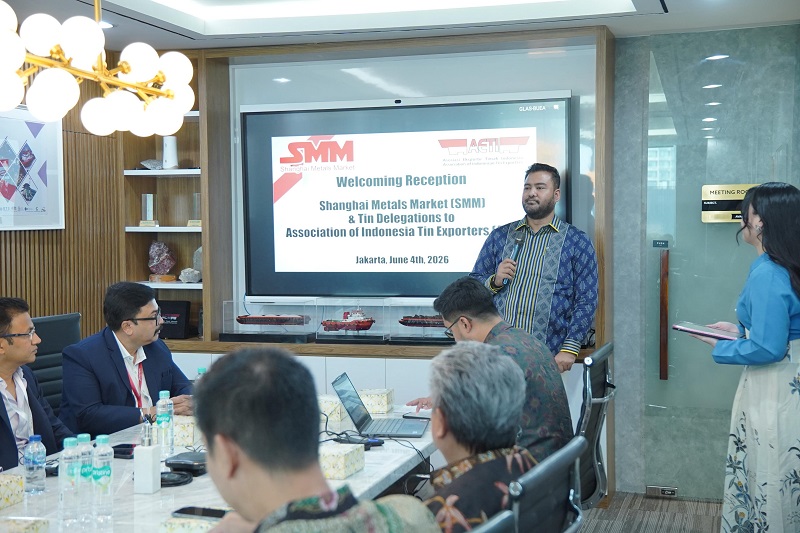
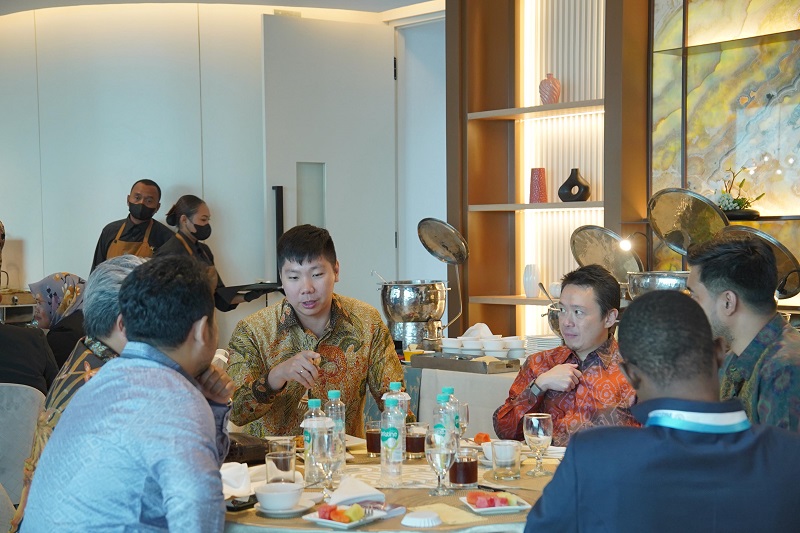
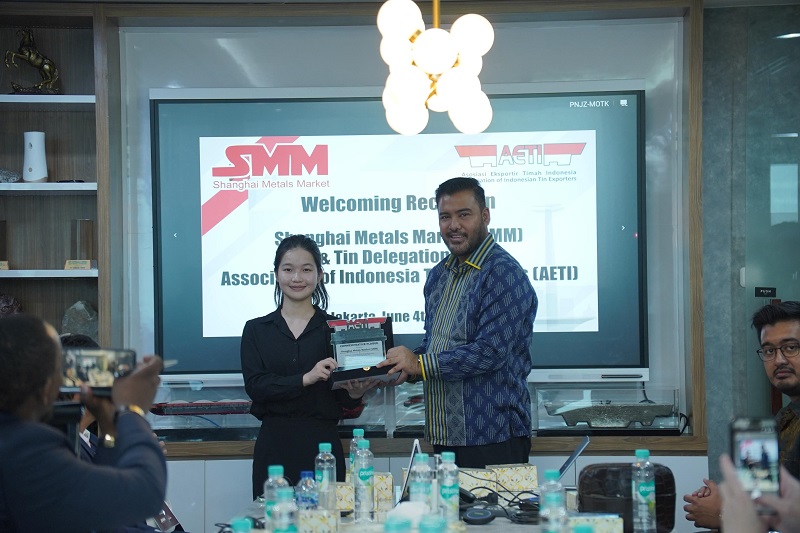
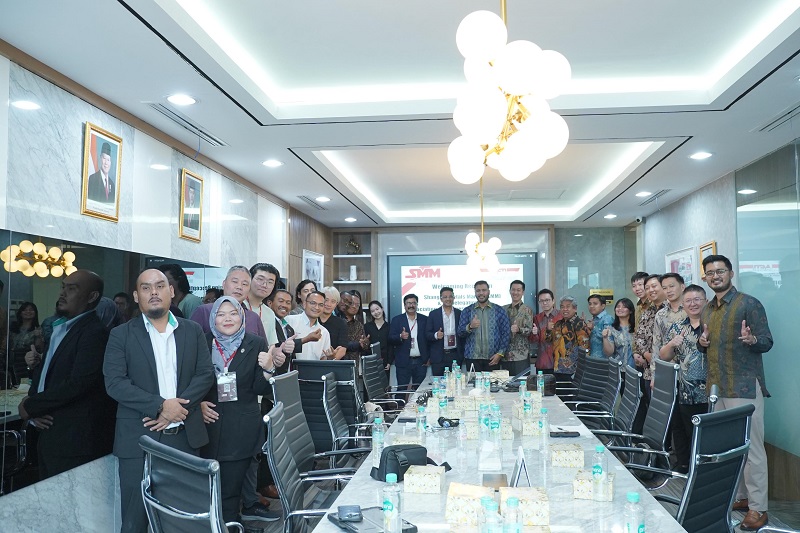
During the exchange meeting, AETI representatives gave a detailed introduction to the association’s development background and the overall production and operational status of some local tin enterprises in Indonesia. In the Q&A session, the two sides had in-depth discussions on key industry topics such as the progress of Indonesian tin ore mining quota approvals and certain current industry-related policies, sharing market information and exchanging industry perspectives.
This face-to-face exchange further strengthened ties between industry partners in and outside China, laying a solid foundation for future cross-regional cooperation and information sharing along the tin industry chain.
Introduction to the Association of Indonesian Tin Exporters (AETI)
Profile
The AETI was established on May 9, 2014, and became a member of the Indonesian Chamber of Commerce and Industry (KADIN) on March 14, 2015.
Objectives:
- Creating productive collaboration between the government, entrepreneurs, and stakeholders
- Increasing the added value of Indonesian Tin
- Encouraging the implementation of Good Mining Practices in the tin mining industry
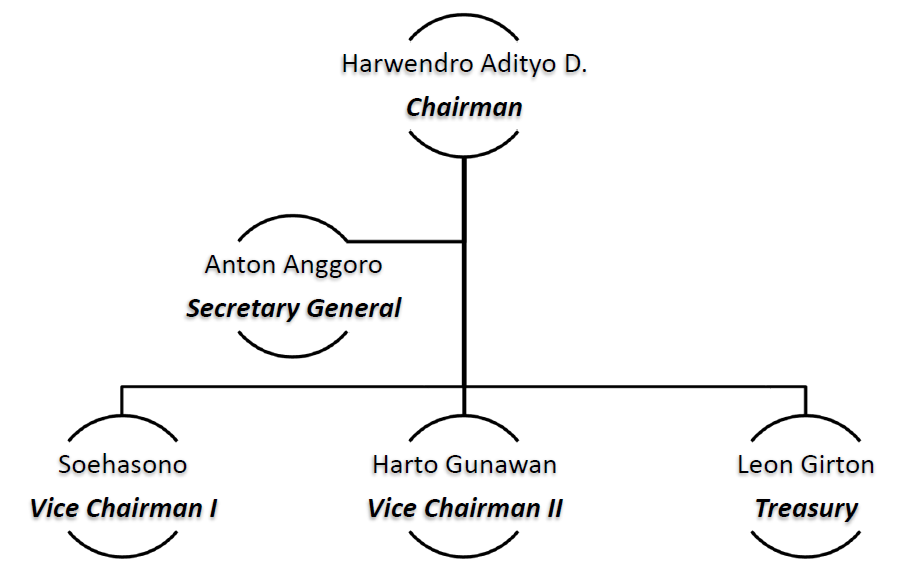
Board of AETI Management
AETI Members
Currently, AETI has 23 member companies of tin exporters spread across the islands of Bangka, Belitung, and Riau
AETI Mandate/Functions
- Advocating for policies that support the national tin industry
- Maintaining the stability and sustainability of the tin export market
- Ensuring member compliance with environmental and trading regulations
- Serving as a forum of communication between tin exporters and the government
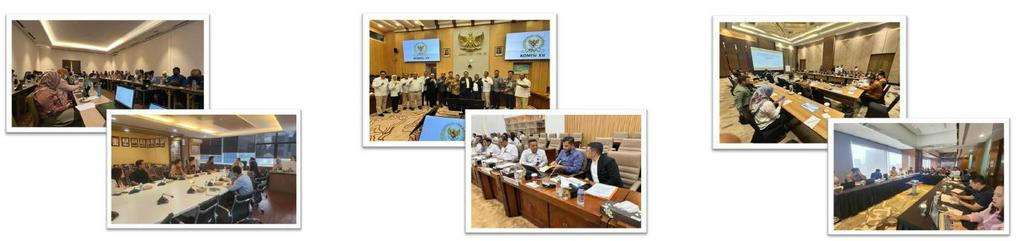
AETI Internal Activities
- Training & Development
- AETI Member Meeting
- TinSeller–BuyerMeeting
Others: Reclamation, Charity, Conference, etc.
As a demonstration of AETI's commitment to the environment, we have launched a reclamation program targeting 500 hectares of abandoned post mining land in Bangka Belitung.
AETI also runs regular social programs for the community in Bangka Belitung
Indonesia Tin Update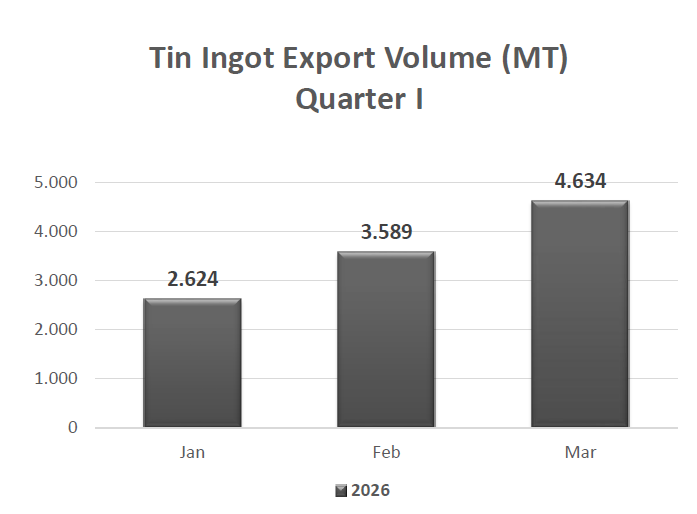
AETI forecasts that the total national tin production quota in the 2026 Mining Work Plan (RKAB) will be approximately 50,000 tons. This figure has been adjusted from around 53,000 tons in 2025 to stabilize global tin prices.
Currently, ten enterprises have obtained RKAB approvals.
The Ministry of Energy and Mineral Resources (ESDM) is implementing a more selective evaluation and adjustment of the RKAB. The Indonesian government has introduced these policies to secure future energy reserves while simultaneously controling the structure of tin trade to prevent illegal mining practices.
Dynamics of Indonesian Tin Industry Regulatory Policies
The dynamics of tin regulation in Indonesia over past years have undergone a massive paradigm shift. Driven by ensuring the sustainability and improving the governance of natural resources, optimizing state revenue and promoting downstream industrialization.1. The validity period of the RKAB has been restored to one year (previously a three-year system).
The policy aims to strengthen the government’s supervision of annual production, close loopholes in illegal mining, and adjust quotas in real time based on global market demand.
Legal basis: an Energy and Mineral Resources (ESDM) ministerial regulation, now officially implemented.
Currently, smelters must reapply annually, and the approval process is becoming stricter. While this measure reduces the predictability of multi-year supply, it has effectively curbed speculative over-application of production quotas.
2. Downstream development policy (Hilirisasi)
This drives Indonesia’s transformation from an exporter of raw materials and refined ingots into a producer of high-value-added finished products, retaining profits domestically.
The policy is a key pillar of the current government’s national development philosophy and falls under the President’s eight core governance goals (Asta Cita).
Indonesia has streamlined regulatory rules for the export of industrial tin products, covering raw material procurement and product technical standards, thereby promoting the domestic production and export of high-end tin products such as tin solder, tin chemicals, tin powder, and tin plate.
3. Designating tin as a critical strategic mineral
Tin has been elevated to a strategic status concerning national resilience and security, ensuring long-term domestic supply for key industries such as EVs and electronics.
Legal basis: the Presidential Regulation on the Governance of Critical and Strategic Minerals, currently under development.
With tin classified as a critical strategic mineral, mining supervision becomes stricter, and the central government gains the highest authority over production control. This has accelerated the downstreamization of Indonesia’s tin industry and, together with tightening global supply, has at times driven a significant rise in tin prices.
4. Establishing a benchmark price for tin ore
This creates a fair, standardized price floor for domestic tin ore transactions in Indonesia, ensuring optimal state revenue (royalties) while securing reasonable income for local miners/partners.
Legal basis: an ESDM ministerial regulation, under development.
The policy can eliminate low-ball pricing and malicious push for lower prices among local miners, partners, and smelters. Domestic ore transaction prices are set with reference to public international benchmarks such as the London Metal Exchange, the Indonesia Commodity Exchange, and the Jakarta Futures Exchange, and are adjusted based on local actual costs.
5. Single export gateway policy for strategic commodities
Strategic commodities must go through a designated unified gateway/trading platform for centralized export business, enabling whole-process compliance supervision, traceable flows, and ensuring full payment of taxes and royalties.
Legal basis: joint regulations formulated by the Ministry of Economic Affairs and the Ministry of Trade, currently under development.
Export business is handled exclusively through the state-designated institution — Danantara Sumber Daya Indonesia — which may weaken the role of domestic private enterprises in the export process.

![SHFE tin contract fluctuates downward but spot trades turn thin, energy prices push up ex-China inflation core [SMM Tin Midday Review]](https://imgqn.smm.cn/usercenter/ASfFn20251217171751.jpg)
![[SMM Tin Briefing: In May, China's NEV production and sales saw double-digit YoY growth]](https://imgqn.smm.cn/usercenter/TMpAM20251217171753.jpg)