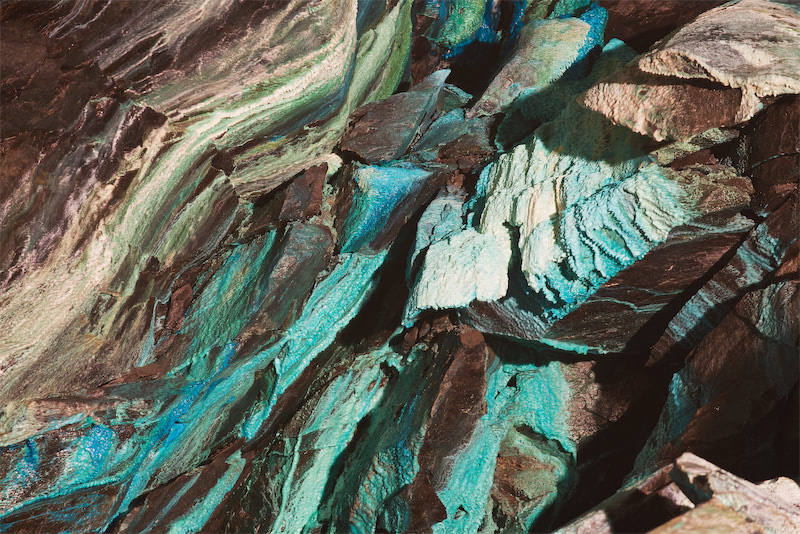
Technical Sharing: Manufacturing and Applications of High-Temperature, High-Strength, and High-Conductivity Copper Alloys [[SMM Copper Conference]]
On April 24, during the **CCIE-2025 SMM (20th) Copper Industry Conference & Expo – High-Quality Development Forum for Copper-Based New Materials**, co-hosted by **SMM Information & Technology Co., Ltd. (SMM)**, **SMM Metal Exchange Center**, and **Shandong AIS Information Technology Co., Ltd.**, with **Jiangxi Copper Corporation** and **Yingtan Port Holding Co., Ltd.** as chief sponsors, **Shandong Humon Smelting Co., Ltd.** as a special co-organizer, and **Xinhuang Group** and **Zhongtiaoshan Nonferrous Metals Group Co., Ltd.** as co-organizers, **Prof. Chang Yongqin, a doctoral supervisor from the University of Science and Technology Beijing**, shared insights on the manufacturing and applications of high-temperature-resistant, high-strength, and high-conductivity copper alloys.
**Industry Challenges and Current Status**
**High-Strength, High-Conductivity Copper Alloy Applications**
High-strength, high-conductivity copper alloys combine high strength with excellent electrical/thermal conductivity. They are primarily used in electronics, aviation, aerospace, NEVs, high-speed rail, power transmission, and other fields.
**Industry Challenges and Current Status**
**Pain Points**: Existing commercial high-strength, high-conductivity copper alloys experience significant drops in strength, fracture toughness, and severe high-temperature creep deformation when operating temperatures rise, failing to meet service requirements.
**Critical Needs**: Rapid advancements in nuclear fusion devices, continuous casting crystallisers, IC lead frames, NEV connectors, high-speed rail contact wires, and rocket combustion chamber liners urgently require enhanced high-temperature performance of these alloys, posing a "bottleneck" challenge.
**A. No Materials Meet Design Requirements**
**Performance Requirements**: High strength, thermal conductivity, elongation, thermal stability, neutron irradiation resistance, and low tritium retention.
**Pain Point**: Elevated service temperatures cause drastic reductions in strength, fracture toughness, and severe creep deformation, failing to meet component design needs.
**B. Existing Products Require Upgrades**
**R&D Needs**: Development of copper alloys with high strength, thermal conductivity, stability, and creep resistance at elevated temperatures.
**Pain Point**: Rising currents in NEV connectors increase material heating and operational temperatures, leading to degraded alloy performance and creep deformation, which cannot meet service demands.
**Projected Demand**: Domestic NEV connector demand for copper alloys is expected to reach **291,000 mt** by 2025, with a CAGR of 21.9% from 2021-2025. NEV connectors alone will require **247,000 mt** of copper alloys by 2025.
**Requirements**: High electrical conductivity and anti-aging performance at high temperatures are critical to ensure reliable operation, safety, extended lifespan, efficiency, and cost reduction.
**Melting Process for High-Temperature-Resistant, High-Strength, High-Conductivity Copper Alloys**
**Potential Customers**: Fusion reactor divertors, continuous casting crystallisers, rocket combustion liners, NEV connectors, IC lead frames, and resistance welding electrodes.
**R&D Breakthroughs**: The developed alloy addresses the urgent need for high-performance heat sink materials in fusion reactors and offers broad applications in industries like crystallisers, rocket liners, and NEVs, with significant market potential.
**Core Technologies**:
1. Precise control of element volatilization/loss via optimized vacuum melting parameters.
2. Thermomechanical processing tailored to composition for microstructure/performance control.
3. Innovative "multi-riser" mold design to improve yield.
**Composition Optimization Advantages**
**Objective**: Achieve high strength, electrical/thermal conductivity, and adequate plasticity at elevated temperatures.
**Challenge**: Balancing strength and electrical/thermal conductivity.
**Solution**: Composition design and thermomechanical processing to impede dislocation/grain boundary movement, ensuring stable microstructure and performance at high temperatures.
**Innovations**:
1. **Multi-functional alloying elements**: High-temperature solid solubility in copper, low-temperature precipitation of high-melting-point phases, reduced stacking fault energy (promoting twinning).
2. **Element coupling**: Combined V and Ti additions form stable Laves phases, enhancing high-temperature performance while minimizing conductivity loss.
3. **RE oxide additions**: Multicomponent interactions strengthen, toughen, and purify the alloy.
4. **Second-phase refinement**: Bimodal nano-precipitates form coherent/semi-coherent structures with the matrix, blocking dislocations; uniformly distributed Laves phases at grain boundaries impede grain motion.
5. **Low-Σ grain boundaries**: Introducing low-Σ (coincidence site lattice) boundaries improves machinability and plasticity.
**Synergistic enhancement of high-temperature strength and thermal conductivity achieved.**
**2.1 High-Temperature-Resistant, High-Strength, High-Conductivity Copper Alloy – CuCrZrTiV**
- **Elevated temperature performance**: Service temperature exceeds C18150 by 100°C; lifespan at 450°C is 9× longer.
- **Mid-temperature brittleness resolved**.
- **Excellent irradiation resistance**: Post-3 dpa Cu ion irradiation, only 5 nm faulted tetrahedra and 3.5 nm dislocation loops observed.
- **450°C/50 MPa creep rate: 2.89×10⁻¹⁰ s⁻¹; 450°C tensile strength: 371 MPa (14.6% elongation); thermal conductivity >300 W/m·K; superior thermal stability vs. IG-CuCrZr.**
Additional alloys discussed: CuCrZrHf (anti-creep) and CuHfSc (ultra-high conductivity).
**Mastered Core Technologies**
**Key Products**: High-temperature-resistant, high-strength, high-conductivity copper alloys.
**Validation**: 50 kg batch production and testing completed; deployed in ITER and continuous casting crystallisers.
**Powder Metallurgy Process for High-Temperature-Resistant Alloys**
**3.1 Ultra-High-Strength Cu-W Alloy**
- Room-temperature tensile strength ≥795 MPa; 450°C strength ≥289 MPa; softening temperature >1050°C (near copper’s melting point); no hardness degradation after 700°C/400 h annealing.
**Innovation**: Achieved record-high strength (795 MPa) with excellent thermal stability.
**3.2 Ultra-High-Temperature Ta-Series Alloy**
- CuTaZrY softening temperature exceeds 850°C (GlidCop-Al15 baseline) by ≥200°C.
**Stability Mechanism**: Bimodal shell-core nano-precipitates pin grain boundaries and dislocations.
**Conclusions**
1. **CuCrZrTiV alloy**: 450°C tensile strength reaches 395 MPa (exceeding IG-CuCrZr), with 600°C softening temperature (200°C higher than IG-CuCrZr) and resolved mid-temperature brittleness.
2. **CuCrZrHf alloy**: Balances thermal stability, conductivity, and creep resistance.
3. **CuHfSc alloy**: 623 MPa room-temperature strength, 95% IACS conductivity.
4. **Cu-W alloy**: 795 MPa strength (highest reported) with ductility and conductivity superior to existing PM copper alloys.
5. **CuTaZrY alloy**: Highest-reported softening temperature (>1050°C), 200°C above GlidCop-Al15, with high strength and thermal conductivity.
**View the CCIE-2025 SMM (20th) Copper Industry Conference & Expo Feature Report**
데이터 출처 설명: 공개 정보를 제외한 모든 데이터는 SMM이 공개 정보, 시장 커뮤니케이션 및 SMM 내부 데이터베이스 모델을 기반으로 가공한 것입니다. 본 자료는 참고용이며 의사결정 권고를 구성하지 않습니다.
문의 사항이 있거나 자세한 정보를 원하시면 아래로 연락해 주시기 바랍니다: lemonzhao@smm.cn
리서치 보고서 열람 방법에 대한 자세한 내용은 아래로 문의하시기 바랍니다:service.en@smm.cn
관련 뉴스
1시간 전
구리 가격 상승으로 다운스트림 구매가 위축되며 가동률과 신규 주문이 지속적으로 감소하고 있다
더 보기
구리 가격 상승으로 다운스트림 구매가 위축되며 가동률과 신규 주문이 지속적으로 감소하고 있다
구리 가격 상승과 수요 부진이 이중 압력으로 작용하며 에나멜선 업계는 침체된 흐름을 이어갔다. 이번 주 에나멜선 업계 가동률은 전주 대비 2.47%포인트 하락했고, 신규 수주는 전주 대비 1.14%포인트 감소했다.
1시간 전
![구리 가격 강세로 하류 구매 위축, 가동률 및 신규 주문 지속 감소 [SMM 에나멜선 시장 주간 리뷰]](https://imgqn.smm.cn/usercenter/mPNrH20251217171709.jpg)
1시간 전
구리 가격 강세로 하류 구매 위축, 가동률 및 신규 주문 지속 감소 [SMM 에나멜선 시장 주간 리뷰]
더 보기
구리 가격 강세로 하류 구매 위축, 가동률 및 신규 주문 지속 감소 [SMM 에나멜선 시장 주간 리뷰]
에나멜선 업계 기계 가동률이 이번 주(8월 21일~8월 27일) 전주 대비 하락했습니다 ....
1시간 전
1시간 전
캡스톤, 산 피에트로 인수 완료로 아타카마 구리 지구 통합
더 보기
캡스톤, 산 피에트로 인수 완료로 아타카마 구리 지구 통합
캡스톤 코퍼는 2026년 8월 31일 칠레 아타카마 지역의 산 피에트로 구리-금-철-코발트 프로젝트 인수를 완료했으며, 골든 애로우와 SSA의 합작법인인 뉴 골든 익스플로레이션 칠레에 캡스톤 주식 2,500만 달러어치를 지급했다. 만토베르데, 산토 도밍고, 시에라 노르테 광구 사이에 위치한 산 피에트로는 약 1만 6,000헥타르의 유망 부지를 추가한다. 린코네스 및 코야 매장지에는 구리 0.23%, 금 0.05g/t의 추정 광량 4억 9,200만 톤이 부존되어 있다. 반경 20km 내 캡스톤의 광권에는 현재 측정 및 지시 광량 약 16억 톤과 추정 광량 14억 톤이 확보되어 있다. 2024년 시에라 노르테 인수와 2025년 ENAMI 옵션에 이은 이번 거래로 광구 인프라가 통합되고 향후 구리 성장 옵션이 확대된다.
1시간 전