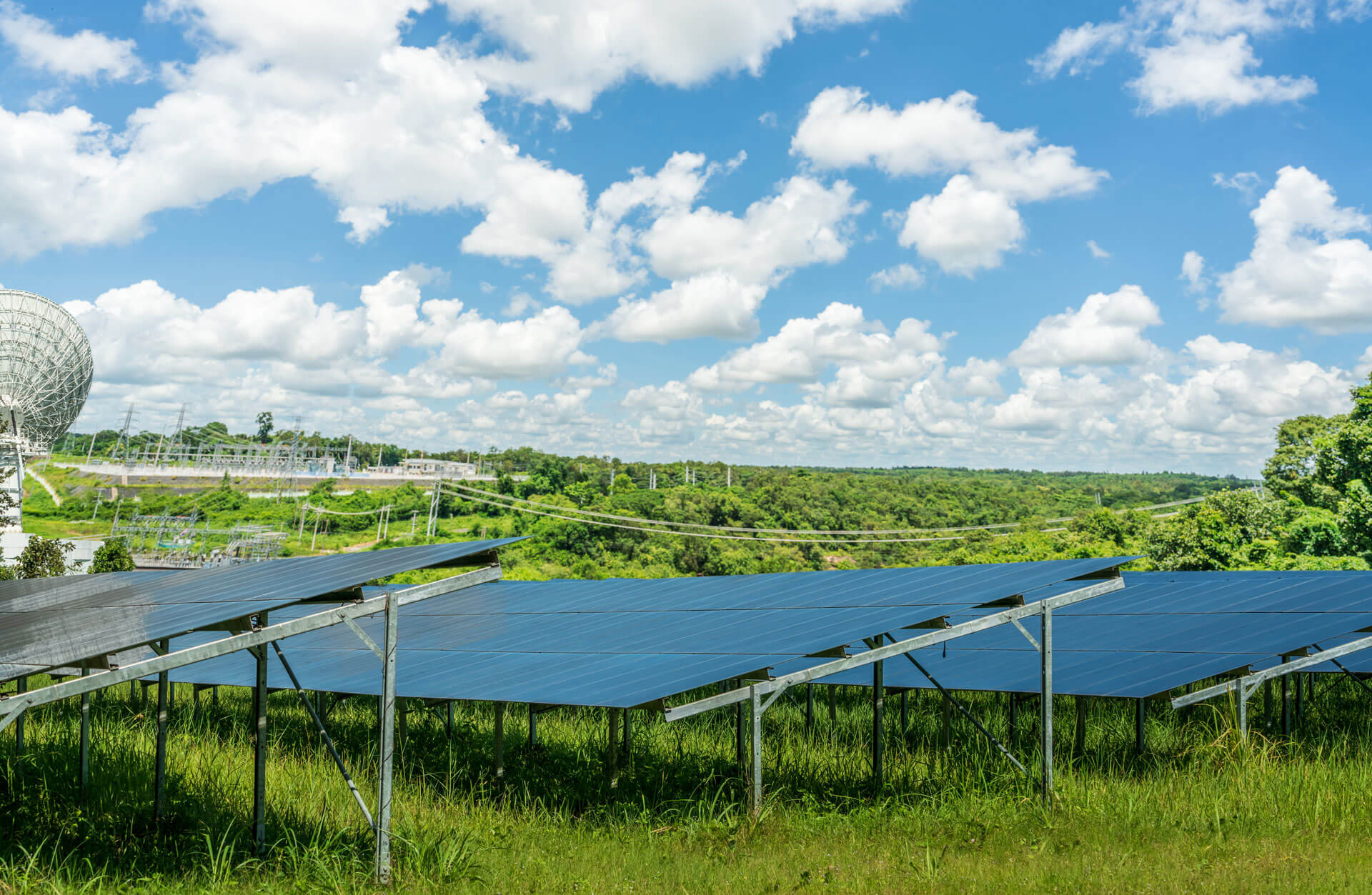
As the Saudi government gradually phases out energy subsidies, numerous companies across industries from logistics to retail are accelerating their shift to solar power generation, further reducing energy costs and aligning with sustainable development goals.
In recent years, the Saudi government has planned to increase the share of renewable energy in its energy mix to 50% by 2030 and achieve net-zero greenhouse gas emissions by 2060, driving the implementation of a series of policies and projects dedicated to sustainable development.
Meanwhile, according to a 2022 report by the International Monetary Fund (IMF), Saudi Arabia is undergoing energy subsidy reforms, with a planned gradual increase in fuel prices aiming to eliminate energy subsidies by 2030.
Several industry insiders pointed out that while promoting sustainable development is a long-term goal, the gradual removal of energy subsidies is a significant economic incentive for Saudi companies to install PV systems in the near term.
For example, the Saudi medical insurance company Fakeeh Care Group installed solar panels on the roof of a hospital parking building in Jeddah, reducing its electricity expenses by over 170,000 riyals in 2024.
Mazen Fakeeh, the company's president, stated, "The upfront investment in solar energy is substantial, but it has already started to yield returns. We have successfully reduced our carbon footprint and also cut certain costs... This is a long-term investment."
Amr Elmansoury, Chief Supply Chain Officer of the Saudi healthcare and consumer goods conglomerate Tamer Group, mentioned that after deploying solar panels at its logistics centers in Jeddah and Riyadh, the company saved over 440,000 riyals in energy costs in 2024, and plans to extend the PV system to all major distribution centers within the next two years.
In addition, apart from local Saudi companies, multinational corporations such as IKEA and GSK are also promoting the deployment of solar power projects in their Saudi subsidiaries.
Faris al-Sulayman, co-founder of the energy startup Haala Energy, noted that the acceptance of solar energy varies across different industries in Saudi Arabia.
"Commercial sector enterprises, such as malls and warehouses, pay an electricity rate of 0.3 riyals per kilowatt-hour, making them more sensitive to the return on investment of installing PV systems; whereas industrial enterprises pay only 0.18 riyals per kilowatt-hour, showing less enthusiasm for adopting solar power generation."
This accelerated shift towards solar power generation is also benefiting from the active global expansion of Chinese PV companies. Driven by energy transition, Saudi Arabia has a robust demand for Chinese PV products.
According to fDi Markets data, from 2021 to October 2023, China's greenfield investment in Saudi Arabia reached $21.6 billion, with about one-third flowing into clean technology sectors such as ESS batteries, solar, and wind energy.
However, compared to other factors, the fiscal and energy subsidy reforms led by the Saudi government are the primary drivers for companies to accelerate their transition.
Shigeto Kondo, a senior researcher at the Institute of Energy Economics, Japan, pointed out, "While the downward trend in PV prices is beneficial, the direction of fiscal reforms, especially the adjustment of energy subsidy mechanisms, is the key factor truly driving Saudi companies to explore non-fossil energy paths."
![[SMM PV 뉴스] 해발 4,700미터! 티베트 야를룽짱부강 중하류 최대 태양광 프로젝트 완공.](https://imgqn.smm.cn/usercenter/rnXTf20251217171741.jpg)
![[SMM PV 뉴스] 미국 에너지부(DOE), 우주 태양광 기술 개발에 1,200만 달러 투자](https://imgqn.smm.cn/usercenter/ZbnfH20251217171741.jpg)
![[SMM PV 뉴스] 유럽 벤치마크 구축 | 치코 솔라 에너지 이탈리아 221MW 추적 시스템 프로젝트 공식 착수](https://imgqn.smm.cn/usercenter/GOtTW20251217171740.jpg)