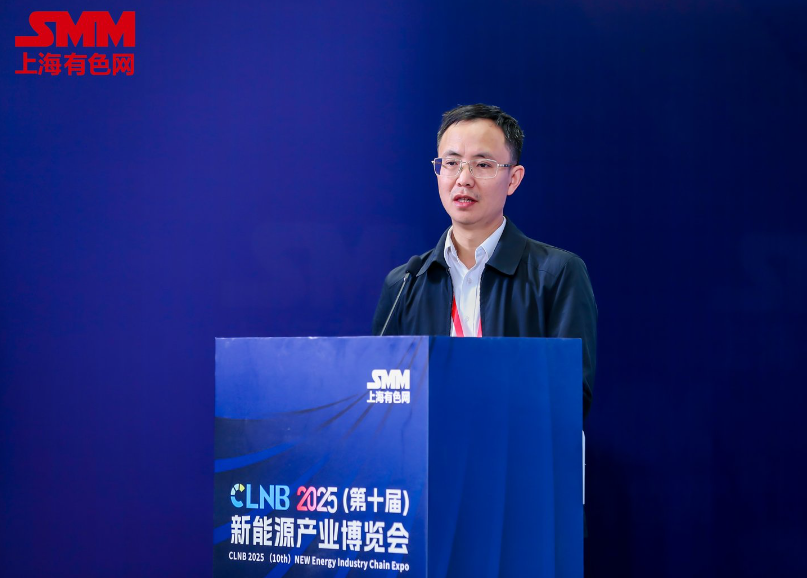
At the Battery Materials Forum of the CLNB 2025 (10th) New Energy Industry Chain Expo hosted by SMM Information & Technology Co., Ltd. (SMM), Songhua Zhou, General Manager of Guizhou Phosphate Chemical New Energy Technology Co., Ltd., discussed the topic of "Phosphorus-Driven New Energy Technology Innovation for a Green Future—Phosphorus-Based Materials Empowering High-Quality Development of the New Energy Industry."
Opportunities and Challenges in the New Energy Industry Era
The National Energy Administration released the 2024 national power industry statistics, showing that the cumulative installed power generation capacity reached approximately 3.35 billion kW, up 14.6% YoY. Among this, solar power installations reached about 890 million kW, up 45.2% YoY, while wind power installations reached about 520 million kW, up 18.0% YoY. By the end of 2024, China's new PV installations had ranked first globally for 12 consecutive years, and its cumulative installations had led the world for 10 consecutive years.
In January-February 2025, NEV production and sales reached 1.903 million and 1.835 million units, respectively, both up 52% YoY. NEV sales accounted for 40.3% of total new auto sales.
Phosphorus-Based Materials: The "Key" to the New Energy Industry
Phosphorus: Widely present in nature, it holds significant importance for life, industry, and the environment.
Ensuring National Food Security—"China feeds 21% of the global population with 9% of the world's arable land, while consuming 33% of the world's fertilizers."
Ensuring National Energy Security—China is the second-largest country in terms of phosphate ore reserves and the world's largest producer of phosphate ore. The application of phosphorus in the new energy industry is becoming increasingly widespread, particularly in battery materials and ESS technologies, showcasing immense potential.
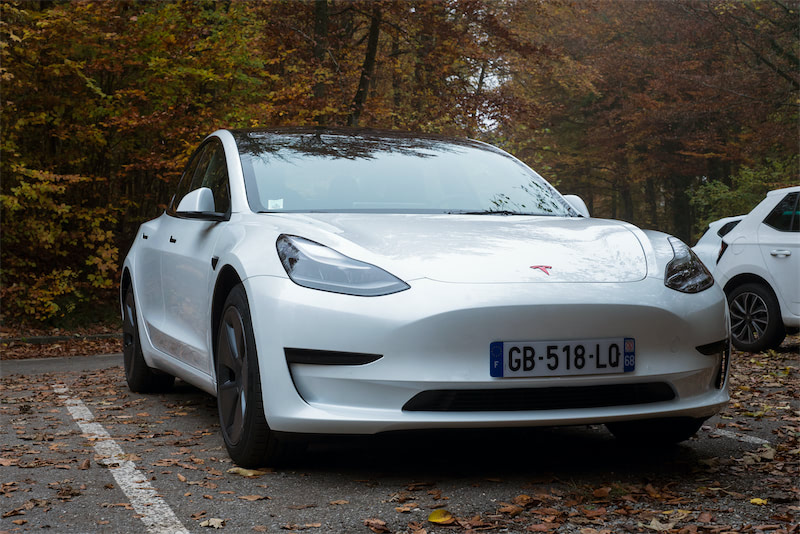
LFP batteries, with advantages such as low cost, good safety, high specific capacity, excellent high-temperature performance, high power output, long cycle life, and environmental friendliness, are widely used in popular NEVs priced below 250,000 yuan, such as the Zeekr 001, XPeng P7i, Tesla Model Y, and Xiaomi SU7.
In January-February 2025, China's cumulative power battery installations reached 73.6 GWh, including 15.0 GWh of ternary batteries and 58.6 GWh of LFP batteries, accounting for 79.6% of total installations, up 199.9% YoY.
LFMP: With safety performance comparable to LFP, it offers higher energy density (10%-20% higher) and better low-temperature discharge performance, making it an upgraded material for LFP. Its application in power batteries has gradually increased in recent years.
Due to issues such as manganese dissolution, industry insiders believe that LFMP will complement LFP and ternary materials in the future, catering to more differentiated market applications.
Sodium-Ion Battery
Sodium-ion batteries have garnered widespread attention due to their abundant resources and high safety. They are mainly divided into three technical routes: layered oxides, polyanions, and Prussian blue analogs, each with distinct characteristics in performance, cost, and application scenarios.
Among them, polyanions such as sodium vanadium phosphate (Na₃V₂(PO₄)₃, NVP) and sodium iron pyrophosphate (Na₄Fe₃(PO₄)₂P₂O₇, NFPP) offer advantages like long cycle life (up to 10,000 cycles) and high safety, making them suitable as cathode materials for ESS batteries.
Solid-State Battery
High energy density, resistance to extreme environments, and long cycle life.
All-solid-state batteries are recognized as one of the preferred solutions for next-generation batteries and a key competitive high ground in next-generation battery technology.
According to a report by global research firm SNE Research, global liquid lithium-ion battery supply will increase from 687 GWh in 2023 to 2,943 GWh by 2030, a 4.3-fold increase, accounting for over 95% of the battery market. Meanwhile, all-solid-state battery supply will grow from 0.2 GWh in 2025 to 131 GWh, with a market penetration rate of around 4%.
Oxide Solid Electrolyte
Wide electrochemical window, good chemical stability, and high mechanical strength, but with poor interfacial contact and risks of brittleness during mechanical processing.
Research and development of oxide-based solid electrolytes are very active in China. Among them, lithium aluminum titanium phosphate (Li1.3Al0.3Ti1.7(PO4)3, LATP) has achieved a certain scale of production and is beginning to be used in the solid-state battery industry.
Sulfide Solid Electrolyte
High ionic conductivity, low density, good ductility, but poor electrochemical and chemical stability and high cost.
Sulfides offer high ionic conductivity, good ductility, and low hardness, which are beneficial for improving interfacial contact with electrode materials. Currently, major lithium battery players (CATL, SDI, SK, LG, Panasonic) are adopting this as their primary technical path.
Black Phosphorus
Black phosphorus: With a unique two-dimensional layered structure and excellent physicochemical properties, it boasts a theoretical specific capacity of up to 2,596 mAh/g (far exceeding graphite's 372 mAh/g), significantly enhancing battery energy density. It holds promise as an anode material for lithium/sodium-ion batteries. Its high conductivity and large specific surface area make it suitable for high-power ESS devices, showcasing immense application potential in electronics, energy, and biomedical fields in recent years.
Looking Ahead: A Win-Win Path for Phosphorus-Based Materials and the New Energy Industry
Focus on "value competition" rather than price competition, promoting collaborative development of the industry chain and optimizing capacity layout.
LinkedIn: https://www.linkedin.com/company/98924065/admin/dashboard/
Facebook: https://www.facebook.com/profile.php?id=61572704694550
![마그네슘 가격 3거래일 연속 상승! 원가 측면은 여전히 '뜨겁게 타오르는' 반면 수요 측면은 바통을 이어받기 어려워 [SMM 논평]](https://imgqn.smm.cn/usercenter/EutUV20251217171724.jpeg)