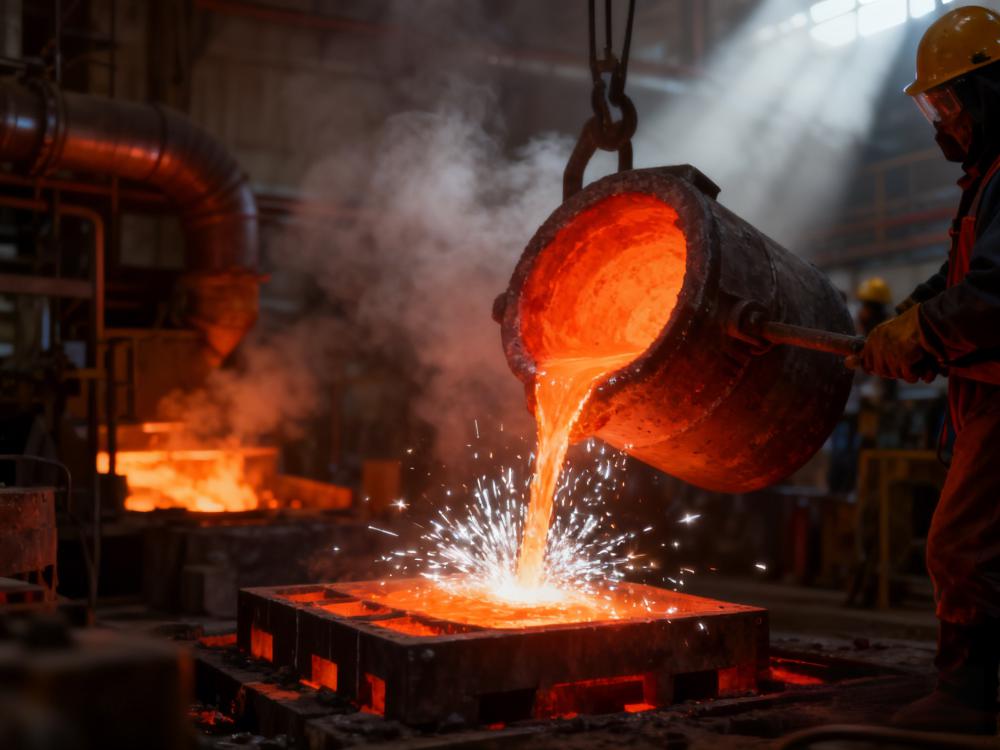
Following the inclusion of imported rare earth ore under control, China has been strengthening its export controls on rare earths.
On April 4, the Ministry of Commerce, in conjunction with the General Administration of Customs, issued an announcement on the implementation of export control measures for seven categories of medium-heavy rare earth-related items, including samarium, gadolinium, terbium, dysprosium, lutetium, scandium, and yttrium, which took effect immediately upon issuance. According to the announcement, the seven categories of medium-heavy rare earth-related items subject to export controls cover various forms such as metals, alloys, targets, oxides, and compounds.
Caixin reporters learned that China's rare earth exports are dominated by light rare earths, with the largest export volumes of light rare earth elements including lanthanum, cerium, and neodymium; followed by some medium-heavy rare earth elements such as praseodymium, dysprosium, and terbium. In terms of export destinations, light rare earths are mainly sold to the US, Japan, and the Netherlands, while medium-heavy rare earths primarily flow to Japan and South Korea.
Industry insiders told Caixin reporters that the US mainly imports light rare earths such as lanthanum and cerium from China, and the implementation of export controls on medium-heavy rare earths this time may have a significant impact on Japan's rare earth imports.
Some analysts told Caixin reporters, "Compared to other minor metals, the seven categories of medium-heavy rare earths subject to export controls this time are basically not produced overseas, but they have wide applications. After the export volume of medium-heavy rare earths is restricted, it is expected to impact domestic rare earth prices, with specific manifestations likely being an initial surge, followed by adjustments, and sustained price increases in the future. Due to their high strategic value and increasingly strict policy controls, medium-heavy rare earths may gradually shift towards high-end applications and indirect exports in the future."
Caixin reporters noted that in December 2024, China implemented export controls on items such as antimony, further exacerbating the price spread between domestic and overseas markets. Data shows that in March this year, the domestic market price of antimony ingots surged to 162,500 yuan/mt, while the overseas market price had already reached 372,300 yuan/mt, with a price spread exceeding 210,000 yuan/mt.
According to a research report released by China Securities on March 16, "China's control of antimony product exports — rising overseas market prices of antimony — 'flour being more expensive than bread,' domestic reduction in imported ore — domestic market shortages and rising antimony prices" this logical chain continues.
In recent years, China has been strengthening its export controls on rare earths. Industry insiders told Caixin reporters that previously, China's restrictions on rare earth exports were mainly on upstream smelting and separation technologies. In terms of export product forms, light rare earths are mainly exported as oxides, carbonates, and primary alloys, while medium-heavy rare earths are more often indirectly exported as high-value-added products such as NdFeB permanent magnet materials.
Public information shows that rare earths are strategic mineral resources contested globally, playing an important role in high-tech industries such as aerospace, national defense, electronics, and new energy. With the accelerated evolution of a new round of technological revolution and industrial transformation, global supply chain security risks have become prominent, and the strategic value of rare earths has rapidly increased, becoming an important object of resource competition and industrial rivalry among major powers. As the only country in the world with the capability to produce the entire industry chain of rare earth products, China has introduced a series of policies to promote the high-quality development of the rare earth industry and ensure the safe supply of domestic rare earths.
On December 1, 2024, the "Regulations on the Export Control of Dual-Use Items of the People's Republic of China" officially took effect. It is worth mentioning that after the implementation of these regulations, seven categories of medium-heavy rare earth-related items, including samarium, gadolinium, terbium, dysprosium, lutetium, scandium, and yttrium, became the first dual-use substances explicitly included in export controls. A spokesperson for the Ministry of Commerce stated that day that the related items have dual-use attributes, and implementing export controls on them is an international common practice.
Rare earths are the collective name for 17 elements, including lanthanum, cerium, praseodymium, neodymium, promethium, samarium, europium, gadolinium, terbium, dysprosium, holmium, erbium, thulium, ytterbium, lutetium, scandium, and yttrium, and are non-renewable scarce strategic resources. Based on the atomic electronic layer structure and physicochemical properties of rare earth elements, as well as their symbiotic conditions in minerals and different ionic radii that produce different characteristic properties, the 17 rare earth elements can be divided into two major categories: light rare earths and medium-heavy rare earths. Among them, medium-heavy rare earths are more valuable than light rare earths due to their high value and low reserves.
Data from Shenzhen Enterprise Investment Industry Research Institute shows that China dominates the global rare earth supply chain, controlling about 70% of global rare earth production and 90% of rare earth refining capacity. Other related data shows that China's rare earth production in 2023 reached 240,000 mt, accounting for about two-thirds of the global total, while its reserves reached 44 million mt, accounting for 40% of the global total.
In terms of distribution, China's rare earth resources generally exhibit a characteristic of heavy in the south and light in the north. Among them, light rare earths are concentrated in Inner Mongolia, Sichuan, and other places, while ion-adsorption type rare earths (heavy rare earths) are distributed in Jiangxi, Fujian, Guangdong, Yunnan, and other places, accounting for more than 80% of global heavy rare earth reserves.
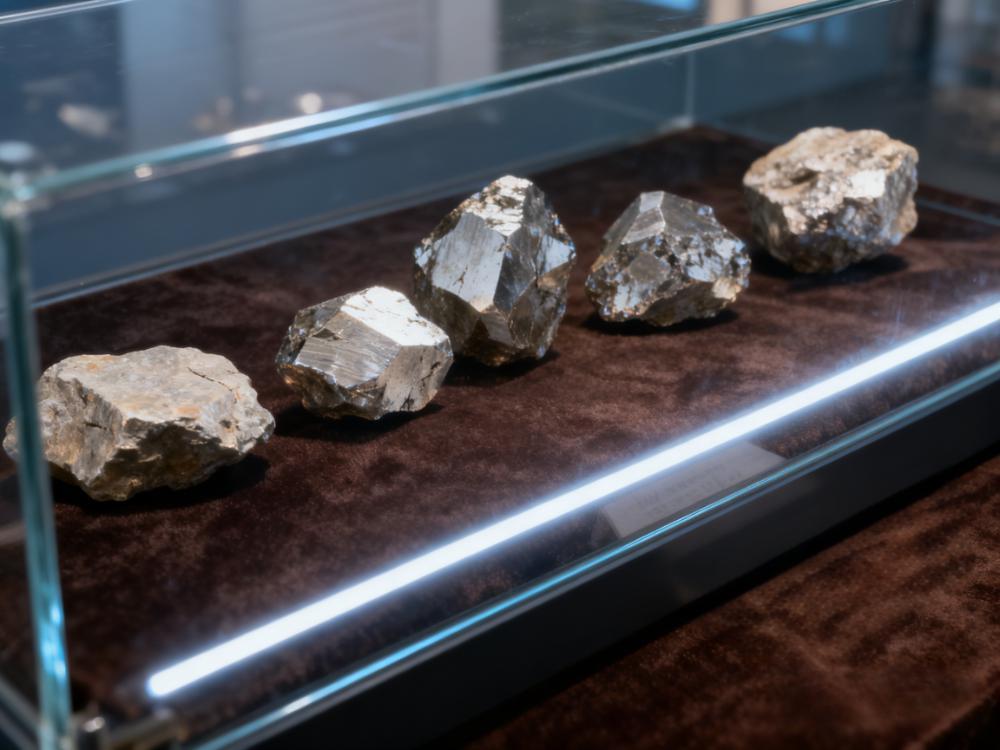
![[광석 측 가격 소폭 상승, 프라세오디뮴-네오디뮴 보합 속 교착, 스크랩 선상승 후 안정 [SMM 재생 희토류 주간 리뷰]]](https://imgqn.smm.cn/usercenter/tXtym20251217171745.jpeg)
![광석 측 가격은 소폭 상승했고, Pr-Nd는 보합세를 보였으며, 중희토류는 엇갈린 흐름을 나타냈다 [SMM 희토류 주간 리뷰]](https://imgqn.smm.cn/usercenter/fpsaU20251217171745.jpeg)