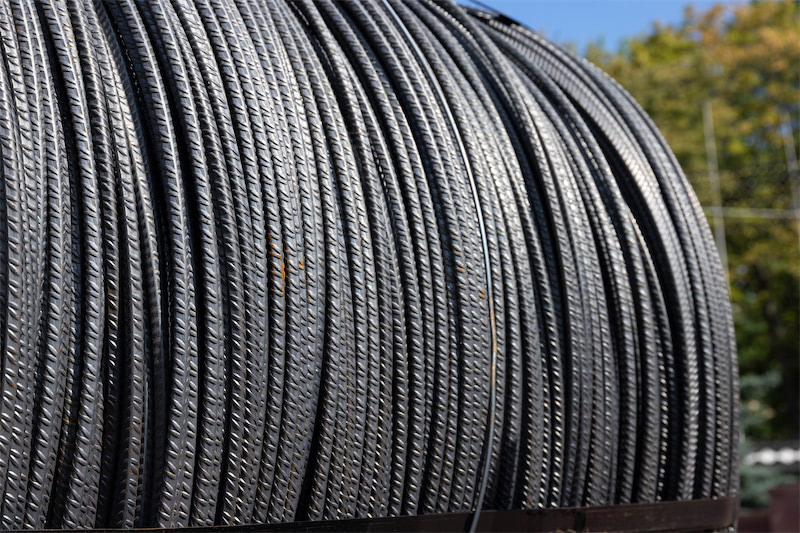
Forecast for next week: Impact of news diminishes, short-term steel prices have limited upside and downside room
This week, the ferrous metals series fluctuated downward. In terms of news, at the beginning of the week, the State Council Information Office held a press conference to introduce the national economic operation in January-February 2025, where new housing starts reached 66.14 million m², down 29.6%. Among them, residential new starts were 48.21 million m², down 28.9%. Overseas, at 2:00 am Beijing time on March 20, the US Fed announced its March interest rate decision, maintaining rates as expected, slowing down balance sheet reduction, raising inflation forecasts, and lowering economic forecasts. The dot plot showed no change in the number of rate cuts. On March 18, India's Ministry of Commerce and Industry announced a recommendation to impose a 12% provisional "safeguard" duty on various steel products. After an investigation, the Indian trade authority preliminarily decided to set the validity period of the additional tariffs on imported steel goods at 200 days. Subsequently, according to Reuters, EU Commission Executive Vice President Valdis Dombrovskis said on Wednesday that the EU will tighten steel import quotas, reducing imports by another 15% from April, aimed at preventing cheap steel from flooding into the European market after the US imposed new tariffs. In the spot market, rumors of production limits have not materialized, leading to weaker market sentiment, but with recent temperature increases, transactions in many areas have gradually improved.
In the short term, the impact of production limit policies on the market has weakened as they have not yet been implemented. Fundamentally, this week, apparent steel demand continued to warm up, with relatively small structural imbalances. It is expected that steel prices will continue to fluctuate rangebound next week, with the center of gravity possibly slightly upward.
Prices continued to fall this week, expected to fluctuate at low levels next week
Iron ore prices continued to fall this week. Fundamentally, global shipments decreased 10.5% MoM, while China's total iron ore arrivals were 21.87 million mt, up 29.76% MoM, indicating a slight increase in supply. On the demand side, blast furnaces across regions resumed production actively, with daily average pig iron production increasing by 19,000 mt MoM. Macro-wise, after the Two Sessions, the market's expectations for macro policies were unmet, coupled with stable domestic LPR, leading to a generally pessimistic macro sentiment. At ports, PB fines in Shandong region fell 8 yuan/mt MoM. Looking ahead, both supply and demand for iron ore are expected to increase. However, with rebar production growth, the increase in apparent demand narrowed, and concerns over negative feedback intensified, making it difficult for iron ore prices to rise. It is expected that iron ore prices will continue to fluctuate at low levels next week.
Supply-demand imbalance eases, coke market may remain weak and stable next week
Key point: On the supply side, after the eleventh round of coke price cuts, coke producers' profits declined, and some even incurred losses, leading to reduced production and a slight decrease in coke supply. On the demand side, recent improvements in steel mill profits, increased pig iron production, and higher daily coke consumption led some steel mills to restock coke, reducing control over arrivals. In terms of raw materials, coal mine coking coal production remained stable. Coal washing plants, affected by loose upstream coal mine supply and weak downstream coke and steel enterprise procurement, showed low production enthusiasm. Additionally, downstream coke and steel enterprises continued to deplete their own coking coal inventories. With some coal types becoming more cost-effective after price cuts, they began to purchase moderately, improving coal mine sales, with online auctions showing mixed performance. Overall, coke inventory at coke producers decreased, and the fundamental situation improved, with limited downside room due to cost support. The coke market is expected to remain weak and stable next week.
Stable supply, increasing demand, market confidence needs to be restored, spot prices mainly fluctuating
This week, both futures and spot prices for rebar were weak, with the most-traded contract breaking down, and the average spot price falling 72 yuan/mt, indicating insufficient market confidence. Speculative demand weakened, while end-users mostly purchased as needed. On the supply side, there was a divergence in the operating conditions of BF and EAF steel mills this week. After the major meeting, some blast furnaces that were previously limited by environmental protection requirements resumed production, and given the moderate profitability of steel mills, long-process steel mills increased production, leading to a slight increase in pig iron production. Short-process steel mills, however, saw a significant reduction in overall benefits due to lower finished product prices, resulting in a decline in operating rates, and overall construction material supply remained relatively stable. On the demand side, affected by weakening futures and spot prices, and funding issues, the recovery of demand in the north was below expectations, with some end-users delaying purchases. This week, national rebar inventory decreased slightly. Given the rapid price decline this week, further downside room is limited. Next week, the market is expected to focus on restoring confidence, with spot prices fluctuating rangebound. The most-traded rebar contract RB2505 is expected to fluctuate between 3100-3300 next week.
Supply-demand imbalance eases, HRC market expected to strengthen slightly next week
HRC prices significantly weakened this week. In the spot market, demand was moderate, with end-users mainly purchasing as needed, and overall transactions showed a decreasing trend. Looking ahead, macro-wise, the expectations for RRR cuts and interest rate cuts were not met this week, but in the long term, such measures are still expected to be implemented. Overseas, the US Fed announced its March interest rate decision, maintaining rates, slowing down balance sheet reduction, raising inflation forecasts, and lowering economic forecasts. Cost-wise, iron ore prices are expected to rebound slightly, while coke prices remain stable, providing a slight increase in cost support for HRC. Fundamentally, HRC supply decreased, and demand increased, with terminal demand performing moderately, and HRC inventories continued to decline. Overall, the fundamental situation for HRC has improved, with a reduced supply-demand imbalance, and in the long term, a significant reduction in steel production is expected, supporting market expectations. Next week, the most-traded HRC contract is expected to fluctuate between 3300-3450, with the HRC market strengthening slightly.
Weak supply and demand, fundamental contradictions not prominent
On the supply side, the operating and capacity utilization rates of scrap processing enterprises increased, but merchants, concerned about falling market prices, opted for quick in-and-out operations, keeping base inventories at low levels, limiting short-term supply increases. On the demand side, due to lower finished product prices and weak downstream demand, short-process steel mills' profits were continuously compressed, leading to general production enthusiasm. According to the SMM survey, the operating rate of 50 major EAF steel mills producing construction materials nationwide was 40.18%, down 0.42% MoM. Overall, the scrap market showed a pattern of weak supply and demand this week. In the short term, the domestic scrap market is expected to continue to stabilize with a weak trend.
1. For data in the report, please visit the SMM database (https://data-pro.smm.cn/). 2. For more information on SMM steel news, analysis reports, and databases, please contact Li Ping of the SMM Steel Division at 021-51595782.
*The views in this report are based on information collected from the market and a comprehensive assessment by the SMM research team. The information provided in the report is for reference only, and the risk is borne by the user. This report does not constitute direct advice for investment research decisions. Clients should make prudent decisions and not rely solely on this report, as any decisions made are unrelated to SMM. Additionally, any losses or liabilities resulting from unauthorized or illegal use of the views in this report are unrelated to SMM. SMM reserves the right to modify and interpret the terms of this disclaimer.
![[SMM 철강] 베트남 밀, 10월 오퍼 가격 인상·중국 가격 약세 속 동남아시아 판재류 시장 엇갈려](https://imgqn.smm.cn/usercenter/vhvTQ20251217171715.jpg)
![[SMM 철강] 튀르키예 철근 가격 상승세 지속: 내수 호조로 공장도 가격 상승, 수출은 부진](https://imgqn.smm.cn/usercenter/gmcdk20251217171720.jpg)