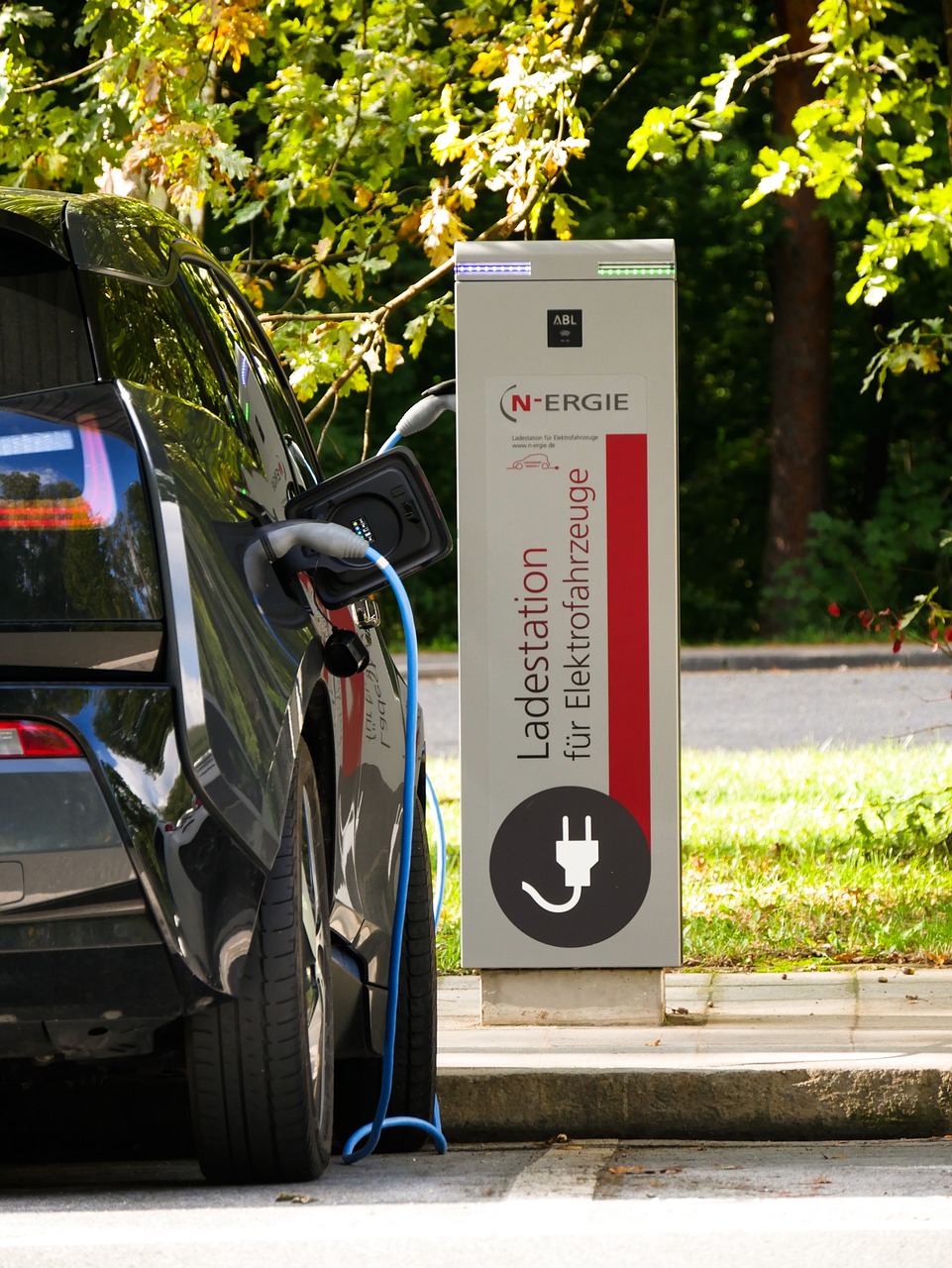
The EU Commission has released its Industrial Plan for the Automotive industry, the policy that will guide the EU’s work in the sector for the coming years. It aims to create the regulatory and financial conditions for a successful EV transition. The Action Plan contains key announcements and indications of the EU policy directions relating to batteries, EVs and EV charging.
A make-or-break moment for the EU’s battery industry?
The Commission put a strong focus on the support of next-generation battery technologies and the broader supply chain. To help foster cell production in the EU a “battery booster” package was announced, which will support battery cell production and components through funding and legislation. The Commission aims to introduce legislation this year to specify local content requirements and their components.Additionally, the Commission will make available EUR1.8 billion over the next two years to support the battery manufacturing industry.
As for battery materials it proposes the establishment of a “Battery Raw Materials Access Entity”, which would help car manufacturers get the raw materials they need by pooling their commitments and investments.
Beyond battery materials access there is a clear ambition to speed up the permitting process for battery materials refining and provide more support for the recycling industry, including direct funding. The Commission will also provide additional support to enhance cooperation in battery recycling in the industry.
How will the EU boost EV adoption?
The action plan laid out how it will look for better coordination of consumer incentives for zero-emission vehicle purchases across Member States to enhance effectiveness, economic efficiency, and longevity. The EU Commission will work with Member States to share best practices, develop a toolbox for incentive schemes, and explore possible EU-level funding and initiatives.
Read: Europe’s EV subsidy landscape set for changes in 2025
In addition to this, work has begun on legislation to decarbonise corporate fleets which account for ~60% of the total car registrations in the EU.
How does the EU plan to manage China’s influence in the EV and battery sectors?
Foreign investments into the EU’s EV and battery space will be key to its development, including from Chinese companies. The Commission plans to set out conditions for these foreign inbound investments which may include joint venture and senior management requirements, supportive agreements for EU industry, technology licensing, supply commitments for critical inputs, and measures to enhance EU economic value. However further details are awaited on this.
Additionally, following the EU’s anti subsidy investigation into BEV producers the Commission stated it was also ready to investigate further unfair subsidy practices elsewhere in the industry including in the battery and parts sectors.
Related:
- What market share do Chinese EVs have overseas?
- The EU accepts final decision on tariffs for Chinese made vehicles
Further support of the charging industry promised
To speed up charging infrastructure deployment under The Alternative Fuels Infrastructure Regulation (AFIR) targets, the EU Commission will allocate an additional EUR570 million in 2025-2026, focusing on HDVs, alongside the EUR1.7 billion already committed.
Changes to the 2025 CO2 targets
Alongside these targets the Commission has also expressed its focus on the development of the autonomous driving industry in the region and its plans to relax the 2025 CO2 targets for automakers.
Related:
- Changes proposed to the EU’s CO2 vehicle targets
- Briefing Rho Motion’s EU 2025 Vehicle Emissions Tracker – March 2025
More Information
For more information about the EU’s policy regarding EVs and batteries see our research or get in touch.
Source: https://rhomotion.com/news/key-takeaways-from-the-eus-automotive-industry-action-plan/
![마그네슘 가격 3거래일 연속 상승! 원가 측면은 여전히 '뜨겁게 타오르는' 반면 수요 측면은 바통을 이어받기 어려워 [SMM 논평]](https://imgqn.smm.cn/usercenter/EutUV20251217171724.jpeg)