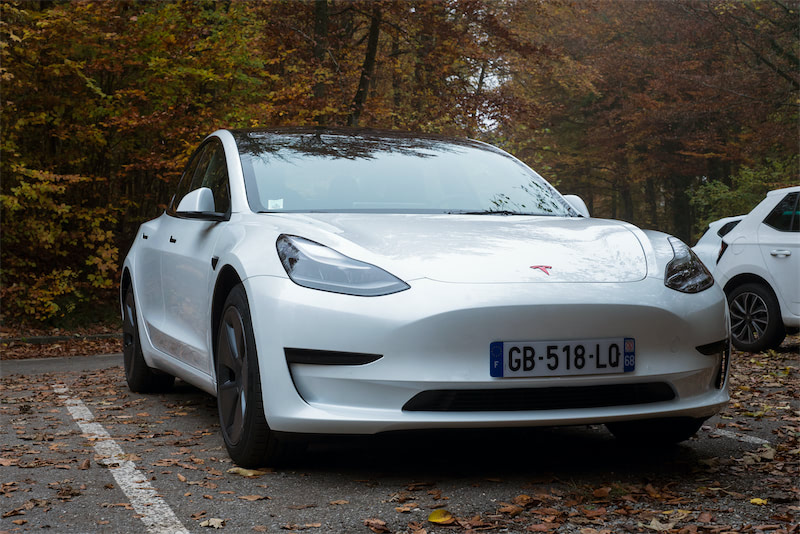
On February 27, Xiaomi launched the SU7 Ultra, priced at 529,900 yuan. At 00:24 on February 28, Xiaomi Auto's official Weibo account announced that over 10,000 units were pre-ordered within two hours of the launch.
The core competitiveness of the Xiaomi SU7 Ultra lies in the integration of its power system and intelligent technologies. This car model is equipped with a self-developed super three-motor system (dual V8s + V6s), delivering a combined power of 1,548 horsepower, with an acceleration from 0 to 100 km/h in just 1.98 seconds, a CLTC driving range of 620 km, and support for 5.2C ultra-fast charging technology (charging from 10% to 80% in just 11 minutes). These performance parameters set a benchmark in the NEV sector, particularly with the application of its track-level high-power battery pack and carbon-ceramic braking system, which not only meet high-performance demands but also reflect investments in core EV technologies.
In terms of intelligence, the SU7 Ultra is equipped with the Xiaomi HAD end-to-end all-scenario intelligent driving system, supporting features such as roaming parking and ultra-narrow space parking. It achieves seamless integration between the vehicle system and the smart home ecosystem through the Qualcomm Snapdragon 8295 chip and the HyperOS system. These technologies not only enhance user experience but also reflect the trend of NEVs evolving towards "scenario-based intelligence."
The pricing strategy of the SU7 Ultra demonstrates a clear differentiation. The standard version is priced at 529,900 yuan, a direct reduction of 285,000 yuan from the pre-sale price, while a limited edition (priced at 814,900 yuan) and an optional "Racing Kit" configuration are also available. This aggressive price cut strategy quickly activated the market, achieving over 10,000 pre-orders within two hours and directly meeting the annual sales target. From a pricing perspective, its positioning falls between the mid-to-high-end and ultra-high-end segments, catering to the consumption upgrade needs of Xiaomi's existing user base while also attempting to attract potential buyers from traditional luxury brands (such as BBA). Notably, the pricing logic of the SU7 Ultra is not solely aimed at achieving sales volume but rather at enhancing brand value through a high-configuration, low-price strategy, paving the way for subsequent models. With an annual sales target of 10,000 units and an average price of 600,000 yuan, the annual revenue is estimated at 6 billion yuan, accounting for 6.7% of Xiaomi Auto's total projected revenue (90 billion yuan), with strategic significance outweighing short-term profit contributions.
Xiaomi's R&D investment in its automotive business has established a long-term layout, with a 2025 R&D budget exceeding 30 billion yuan and an estimated total of 105 billion yuan over the next five years. The technological breakthroughs of the SU7 Ultra rely on self-developed motors, batteries, and high-voltage platforms, but high-performance configurations (such as carbon fiber components and track-level batteries) may exert short-term pressure on profit margins. Additionally, its supply chain's reliance on manually assembled carbon fiber components may affect the speed of capacity ramp-up, requiring a balance between mass production efficiency and quality control.
From an industry perspective, cost control and the speed of technological iteration are key competitive factors in the NEV sector. Leveraging its supply chain management experience in the consumer electronics field, Xiaomi attempts to replicate the "high cost-performance" model in the automotive sector but must address cost fluctuation risks for core components such as battery materials (e.g., ternary lithium) and chips (e.g., Orin X).
The launch of the SU7 Ultra marks a new phase in the NEV market, defined by "technology-driven luxury." Its technological approach (e.g., three-motor stacking, ecosystem integration) may drive the industry to shift from a "parameter race" to "scenario-based innovation," such as developing features for narrow parking spaces and track driving.
On the policy front, China's NEV penetration rate has exceeded 40%, and the continuous improvement of charging infrastructure provides growth opportunities for high-end EVs. If Xiaomi can validate its technological path and business model through the SU7 Ultra, it may accelerate the industry's transition from "electrification" to a dual-driven model of "intelligence + high performance." However, long-term competitiveness will still depend on the continuous iteration of core technologies (e.g., solid-state batteries, map-free intelligent driving) and the development of a user service network.
From technology, pricing, to market strategy, the launch of the Xiaomi SU7 Ultra reflects the trend of the NEV industry towards high performance and intelligent ecosystems. Its core value lies in redefining luxury car standards through technological innovation, but it must balance challenges between R&D investment and profitability pressures, brand value and user perception. For the industry, the exploration of the SU7 Ultra provides a new paradigm for the high-end development of "Made in China," but its long-term market performance will depend on the synergistic effects of capacity ramp-up, user reputation, and technological iteration.
SMM New Energy Industry Research Department
Cong Wang 021-51666838
Xiaodan Yu 021-20707870
Rui Ma 021-51595780
Disheng Feng 021-51666714
Yujun Liu 021-20707895
Yanlin Lü 021-20707875
Zhicheng Zhou 021-51666711
Haohan Zhang 021-51666752
Zihan Wang 021-51666914
Xiaoxuan Ren 021-20707866
Jie Wang 021-51595902
Yang Xu 021-51666760
Boling Chen 021-51666836
![마그네슘 가격 3거래일 연속 상승! 원가 측면은 여전히 '뜨겁게 타오르는' 반면 수요 측면은 바통을 이어받기 어려워 [SMM 논평]](https://imgqn.smm.cn/usercenter/EutUV20251217171724.jpeg)