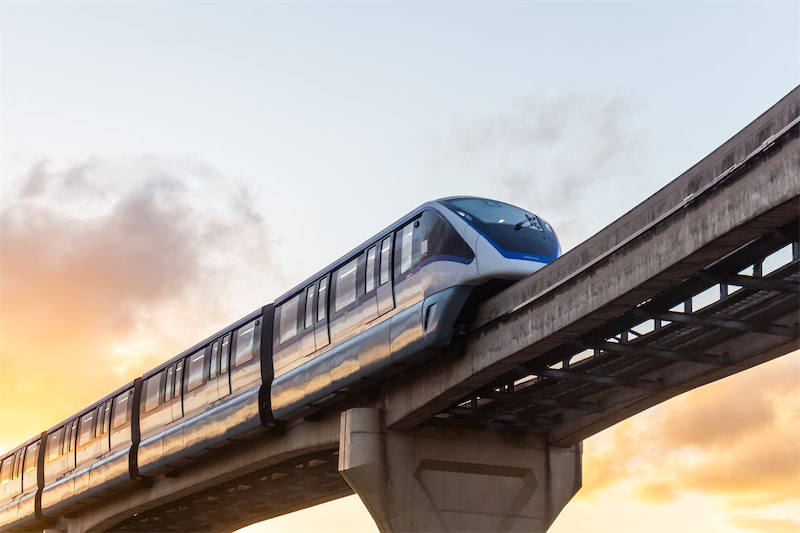
On February 8, 2025, Samsung SDI issued an urgent announcement stating that its supplied high-voltage battery packs posed significant safety risks, affecting 180,196 NEVs from four major automakers, including Ford, Audi, and Stellantis. This recall incident spanned three continents—North America, Europe, and Asia—bringing power battery safety issues back into the spotlight of the industry.
Among the affected automakers, Stellantis Group was hit the hardest, with 155,096 units of its Jeep Wrangler 4xe (2020-2024 models) and Grand Cherokee 4xe (2022-2024 models) plug-in hybrid car models confirmed to have severe safety risks. These models are the group’s key products in its electrification transition, with a market share as high as 27% in the North American market last year. Additionally, Ford's 2020-2024 Escape, 2021-2024 Lincoln Corsair, and Audi's 2022 A7 and 2022-2023 Q5 strategic car models were also included in the recall list. Notably, some Volkswagen Group car models were confirmed to have thermal runaway risks due to the use of the same battery modules, indicating that Samsung's battery defects might have broader industry implications.
According to the investigation report by the US National Highway Traffic Safety Administration (NHTSA), the battery cells provided by Samsung had separators with a thickness of only 10 microns, which exhibited micron-level damage. This defect could gradually expand during long-term charge and discharge cycles, eventually causing direct contact between the anode and cathode, leading to thermal runaway. Disassembly and analysis of the faulty batteries revealed that Samsung's manufacturing process had a technical defect in handling cathode pole piece burrs. These metal protrusions could puncture the separators during vehicle vibrations. Furthermore, the battery management system's delayed response in its warning mechanism exacerbated the safety risks.
The impact of this recall incident goes far beyond the surface numbers. With an estimated recall cost of $2,000 per vehicle, Stellantis Group alone is expected to face a direct loss of $310 million, not including the loss of brand value and market share. The more profound impact lies in the erosion of consumer trust in plug-in hybrid electric vehicle (PHEV) technology. According to third-party survey data, the concern index of potential car buyers regarding PHEV models increased by 42%.
From an industry perspective, this incident exposed three key issues: first, systemic flaws in process control among battery suppliers; second, insufficient quality supervision of core components by automakers; and third, outdated battery safety standards lagging behind technological advancements. The 20th-century quality systems currently adopted by the industry are no longer adequate to meet the demands of 21st-century battery technology development.
Crises often breed opportunities. Domestic companies have also made relatively innovative advancements in battery safety. For instance, BYD's blade battery uses "honeycomb arrangement + ceramic coating" technology to extend puncture ignition time to three times the industry average. CATL has developed intelligent self-healing separator materials. These innovations demonstrate that structural design and material breakthroughs can achieve qualitative improvements in battery safety.
On the policy front, changes are accelerating. According to SMM, the Ministry of Industry and Information Technology (MIIT) of China is expected to introduce the "Power Battery Life Cycle Safety Management Specification," which, for the first time, incorporates "visualized monitoring of the manufacturing process" and a "defect traceability big data platform" into mandatory standards. The European Union is even more aggressive, requiring all power batteries to be equipped with a three-level thermal barrier system starting in 2026. These policy initiatives are likely to have a more direct impact on promoting power battery and automotive safety.
SMM New Energy Industry Research Department
Cong Wang 021-51666838
Xiaodan Yu 021-20707870
Rui Ma 021-51595780
Disheng Feng 021-51666714
Yujun Liu 021-20707895
Yanlin Lü 021-20707875
Zhicheng Zhou 021-51666711
Haohan Zhang 021-51666752
Zihan Wang 021-51666914
Xiaoxuan Ren 021-20707866
Yushuo Liang 021-20707892
Jie Wang 021-51595902
Yang Xu 021-51666760
Boling Chen 021-51666836
![[SMM 에너지저장 배터리 셀 시장 주간 리뷰 9.3] 동박 공급 부족으로 9월 생산 일정 제약, 에너지저장 배터리 셀 가격 견조 유지](https://imgqn.smm.cn/usercenter/tKgKv20251217171725.png)
![마그네슘 가격 3거래일 연속 상승! 원가 측면은 여전히 '뜨겁게 타오르는' 반면 수요 측면은 바통을 이어받기 어려워 [SMM 논평]](https://imgqn.smm.cn/usercenter/EutUV20251217171724.jpeg)