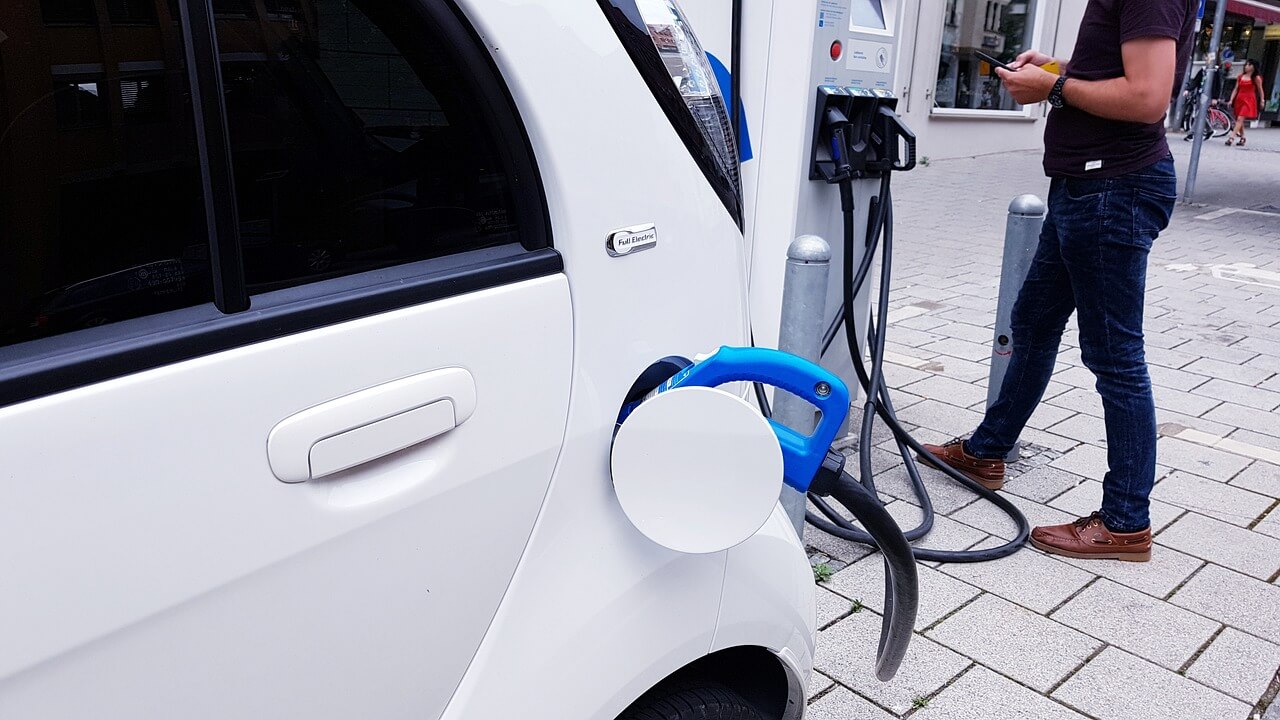
Power battery is one of the core components of new energy vehicles. The power battery pack accounts for about 35% of the cost of the vehicle, according to (GGII) of the Institute of Lithium electricity of Gao Gong Industry and Research Institute. Consumers' acceptance of new energy vehicles is also closely related to battery charging time and mileage, and the price of new energy vehicles is directly related to the performance of power batteries. Therefore, the performance of the power battery determines the vehicle performance and cost.
Direct material occupies power battery
The proportion of cost is the largest.
The upstream of the power battery industry chain is mainly the mine end, including the mining industry composed of nickel, cobalt, manganese, lithium, graphite and other batteries; the middle reaches enterprises are battery material enterprises, including positive electrode, negative electrode, electrolyte, diaphragm and other direct material production enterprises; the terminal enterprise is the power battery manufacturer.
In 2020, the penetration rate of commodity hedging of listed enterprises of lithium raw materials and power batteries is not high. According to the disclosure of the announcement of listed companies, only 9 companies have participated in hedging, and only two companies, Ningde Times and Zhongwei, have participated in commodity hedging, while the rest of the companies have participated in foreign exchange hedging.
According to relevant estimates, direct materials account for more than 80% of the cost of power batteries, including the cost of direct materials such as positive and negative electrodes and electrolytes. This calculation was confirmed in the annual reports of battery manufacturers such as Ningde era and Yiwei LiNeng. In 2021, direct materials accounted for 78% of operating costs in Ningde era. Among the direct materials, the positive active materials account for the largest proportion, the ternary positive active materials account for about 30% of the direct materials, and the lithium iron phosphate positive active materials account for 17% of the direct materials, because lithium iron phosphate does not contain cobalt. The cost proportion of the positive electrode is significantly smaller than that of the ternary cathode. There is little difference in the proportion of other components such as electrolyte and diaphragm.
In the long run, high nickel ternary battery (ternary material 811) is still the development direction of power battery. The energy density of lithium iron phosphate battery is close to the maximum value of its theory, so it is difficult to improve it. Although there are risks in the safety and stability of high-nickel ternary batteries, with the breakthrough of technology, there is still a lot of room for high-nickel ternary batteries to play in performance. The cost of high nickel ternary cathode is quite different from that of lithium iron phosphate cathode. As of October 12, the price of lithium iron phosphate is 74000 / ton, while the price of ternary material 523 has reached 214000 / ton. Statistics from China Power Battery Alliance show that lithium iron phosphate batteries have exceeded the loading capacity and are favored by manufacturers because they are better than ternary batteries in terms of cost and safety. In the long run, with the continuous improvement of consumer requirements for mileage and performance, high-nickel ternary battery can have more room for breakthrough in performance and mileage, so high-nickel ternary battery is the development direction of power battery.
The cost gap between the power battery and the fuel car is mainly in the battery. For consumers, mileage and charging time is one of the core considerations for buying new energy vehicles, and another core factor is price. At present, there is still a large gap in the proportion of power system cost between traditional fuel vehicles and electric vehicles. The power system cost of a fuel passenger vehicle accounts for about 15% of the whole vehicle, and the power battery currently accounts for 30% of the vehicle cost. 40%. With the reduction of the cost of power batteries driven by technological innovation, the price of oil and electricity is expected in the future.
The price of raw materials has gone up.
Squeeze out the profit space of battery enterprises
The rise of raw materials has a great impact on the profitability of battery enterprises, and manufacturers are facing greater cost pressure. Since the beginning of this year, lithium power raw materials have continued to soar. The price of lithium carbonate has risen from 53000 / ton to 180000 / ton, an increase of 240%. The price of lithium hydroxide has increased from 49500 / ton to 182000 / ton, an increase of 260%. The price of lithium hexafluorophosphate rose from 110000 / ton to 500000 / ton, an increase of 355%. However, as the cell price remains relatively stable, this has brought a lot of pressure on the profitability of battery companies. Judging from the financial data that have been made public by enterprises, the gross profit margin of battery enterprises has declined to varying degrees in the first half of this year. The gross profit margin of Ningde era has dropped by 3%, that of Yiwei LiNeng by 1%, and that of Guoxuan Hi-Tech by nearly 5%.
According to the preliminary calculation of the Institute of Lithium electricity of High Industrial Research Institute, affected by the rise in the price of raw materials, the theoretical cost of square iron lithium cell has increased from 0.33 yuan / Wh at the beginning of the year to 0.48 yuan / Wh / Wh;. The theoretical cost of square power cell has increased from 0.45 yuan / Wh at the beginning of the year to 0.61 yuan / Wh; at present. The theoretical cost of the corresponding cylindrical ternary 523 battery cell has increased from 0.4 yuan to 0.46 yuan to the current 0.58 yuan to 0.64 yuan / Wh; cell and battery system, the theoretical cost has increased by more than 30% (the above is estimated as theoretical cost, that is, all raw materials are quoted in the market, without taking into account the impact of account period, purchase volume, customer bargaining power, etc.). However, considering the bargaining power of front-line battery manufacturers, long-term prices and technology improvement and other factors, the rise in costs does not have such a great impact on front-line echelon enterprises, but the rise in raw material prices is bound to continue to affect the profitability of battery manufacturers. Second and third-line manufacturers have issued price adjustment letters one after another, and price adjustment can also see the rise in material costs and the severity of the squeeze on the living space of battery manufacturers.
Enterprises at the unfavorable end of raw material costs can seek hedging or directly acquire raw material enterprises for risk management. For example, Ningde Times issued a "bill on the 2021 hedging plan" in 2021, which announced that the trading varieties were options, futures, forwards and other derivatives contracts of nickel, aluminum, copper and other metals. In September 2021, Ningde era beat Ganfeng Lithium Industry to acquire Canadian lithium mining company Millennial, layout upstream lithium mining enterprise is also a key step to actively obtain raw material price control. However, not all enterprises have such abundant funds to carry out mine acquisitions, so it is more economical to use hedging for cost management. (author: Jiang Lu and Tang Huiyi)
![[Solid-State Battery Rumor Refuted: CATARC's Wang Fang Says No Compliance Determination Made for Solid-State Battery Enterprises]](https://imgqn.smm.cn/usercenter/JSjkr20251217171728.jpg)
![[리튬 배터리: 포산 플라스틱, 고급 분리막 생산능력에 70억 위안 이상 투자 계획]](https://imgqn.smm.cn/usercenter/aXRJI20251217171728.jpg)
![[전고체: ProLogium, 381Wh/kg 3.5세대 전고체 셀 양산 시작]](https://imgqn.smm.cn/usercenter/mpqgn20251217171727.jpg)