SMM May 21: at the "2021 China International Nickel-Cobalt-Lithium Summit Forum" sponsored by SMM Information & Technology Co., Ltd., Zhao Guangying, director of the Research Institute of Shenzhen Yongqing Water Co., Ltd., introduced the solution of zero discharge and resource utilization of lithium electric extraction wastewater.
Environmental Challenge of Zero discharge and Resource Utilization of Wet extraction Wastewater
The recycling of decommissioned power batteries is of great significance to solve the resources needed for the manufacture of lithium-ion batteries and to alleviate the dilemma of key mineral resources in China. In terms of their impact on the environment, decommissioned batteries contain heavy metal pollutants, such as Ni, Mn, Co, etc., as well as organic hazardous wastes, such as electrolyte organofluorides / phosphorus, DMC and other esters. In addition, although the decommissioned battery has been eliminated, its internal residual energy is still not low, the activity is high, and the risk of critical situations such as arbitrary disposal explosion is high.
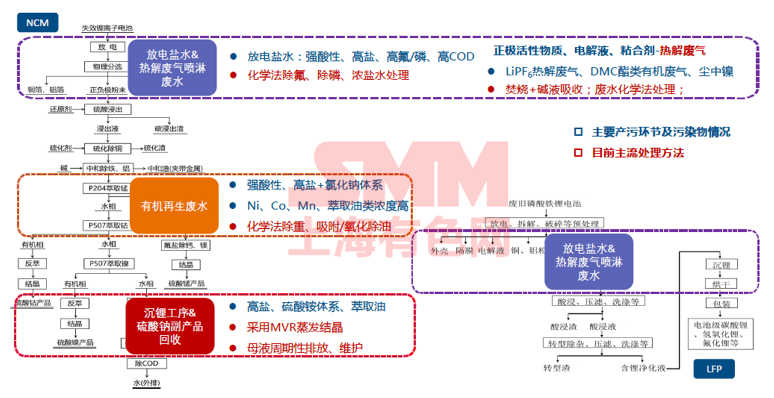
First of all, let's take a look at the detailed diagrams of pollution production and pollutant control:
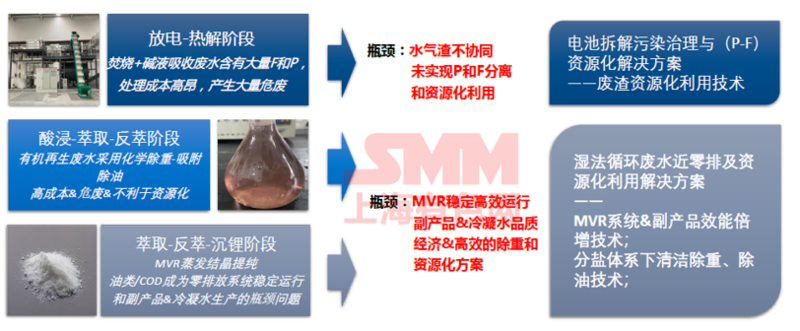
Based on the idea of "zero emission and resource utilization", the following ways can effectively solve the bottleneck problems of "disassembly recovery" and "wet extraction":
YCEC Ozone Technology and its solution for Wet extraction Wastewater
The wastewater of wet extraction comes from the process of acid leaching-extraction-stripping-lithium precipitation. The wastewater contains high salt (sodium sulfate / sodium chloride system), extraction oil and high COD. The processing path is as follows:
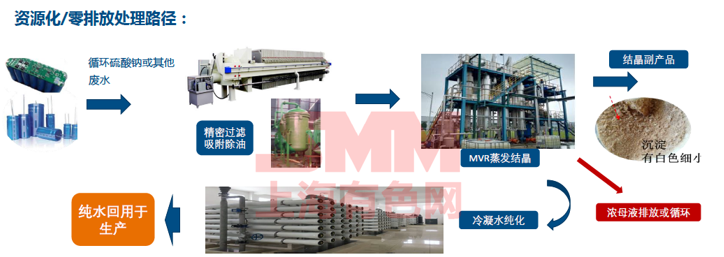
After a series of treatment, the final purified water conductivity ≤ 10 μ s / cm, concentrated water discharge concentration > 1%; for heavy metals, the recovery of nickel, cobalt, manganese and copper is required to return to the upstream process unit for treatment in the form of chloride.
In order to achieve this ultimate goal, YCEC ozonation technology came into being. The treatment of high salinity wastewater by catalytic ozonation can not only completely degrade TOC/COD to carbon dioxide and water, but also change the physical and chemical properties of the wastewater, reduce the viscosity of the wastewater, and achieve the following purposes:
1. It improves the Filter performance of wastewater.
two。 Increase the evaporation and concentration ratio of wastewater, reduce the discharge of miscellaneous salt and save the cost of hazardous waste disposal.
3. Reduce the probability of foaming, flooding and coking of concentrated liquid, and improve the water quality of condensate.
4. Reduce the impurity content of crystalline salt and improve the product quality of crystalline salt
5. Remove organic matter and improve product whiteness
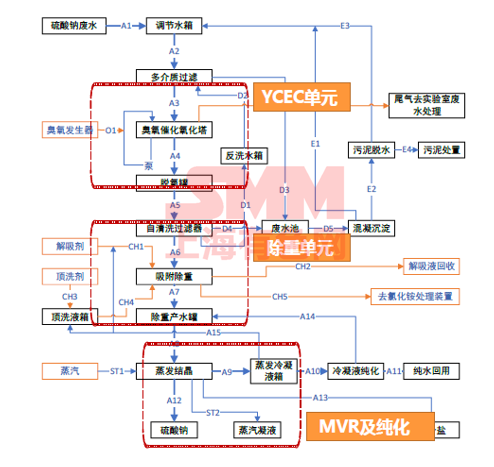
YCEC Diluted Ozone Catalytic Oxidation Technology
Technology package features:
1) Clean: clean and efficient, no secondary pollution, do not change the salt system of waste water;
2) excellent: excellent treatment effect on dissolved oil (extraction system oil) and COD in water body;
3) High efficiency: unique catalyst formula, the overall efficiency of the technology package is 80% higher than that of the traditional ozone reactor;
4) economy: the ozone consumption of degraded 1gCOD was reduced from 3~4gO3 to 0.5cm 1.0gO3;
5) proprietary: at present, it is the only clean technology for ternary / hydrometallurgical extraction wastewater treatment + to improve the quality of by-products and the stability of the system.
Practical application case
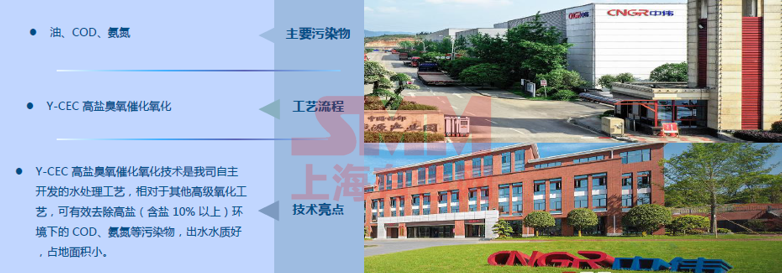
A new energy power battery group enterprise cycle expansion supporting wastewater project
![8월 배터리급 황화리튬 생산 분석: 4분기에 급증할까? [SMM 분석]](https://imgqn.smm.cn/usercenter/mpqgn20251217171727.jpg)