[live broadcast of Ni-Co-Li Summit] focus on: global economy, Ni-Co-Li prices, battery technology and battery recycling
SMM5 March 20: at the SMM2021 (sixth) China International Nickel, Cobalt and Lithium Summit Forum, Wang Pei, chairman of Hongzemidao (Shanghai) Investment Consulting Co., Ltd., brought a keynote speech on the macro pattern of 2021 and its impact on asset allocation.
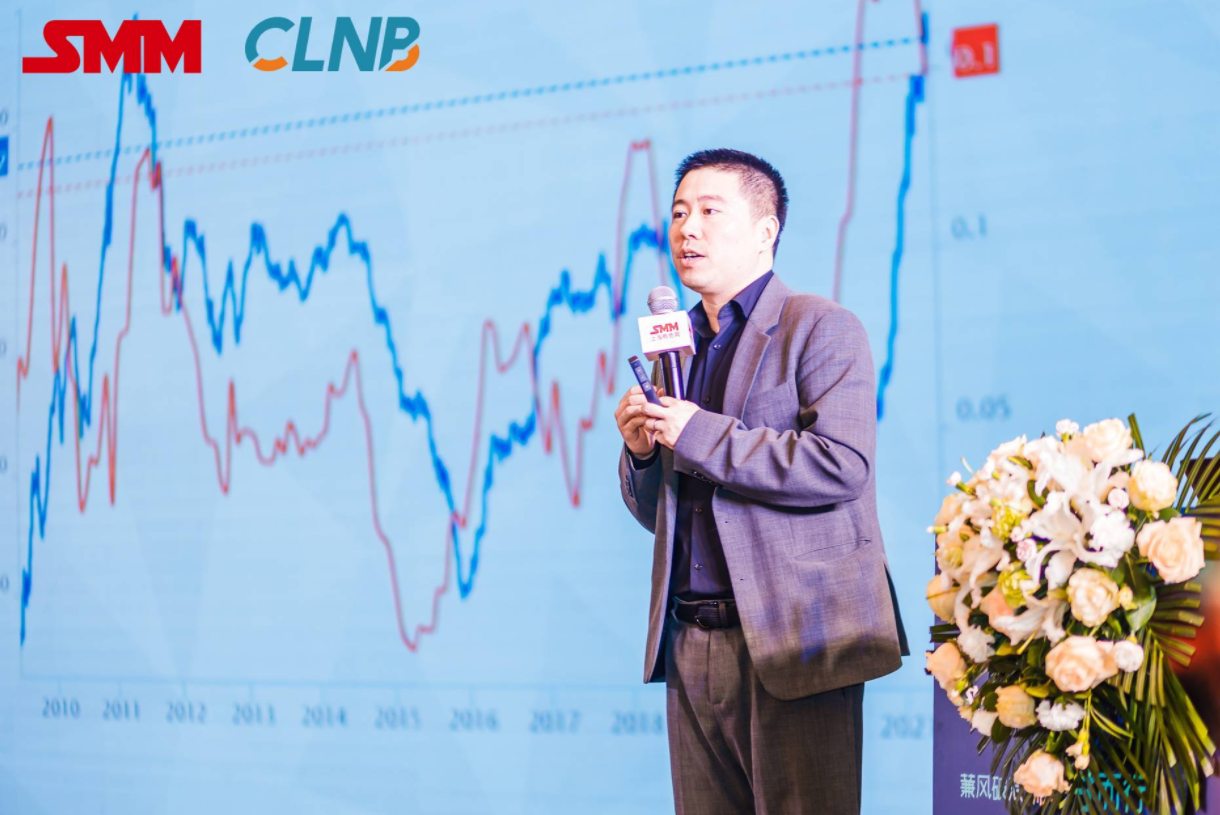
Since the outbreak, this round of global central banks have released a large amount of water, the global currency has loosened, even surpassing the previous volume of operations during the 2008 financial crisis, and the rapid increase in liquidity has led to a sharp rise in asset prices.
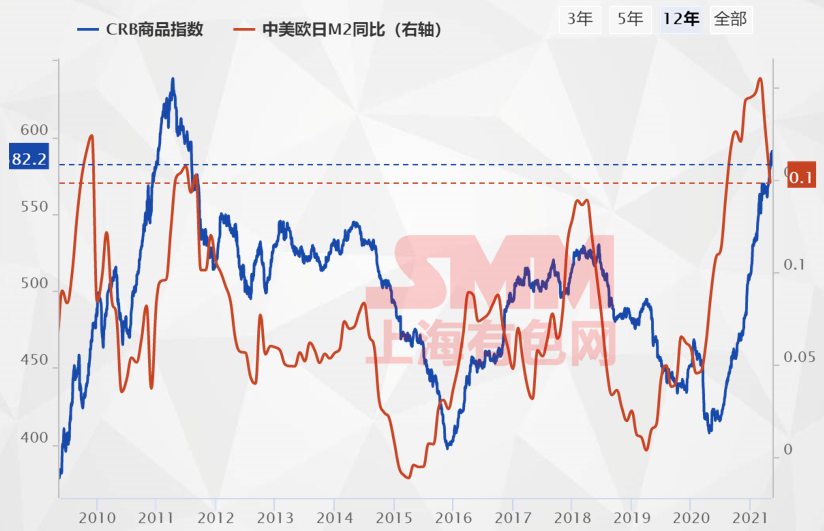
For the price of non-ferrous metals, from the historical data, the peak of monetary liquidity in each round will affect the peak of commodity prices. Have commodity prices peaked in this round? Is it a trend shock or a downward adjustment after complex consolidation? It depends on the commodity sector where this round of monetary easing flows.
Generally speaking, inflation brings about a rise in prices. If money flows to capacity construction, the consequences of the formation of a large amount of capacity will lead to an increase in supply and a fall in prices. If the money flows to the treasury, there is no significant increase in demand. The explicit inventory is invisible and the total inventory does not change, but the transfer from upstream to downstream will lead to a rise in commodity prices. From historical data, after the liquidity easing cycle reaches its peak, commodity prices will fall with the liquidity cycle.
With the continuous release of water in the United States, the end consumption has risen, and the rate of increase in the past six months is even faster than that in the previous six years. This cycle of the outbreak of end consumption is enough to be included in the textbook. The main reason for the outbreak is the increase in household income caused by the stimulus policy in the United States.
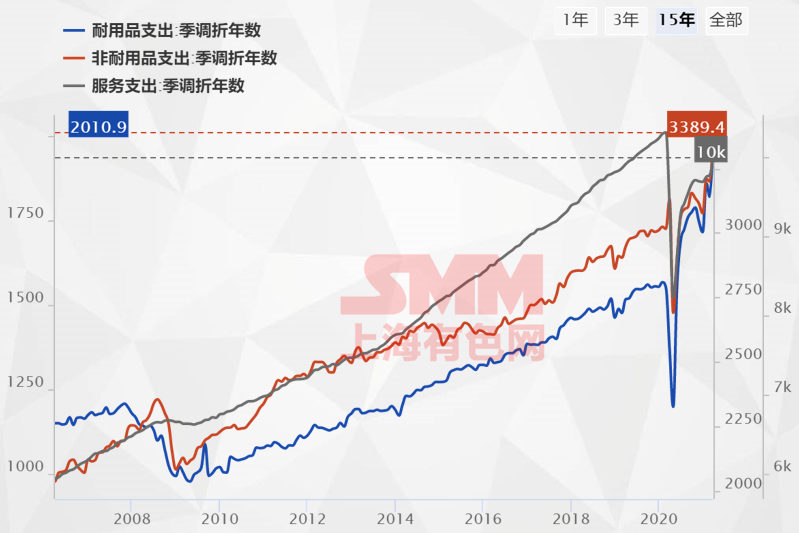
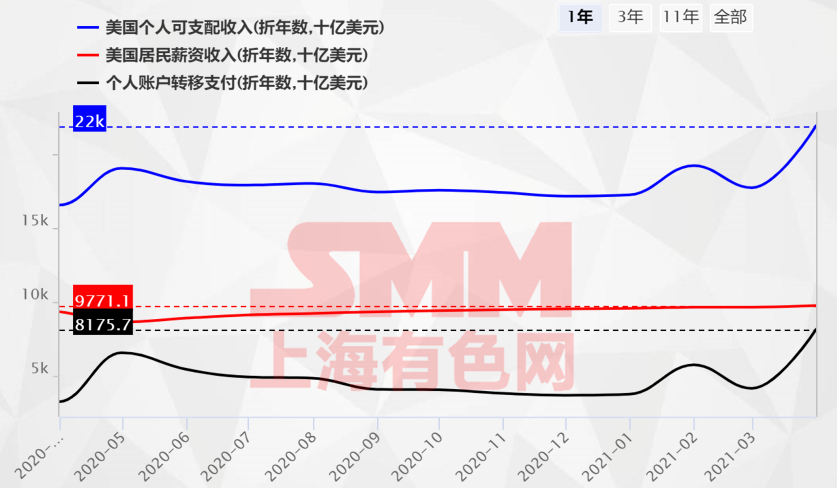
According to the data, wages in the United States basically returned to those before the epidemic at the end of 2020, but the continued release of water by the US government in 2021 led to an increase in personal disposable income in the United States. This retaliatory growth will overdraw future demand. In addition, the Biden administration's stimulus may be the last big stimulus in recent years. As a result, global demand, especially in the United States, may peak in the second quarter of this year.
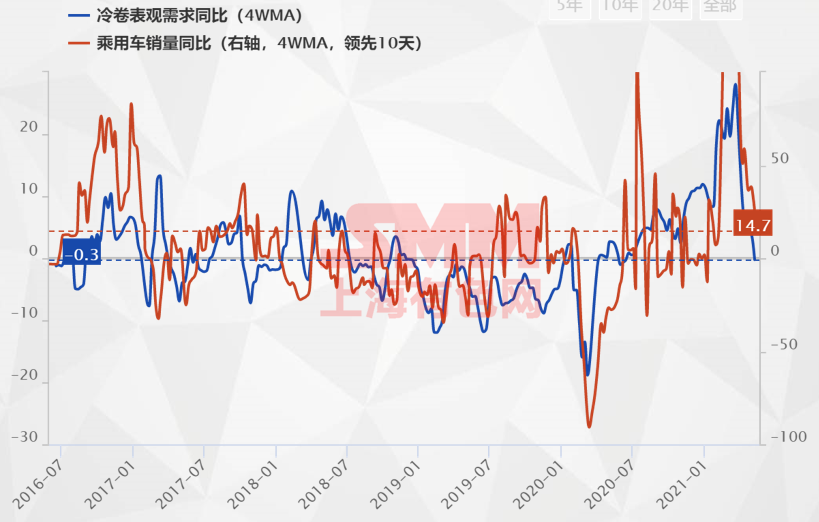
Back to China, from the black industry hot and cold rolling price point of view, hot-rolled plate as a basic raw material, the export volume is relatively large. Cold rolling is mainly used for domestic demand. The two prices can represent the relationship between China's domestic demand. Judging from the data, social finance has fallen since the beginning of this year, and the price of hot and cold rolling Synchronize has weakened, indicating that domestic demand has begun to decline. Judging from the sales volume of passenger cars and the apparent demand for cold rolling, it has begun to decline recently, and the domestic market has gradually begun to accumulate. Overall, commodity markets have been weak recently after last year's bull market.
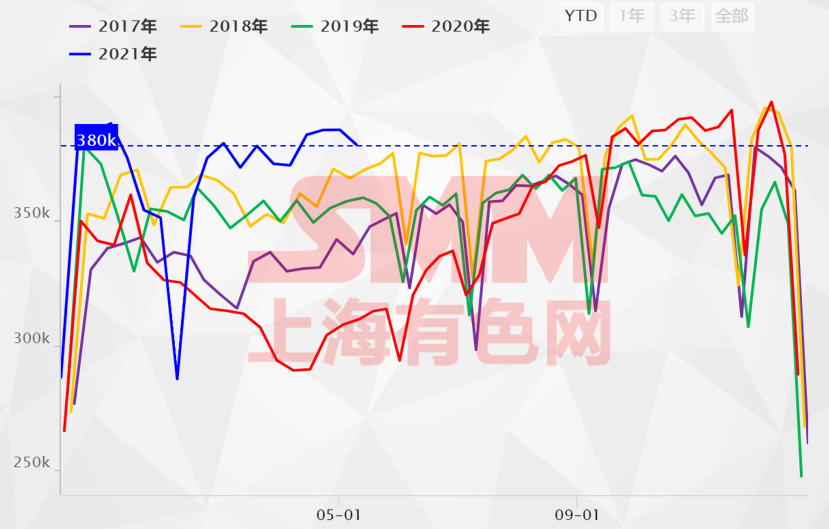
From the weekly data of US rail transport consumer goods, it can be found that US terminal consumption rose rapidly in January this year, as the $900 billion stimulus at the end of last year was sent to the public in January and began to spend. After entering May, consumption is still high but weakens marginally. There has even been an anti-seasonal decline in the last three weeks.
Taken together, this round of monetary easing, led by the United States, has boosted consumption in the United States and around the world, leading to a surge in commodity prices. However, recent data show that this round of international demand may peak, coupled with the influence of relatively tightened domestic fiscal policy, commodity prices are close to the top in the second quarter from a macro point of view, and prices are cautious in the later period.
![[SMM 분석] 코발트 시장 성수기 시작은 더디게: 수요 회복 탄력 못 얻어](https://imgqn.smm.cn/usercenter/olwlF20251217171731.jpg)
![재활용 응용 시장 안정, 탄산리튬 상승 후 하락, LFP 수요가 삼원계 능가 [SMM 주간 리뷰]](https://imgqn.smm.cn/usercenter/GVVKq20251217171728.jpg)
![[SMM 주간 리뷰] 습식제련 재활용 시장 이번 주: 순수 코발트 및 삼원계 블랙매스 시장 부진, LFP 가격 대체로 횡보, 2026.8.31-2026.9.3](https://imgqn.smm.cn/usercenter/fblvS20251217171729.png)