California start-up research and development of cobalt-free batteries have higher capacity, shorter charging time and lower cost

게시됨: May 17, 2021 16:07
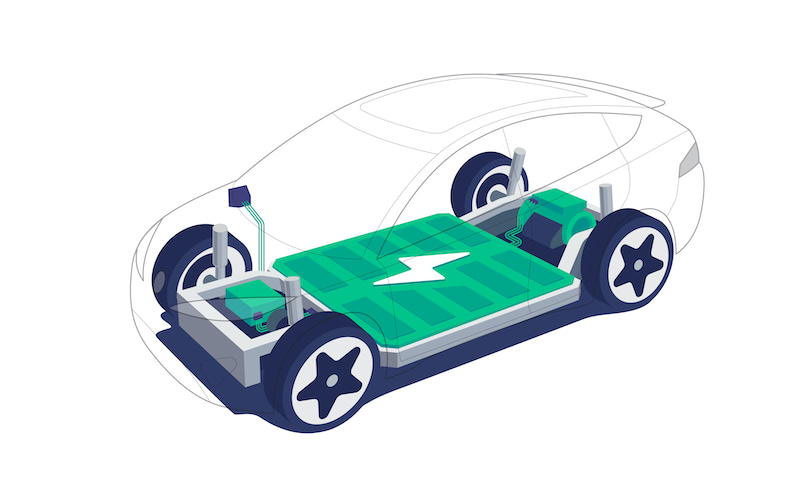
[California start-ups develop cobalt-free batteries with higher capacity, shorter charging time, and lower cost] scientists at Sienza Energy, a California Institute of Technology spin-off, are developing two trendsetting batteries for electric vehicles and consumer electronics. Battery research plans include improving the overall capacity of the battery, shortening the charging time, and the cost is much lower than the existing batteries on the market.

Scientists at Sienza Energy, a California Institute of Technology spin-off, are developing two trendsetting batteries for electric vehicles and consumer electronics. Battery research plans include improving the overall capacity of the battery, shortening the charging time and costing much less than the existing batteries on the market.

Researchers say the most important thing is that they consider the need to use green energy to make batteries. Although the original battery generally contains 33% cobalt (a toxic chemical element), many existing batteries still contain 20% to 15% cobalt. However, Sienza Energy's first-generation batteries will contain less than 5% cobalt, and second-generation batteries will be completely cobalt-free. If all goes according to plan, the team hopes that the first-generation battery will be on the market within a year and a half, and the second-generation battery will be available six months after the first-generation battery goes on sale.

Dr. Mory Gharib is the founder of the technology, Dr., Azin Fahimi and Dr. Isabelle Darolles are co-inventors, and, Matthew Tasooji is the CEO of Sienza. The company's scientists work in the Sienza Lab (with few people), the California Institute of Technology, the University of California, Los Angeles, and the University of California, Riverside. So far, the project has cost about $3.5 million.

The research team is proud to have developed a dry manufacturing process, which is safer and more environmentally friendly. "We use a completely dry manufacturing process, so we don't use any harmful substances," said Fahimi, the team's chief scientific officer. In this industry, many people use a lot of toxic solvents. "

Recycling is also one of the team's goals, and some battery materials may be reused, the team said. "We can recycle 10% to 15% of battery materials, so it's a win-win situation." The team's goal is to build batteries that charge faster, have less battery life and have a longer life. Dr Tasooji said: "if an ordinary battery can be used for five years, our battery can be used for seven or eight years under the same conditions, which in itself is good for the environment."

Dr Tasooji also says 30 per cent of the cost of an electric car is in the battery. As a result, they hope to eventually make electric cars cheaper and increase the popularity of electric vehicles.

Dr. Brian Tarroja, a research professor in the Department of Civil and Environmental Engineering at the University of California, Irvine, and director of the Energy Systems Integration Group of the Advanced Power and Energy Project, pointed out that Sienza is not the only company looking to build longer-running, lower-cost, greener batteries. The battery in Tesla's upgraded Model 3 also uses lithium iron phosphate (LFP). "in terms of environmental impact alone, removing cobalt from the battery is also beneficial. In addition, there are benefits in terms of environmental justice, as cobalt mining also involves many labour-related issues. "
데이터 출처 설명: 공개 정보를 제외한 모든 데이터는 SMM이 공개 정보, 시장 커뮤니케이션 및 SMM 내부 데이터베이스 모델을 기반으로 가공한 것입니다. 본 자료는 참고용이며 의사결정 권고를 구성하지 않습니다.

문의 사항이 있거나 자세한 정보를 원하시면 아래로 연락해 주시기 바랍니다: lemonzhao@smm.cn
리서치 보고서 열람 방법에 대한 자세한 내용은 아래로 문의하시기 바랍니다:service.en@smm.cn
관련 뉴스
US DOE to Provide $500 Million for Lithium, Cobalt and Battery Materials Projects, Nth Cycle Gets $100 Million
10분 전
US DOE to Provide $500 Million for Lithium, Cobalt and Battery Materials Projects, Nth Cycle Gets $100 Million
더 보기
US DOE to Provide $500 Million for Lithium, Cobalt and Battery Materials Projects, Nth Cycle Gets $100 Million
【US DOE to Provide $500 Million for Lithium, Cobalt and Battery Materials Projects, Nth Cycle to Receive $100 Million for Black Mass Processing】 The U.S. Department of Energy will provide a total of $500 million in grants to seven companies to support domestic lithium, cobalt and battery materials projects. Battery recycler Nth Cycle will receive $100 million to develop a facility for black mass processing, while Princeton NuEnergy will receive $50 million to reprocess cathode battery materials. The funding also covers lithium extraction, cobalt refining, electrolyte chemicals and silicon-based anode materials, as the U.S. seeks to strengthen its critical minerals and battery supply chains and build a domestic battery and black mass recycling ecosystem.
10분 전
코발트 제품 가격 정체; 정제 코발트 한 주 만에 2만 위안 이상 하락; 황산코발트 가격 5일 연속 하락! [주간 리뷰]
1시간 전
코발트 제품 가격 정체; 정제 코발트 한 주 만에 2만 위안 이상 하락; 황산코발트 가격 5일 연속 하락! [주간 리뷰]
더 보기
코발트 제품 가격 정체; 정제 코발트 한 주 만에 2만 위안 이상 하락; 황산코발트 가격 5일 연속 하락! [주간 리뷰]
1시간 전
2026년 7월 중국의 미가공 코발트 수입은 전월 대비 6% 감소했고, 수출은 전월 대비 38% 급감했다
1시간 전
2026년 7월 중국의 미가공 코발트 수입은 전월 대비 6% 감소했고, 수출은 전월 대비 38% 급감했다
더 보기
2026년 7월 중국의 미가공 코발트 수입은 전월 대비 6% 감소했고, 수출은 전월 대비 38% 급감했다
2026년 7월 중국의 코발트 금속(미가공) 수입량은 약 1,055톤으로, 전월 대비 6% 감소했으나 전년 동월 대비 83% 증가했다. 국가별로 보면 7월 코발트 금속 수입 상위 3개국은 인도네시아, 러시아, 캐나다였으며 수입량은 각각 403톤, 271톤, 175톤이었다. 무역 방식별로는 세관 특수감독구역 물량이 약 795톤으로 7월 수입의 약 75%를 차지했다. 이 물량은 주로 저장성과 상하이의 보세창고로 유입됐다. 일반무역을 통해 국내 소비 경로로 유입된 물량은 약 259톤에 그쳤다. 보세창고는 뚜렷한 ‘저수지’ 특성을 보여 수입 통계와 실제 국내 수요 간에 일정한 괴리가 발생한다. 수입 가격 측면에서 2026년 7월 중국의 코발트 금속(미가공) 평균 수입가격은 톤당 59,296달러로 전월 대비 13.53% 상승했다. 2026년 1~7월 누적 수입량은 8,763톤으로 전년 동기 대비 113% 급증했다. 수출 측면에서 중국은 2026년 7월 코발트 금속(미가공)을 약 313톤 수출했으며, 전월 대비 38%, 전년 동월 대비 68% 감소했다. 목적지별로 상위 3대 수출 시장은 네덜란드, 미국, 일본이었고 출하량은 각각 83톤, 71톤, 49톤이었다. 월간 수출의 약 95%는 세관 특수감독구역 물량으로, 보세구역 간 재수출 흐름이 주를 이뤘다. 2026년 7월 코발트 금속(미가공) 평균 수출가격은 톤당 56,505달러로 전월 대비 5.16% 하락했다. 2026년 1~7월 누적 수출량은 2,977톤으로 전년 동기 대비 76% 감소했다.
1시간 전