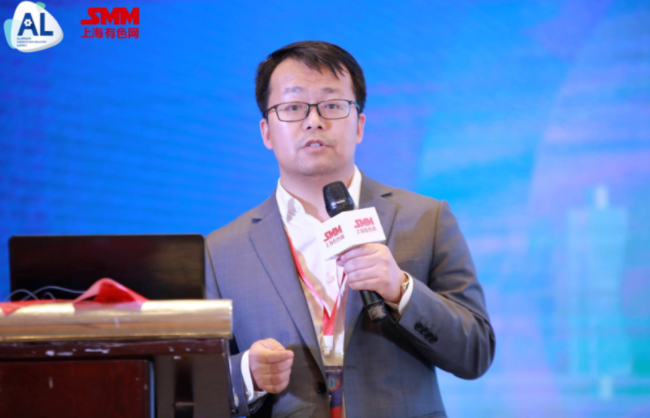
SHANGHAI, May 14 (SMM)—At the 2021 (16th) China International Aluminium Processing Summit co-hosted by the Shanghai Futures Exchange and Shanghai Metals Market (SMM), Hu Jian, senior vice president delivered a speech on “Carbon Neutrality—Inspiration from the Aluminium Industry”. He introduced the global background, the practice of China's aluminium industry, and the path to carbon neutrality.
Global carbon neutrality background
It is imperative to reduce carbon globally, and countries around the world have successively proposed carbon neutrality goals.
The global aluminium industry emits more than 1.1 billion mt of CO2, which mainly comes from alumina refining and aluminium production. Aluminium plants in main producing areas including Asia (China), Oceania and Africa mainly use thermal power for production, while those in Europe and South America use hydropower. Iceland uses geothermal power, France uses nuclear power, and the Middle East uses natural gas for power generation.
The energy structure determines carbon emissions, and the overall carbon emissions per unit of aluminium in Asia are relatively high. Four major carbon trading markets have been established overseas, and multinational aluminium companies continue to promote their own low-carbon products.
The practice of China's aluminium industry
Carbon emission reduction has risen to the national strategic level since 2020.
In September 2020, China announced at the 75th United Nations General Assembly that it will strive for a carbon peak by 2030 and carbon neutrality by 2060. In December 2020, the Central Economic Work Conference also clearly identified carbon peak and carbon neutrality as one of the eight key tasks in 2021.
Practice of reducing carbon emissions in the aluminium industry
- Use of clean energy
Aluminium capacity has shifted from places such as Shandong and Henan, where thermal power is dominated, to places such as Yunnan, which is rich in hydropower, and some plants are trying to use grid electricity instead of self-supplied electricity.
- Recycling of secondary aluminium
The domestic supply of secondary aluminium is gradually increasing, and imported aluminium scrap is used as a supplement to further optimize the aluminium supply structure and reduce carbon emissions.
- Consumers help to reduce carbon emissions
Many large-scale multinational companies prefer low-carbon aluminium, forcing aluminium and export-oriented processing plants to produce and use low-carbon aluminium.
New aluminium capacities are shifted to the southwest region with abundant hydropower resources
There will be nearly 5 million mt of aluminium capacity in China coming online in the next three years, according to SMM statistics.
About 80% of them are concentrated in southwestern regions such as Yunnan and Guangxi, making full use of local hydropower, wind power and other rich green energy resources. Capacities in Inner Mongolia will also likely to shift to the southwest in the future.
The energy consumption of secondary aluminium is only 5% of primary aluminium, and greenhouse gas emissions can be reduced by more than 90%
Primary aluminium production includes 5 stages. That is bauxite mining, alumina production, anode preparation, aluminium production and aluminium ingot casting. The proportion of energy consumption in each stage is 1%, 21%, 2%, 74% and 2%.
The production of secondary aluminium includes 3 stages. Namely, pretreatment, smelting and transportation. The proportion of energy consumption in each stage is 56%, 24% and 20%.
According to calculations, the energy consumption of 1 mt of secondary aluminum is only 3-5% of the energy consumption of aluminium. Meanwhile, it can reduce the treatment of solid waste, waste liquid and waste slag, which has obvious advantages in energy saving and emission reduction.
In the future, with the improvement of the purity and mechanical properties of secodnary aluminium alloy ingots and the development of the casting process, secondary aluminium will gradually be applied into construction, communications, electronics and packaging. In addition, its application in the automotive industry will continue to expand.
Although China's secondary aluminum industry has developed rapidly in recent years, it still lagged behind developed countries
Secondary aluminium output in developed countries accounts for a relatively high proportion of total aluminium output. Secondary aluminium output in the United States, Germany and Japan has exceeded that of primary aluminium, and the aluminium consumption in Japan and the US has been dominated by secondary aluminium products.
China's secondary aluminium output reached nearly 5.3 million mt in 2020, accounting for about 15% of total aluminium output. Limited by factors such as the quality of aluminium scrap and production technology, the proportion of wrought aluminium alloy in domestic secondary aluminium products is relatively low, while in developed countries, wrought aluminum alloy accounts for more than a half.
Ways to realise carbon neutrality
For the aluminium industry
Control total production capacity, optimize layout of enterprises, and improve the energy structure
Advocate primary recycling and strengthen construction of the recycling system
Innovate carbon reduction technology and promote carbon emissions market transactions
For aluminium plants
Increase the proportion of green energy, upgrade technology to reduce carbon emissions
Actively participate in carbon emissions trading
For aluminium processing plants
Invest or deepen cooperation with low-carbon aluminium companies to establish their own low-carbon brands