Tesla Model3's announcement of the price increase quickly went viral on domestic social media this weekend. The price of the domestic Model 3 standard battery life upgrade will rise by 1000 yuan, reflecting the actual situation of cost fluctuations, Tesla announced on May 8. In the Chinese market, this is the first time that Tesla has raised the price of the Model 3 model this year, and it is also the second time that the price of the domestic Tesla model has increased this year.
Tesla's announcement of the price increase in China comes a day after Tesla in the United States also announced a price increase, and the prices of the standard life upgrade version of Model 3, the long-range flight version and the long-term flight version of Model Y will all be increased by US $500 (about RMB 3215). According to statistics, this is the fourth time in the past two months that Tesla has raised the price of the standard upgrade version and long-lasting version of Model 3 in the United States.
Due to the relatively high brand awareness, and recently at the forefront of public opinion, Tesla's price increase has set off a round of hot discussion in China. However, for many consumers who want to buy a car recently, whether Tesla is on your car purchase list or not, this round of price increases may be a clear signal that more and more car companies are likely to join the price increase camp.
Many of the carmakers' basic raw materials, such as copper, steel and aluminium, have hit or near record highs this year as lagging supply has fallen far short of keeping up with stimulating demand. The Bloomberg spot commodities index, (Bloomberg Commodity Spot Index), rose this week to its highest level since 2011, with the metals index up 21 per cent so far this year. If the current rally turns into a supercycle, rising car prices could herald across-the-board inflation.

The price of industrial metal rises and the cost of getting off and getting off the enterprise keeps rising.
JPMorgan Chase & Co. Analysts estimate that the price of automotive raw materials has risen 83 per cent in the year to march. These components usually account for about 10% of the total cost of car manufacturing, which means that the price of a $40,000 car must rise by 8.3% to offset the rising cost of raw materials, the analyst wrote.
"We do feel the headwinds from the commodity markets," Ford CEO Jim Farley said last week. We have seen inflation in all areas of the industry, which we have not seen in years. "
The main areas that have hit the industry's rising cost of goods are the steel needed for chassis, engines and wheels. The recent rise in copper prices has broken records as Chile, the world's largest copper producer, has taken steps to curb production.
Electric car makers have been particularly hard hit. According to consulting firm Wood Mackenzie Ltd. According to the data, because of the large number of lines inside electric vehicles, electric vehicles consume nearly 3.5 times more copper than fuel vehicles.
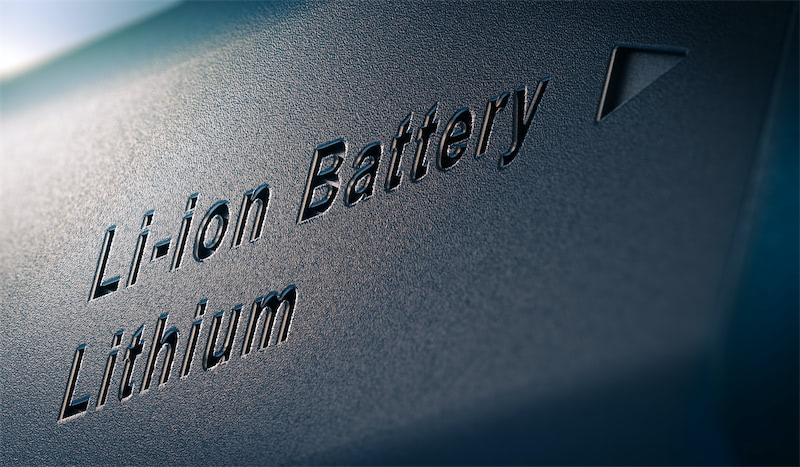
In addition to copper, the soaring price of rare metals such as lithium, cobalt and nickel has also sent the cost of electric car batteries soaring. The prices of raw materials for all three metals have risen by at least 47 per cent in the past 12 months.
This month, companies such as Ford and BMW reported to battery startup Solid Power Inc. With an investment of $130 million, the company is working on a battery that does not need to use these metals, which will reduce the cost of the battery pack tenfold. "they want to spread the risk," said Caspar Rawles, head of price and data assessment at Benchmark Mineral Intelligence. Lithium and cobalt do not have hedging products. "
BMW expects the adverse impact of rising commodity prices this year to be as high as 1 billion euros ($1.2 billion), BMW Chief Financial Officer Peter (Nicolas Peter) said at an earnings conference on Friday. The luxury carmaker highlighted rising prices of rhodium, steel and palladium as major concerns in the coming months.
Has the seller's market been formed? Automakers try to pass on costs
It is often difficult for carmakers to pass on higher costs, but this year the situation is very different.
One sign in favor of car companies is that demand for cars is booming as major economies reopen and many consumers continue to avoid public transport.
Daimler, BMW and Toyota all sold record cars at the start of the year. In the United States, the supply of cars has become so tight that rental companies have to buy used cars instead of new ones at auctions. Driving mileage on American highways has begun to exceed the 2019 level.
"it is hard to imagine a better environment in which the effects of supply shocks and price increases can be passed on to consumers," Morgan Stanley analysts wrote in a report. They (consumers) are actually queuing up to buy new cars. The car market is now a seller's market. "
In addition to Tesla, Ford and other traditional car companies have already started the mode of price increase. Affected by the shortage of chips, Ford lost about 200000 vehicles in the first quarter of this year, accounting for about 17% of its planned production. However, Ford offset some of the drop in production by raising the average trading price per car to nearly $48000, according to Edmunds, a research firm.
Stellantis NV, a manufacturer of Gyibug, said it needed to recover some of the rising costs, and market conditions were supported so far. Stellantis NV is formed by the merger of Fiat Chrysler (Fiat Chrysler) and PSA Group.
A relevant person in the auto industry said, "most of this year's popular models are difficult to avoid delays." The cost increase brought about by the increase in the price of spare parts is likely to be reflected in the price of new cars. "