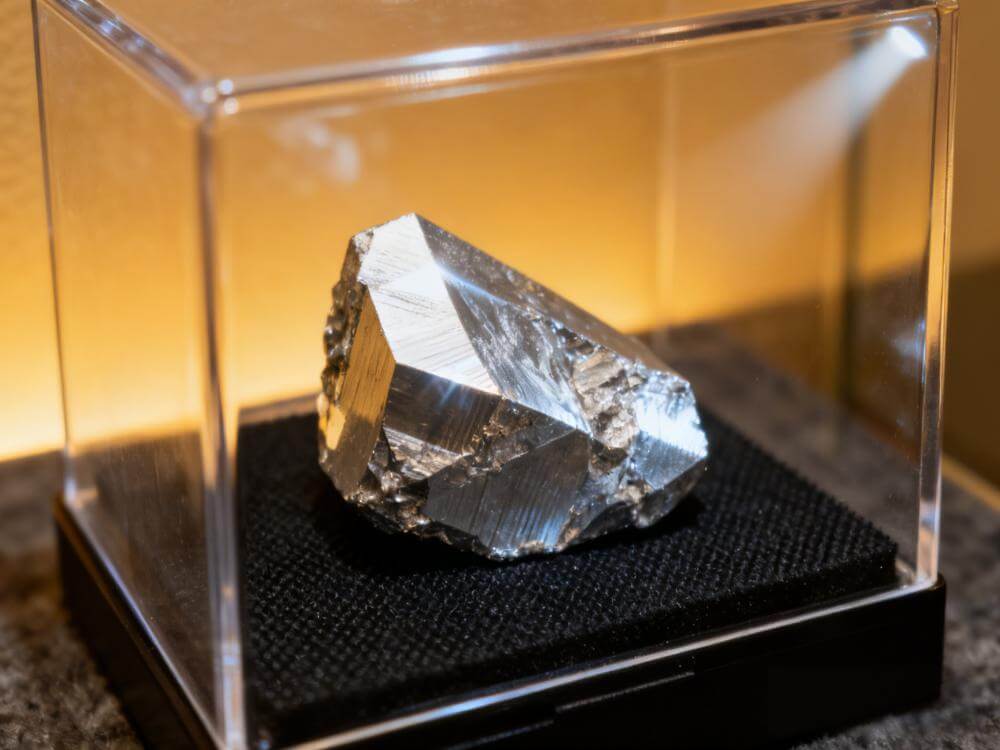
At the 2021 China magnesium Industry chain Summit Forum held by SMM, Xia Shaohua, deputy director of the material Technology Research Center of CRRC Qishuyan Locomotive and vehicle Technology Research Institute Co., Ltd., explained the application status and prospect of magnesium alloy in rail transit equipment.
Introduction
Lightweight is the eternal goal of rail transit equipment. At a speed of 200 kilometers per hour, the train consumes about 12 kilowatts per ton of traction and 16-17 kilowatts per ton of traction at 300 kilometers per hour. Vehicle lightweight technology can effectively restrain the increase of foundation vibration, reduce noise, improve transport capacity and reduce energy consumption.
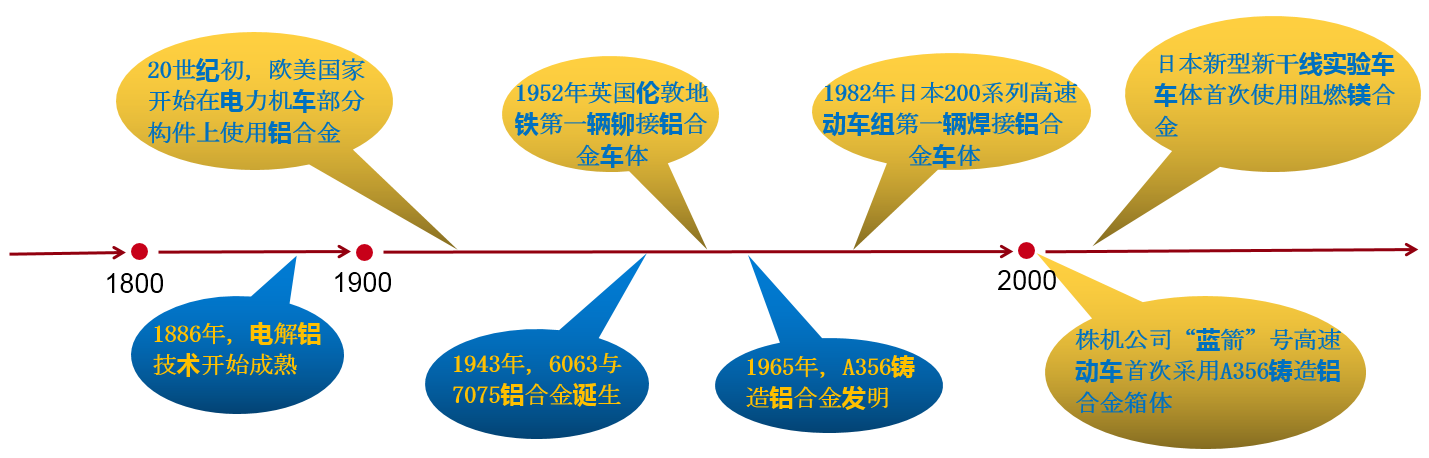
Magnesium alloy is known as "21 ji green engineering material":
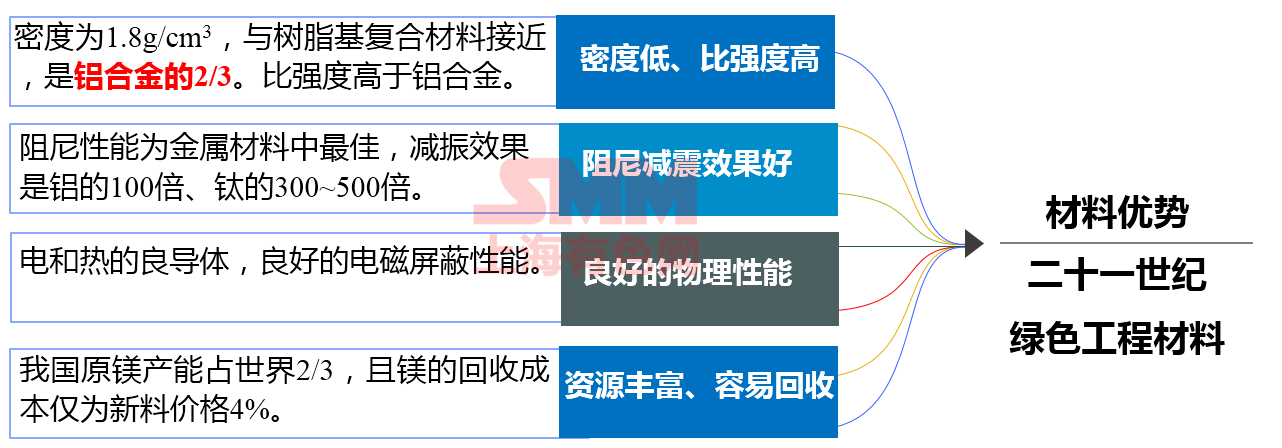
Integral forming of complex structure: where the liquid metal can flow, it can be formed at one time, and the mechanical properties are isotropic. It is the best method for near-net forming of large and complex metal structures.
Short cycle / moderate cost: short casting production cycle, high efficiency, strong adaptability, can take into account single piece-batch production, high material utilization, moderate cost and less machining margin.
The best way to lighten structure: high performance magnesium alloy + casting integral forming (taking into account material weight loss + structure weight loss)
Application of magnesium Alloy in Rail Transit equipment
Car body: aluminum alloy car body was used for the first time in Munich metro vehicles in the 1960s. Compared with the stainless steel car body, it has better corrosion resistance, which can greatly reduce the self-weight of the car body, increase the vehicle acceleration, reduce the operation energy consumption, reduce the wear and impact on the line, and reduce the noise.
Key components: for lightweight vehicles, only considering the car body is obviously not enough, off-spring weight loss is of greater significance. The quality of the bogie mainly depends on the traction motor, wheelset, frame and braking system. High-strength aluminum alloy is used in high-speed trains, such as gear box, pillow beam, axle box front cover, axle box, brake disc and so on.
Magnesium alloy has appeared in many occasions of foreign high-speed trains. The seats are made of magnesium alloy on the ICE high-speed train of Siemens in Germany and the double-decker high-speed train of TGVDuplex in France. Among them, the French TGVDuplex train made a total of 45000 seats, and made a small table, handrails, pedals and seat side and other parts. Compared with the traditional aluminum alloy seats, the mass of each double seat is reduced by 6kg, accounting for 5% of the total mass.
Seats and brackets, backrest and handrails, floor mats and bases of Japanese Shinkansen N700 series high-speed trains have been made of magnesium alloy. Because the cost of magnesium alloy is similar to that of aluminum alloy, the energy consumption of train operation is reduced, which reduces the train operation cost as a whole.
KTX express train seats in South Korea used fiberglass and aluminum alloy as materials in the past. After using magnesium alloy sheet parts, the quality of the seat is reduced by 5kg compared with the previous seat, and the material cost is reduced by 8% to 10%.
The body structure of the new Japanese Shinkansen train, which began to run in May 2019, is made of large flame retardant magnesium alloy extruded profiles for the first time.
Take the passenger dedicated train of the Beijing-Shanghai high-speed railway as an example, if its body is made of magnesium alloy, the overall weight loss will be more than 13%, with an average energy saving of 8%. Based on the emus currently operating more than 1000 trips a day on the Beijing-Shanghai high-speed railway, the full application of magnesium alloy car bodies can save 1.26 million kilowatt-hours of electricity a day and reduce carbon dioxide emissions by 1146 tons. Thus it can be seen that the use of magnesium alloy to reduce the weight of the train is of great significance to energy saving and emission reduction.
The application of magnesium alloy in rail transit equipment in China is also advancing rapidly. At present, magnesium alloy is mainly used in air conditioning vent grille, window protective railings, seats and floors, berth frames and brackets, luggage rack frames, internal dashboard frames and other parts. The commonly used magnesium alloy models in rail transit equipment include AZ31B, AZ61A, AZ91D, ZK60, AM60B and so on. The demand for the load-bearing capacity of magnesium alloy parts is increasing, and it has begun to try to manufacture the main load-bearing components.
In 2020, CRRC Qishuyan Institute cooperated with the eighth Aerospace Institute to develop a rare earth magnesium alloy gear box to complete the type experiment, and the weight of a single box is 30 kg lower than that of aluminum alloy.
Problems that need to be further solved
Will more magnesium alloy parts be used in rail vehicles in the future?
Low elastic modulus: magnesium alloy elastic modulus 45-50GPA, aluminum alloy 70GPA, can improve the stiffness of the member as a whole by the way of structural design.
Flammable: magnesium vapor reacts with oxygen in the air, which can easily cause magnesium to burn violently. By adding surface active elements which are easy to form a dense oxide film, the oxide layer of magnesium alloy is formed at high temperature, which hinders the further reaction between oxygen and magnesium alloy melt.
Corrosion resistance: the non-dense oxide film leads to relatively poor corrosion resistance. The surface of magnesium alloy is modified by micro-arc oxidation to improve the hardness and corrosion resistance.
Cost: the cost of magnesium alloy is similar to that of aluminum alloy in the same volume, but the surface of magnesium alloy parts needs secondary treatment, so the cost is higher than that of aluminum alloy, which needs to be controlled comprehensively from the point of view of processability.
Establish the relevant testing methods and evaluation standard system of cast magnesium alloy in the field of rail transit equipment parts as soon as possible, popularize it from the national and industry level, and speed up the application of cast magnesium alloy in rail transit industry.
Prospect of future application
![[SMM 마그네슘 잉곳 현물 익스프레스] 원가 지지로 마그네슘 잉곳 시세 상승, 국내외 수요 부진으로 보합세 전망](https://imgqn.smm.cn/usercenter/LYGyd20251217171725.jpg)
![생산 비용 상승이 마그네슘 잉곳 가격을 끌어올렸지만, 수요 부진이 반등을 제한 [SMM 마그네슘 잉곳 현물 속보]](https://imgqn.smm.cn/usercenter/qjvqf20251217171725.jpg)