SHANGHAI, Jan 8 (SMM)—This is a roundup of China's base metals output in December 2020, from an exclusive survey of key producers by SMM analysts.
Copper
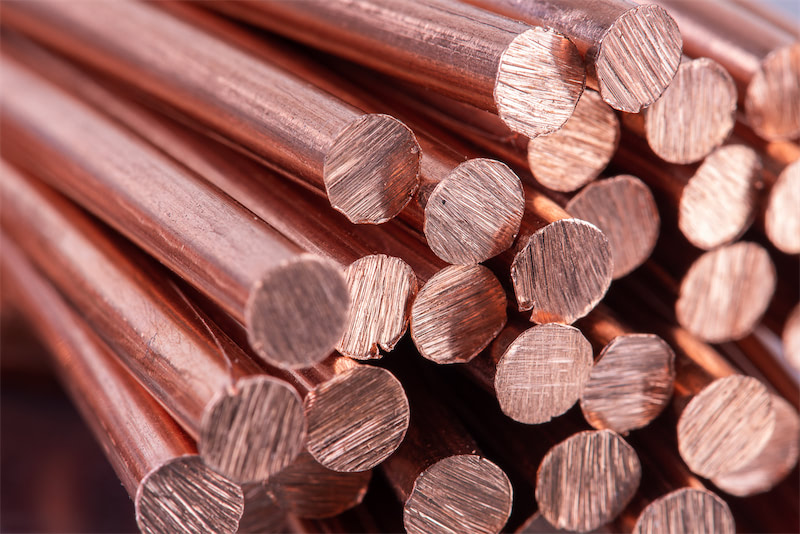
SMM survey showed that China produced 862,000 mt of copper cathode in December, rising 4.9% from November, and 7.01% from a year ago. China’s copper cathode output totalled 9.3 million mt in 2020, up 3.97% from 2019. (China’s copper cathode output for November was revised to 821,700 mt) Large-scale copper smelters continued to keep high operating rates in order to fulfill annual production targets. Chifeng Jinjian's new capacity continued to yield output, and some smelters in Shandong gradually returned to normal production. Sufficient supply of copper scrap eased feedstock shortages at smelters.
Treatment charges (TCs) for copper concentrate fell to $47.34/mt this week, which may post pressure for copper smelters’ production in early 2021.
According to smelters’ production schedules, SMM expects China’s copper cathode output to fall 8.34% on the month but rise 8.84% on the year to 790,100 mt in January, as several large-scale smelters will undergo maintenance in the month.
Alumina
China’s alumina output stood at 5.96 million mt in December. This included 5.75 million mt of metallurgical-grade alumina, with the daily output down 4.04% on the month but up 2.26% on the year to 185,500 mt. Output of metallurgical-grade alumina in 2020 totalled 67.29 million mt, 2.02% lower on a year-on-year basis. Roasting capacity at some alumina plants in Shandong, Henan and Shanxi was restricted, and this led to the decline in alumina output in December.
As of early January, the operating capacity of metallurgical-grade alumina stood at 70.2 million mt/year. SMM sees output of metallurgical-grade alumina at 5.96 million mt in January (31 days), with the daily output rising slightly. State Power Investment Wuchuan commissioned its roasting capacity on December 25. Alumina plants in Shanxi and Henan resumed their roasting capacity during the New Year’s Day holiday, and some plants in Shandong recovered their roasting capacity in late December.
Aluminium
China’s primary aluminium output rose 8% year on year to 3.28 million mt in December (31 production days), showed an SMM survey. As of early January, there was 39.24 million mt among 44.2 million mt per year of existing primary aluminium capacity in operation, while operating rates across Chinese primary aluminium producers stood at 90.8%. The daily average primary aluminium output rose 300 mt from November to 105,800 mt in December, and Yunnan Shenhuo and Inner Mongolia Chuangyuan mainly contributed to the increase. The proportion of aluminum water came in at 66.6%, down 1.7% month on month.
Throughout the year of 2020, China’s primary aluminium output increased 4.8% year on year to 37.12 million mt, while consumption rose 5.77% to 38.19 million mt. SMM expects China’s primary aluminium output to stand at 3.3 million mt in January, while import at about 150,000 mt. Demand for primary aluminium weakened in late December, and inventories are likely to build up in January.
Nickel
China’s refined nickel output rose 7.49% or 1,023 mt from November, but shrank 7.9% from a year earlier, to 14,700 mt in December. The Gansu smelter operated normally in December, and fulfilled its annual production target of 150,000 mt after stepping up production by 8.8% in December. The smelter in Xinjiang raised output by 7.18% from November, bringing its annual output to 11,900 mt. The Shandong smelter suspended its production line of refined nickel in December and put raw materials into nickel sulphate production.
SMM expects China’s refined nickel output to fall to 13,000 mt in January 2021, as smelters usually reduce operating rates ahead of the Chinese New Year holiday. Those suspended smelters are unlikely to restart production before the CNY holidays due to shortage of raw materials and cash flow issues.
Nickel pig iron (NPI)
China’s NPI output shrank 12.5% from November to 37,300 mt Ni in December. This included 29,800 mt Ni of high-grade NPI, down 15.1% on the month, and 7,500 mt Ni of low-grade NPI, down 0.8% month on month. Shortage of raw materials and weak demand from steel makers drove NPI plants to cut or suspend production in December. A large-scale high-grade NPI plant in east China reduced output by 50%. A low-grade NPI plant in central China suspended production in December on environmental concerns, which led to the slight decline in output. Some steel makers stepped up production of #200 stainless steel due to its improved profits.
SMM expects China’s NPI output to fall 3.1% on the month to 36,200 mt Ni in January. Output of high-grade NPI is likely to shrink 5.6% to 28,200 mt Ni, while that of low-grade NPI to rise 6.8% to 8,000 mt Ni. Low inventories of raw materials and high prices of nickel ore are likely to prompt NPI plants to trim output. Besides, the approaching Chinese New Year holiday and a resurgence of COVID-19 cases in some Chinese provinces will affect transportation of feedstock and supplementary materials.
Nickel sulphate
China’s nickel sulphate output expanded 6.07% on the month and 63.97% on the year, to 77,800 mt or 17,100 mt in nickel content in December. This included 69,400 mt of battery-grade materials and 8,400 mt of electroplating materials. Most of the nickel sulphate plants operated at full capacity in December as demand from downstream users improved as they needed to restock raw materials before the Chinese New Year holiday. Nickel sulphate prices steadied at high levels in the month.
SMM expects China’s nickel sulphate output to drop 589 mt Ni or 3.44% from December to 16,500 mt Ni in January, as an intermediate product project was suspended and is likely to resume in Q2. Besides, rising nickel prices will also drive some nickel salts plants to cut output.
Zinc
China's refined zinc output stood at 553,500 mt in December, falling 8,800 mt or down 1.57% on month and up 3.06% on year. In the full 2020, output totalled 6.1 million mt, up 4.44% from 2019. Zinc smelters produced 78,700 mt of zinc alloy in December, down 3.78% from the previous month.
SMM survey showed that China's refined zinc output in December basically met expectations. Treatment charges (TCs) for domestic 50 grade zinc concentrate continued to decline in December. Domestic smelters rarely reduced production or turned into maintenance due to the shortage of zinc concentrate supply. China's refined zinc output in December fell from November mainly due to smelters’ routine maintenance and decreased zinc products of smelters led by weaker hot-galvanising alloy orders. In addition, Xinjiang Zijin Smelter was officially put into production on December 10, whose main product is #1 zinc due to equipment debugging.
TCs for zinc ore in Inner Mongolia and Hunan have temporarily slowed their downward trend in January, but TCs for zinc ore in other regions continued to decline. In addition, as imported zinc ore from smelters gradually arrived at ports in January, smelters’ raw material inventory days increased 3 days from the previous month to 25-26 days, most domestic refineries are expected to maintain stable production in January. It is expected that the reduction in domestic refined zinc in January will be mainly concentrated in the maintenance of Yunnan and Guangxi, and the reduction in production in Shaanxi and Qinghai.
China's refined zinc output is expected to decrease 6,300 mt to 547,200 mt in January.
Lead
SMM data showed that China produced 286,000 mt of primary lead in December, down 1.3% from November, and up 2.4% from a year ago. In the full 2020, output increased 4.42% from 2019.
According to an SMM survey, primary lead smelters turned into maintenance and resumed production simultaneously in December. Hunan Yuteng resumed production. Some enterprises slightly increased production in December in order to complete the annual production and sales plan before year-end, while Henan Xinling carried out a one-month routine maintenance, Jiangxi Jinde and Yunnan Zhenxing both have minor maintenance. Output in December posted a slight decline, in line with expectations of the previous report.
Taking into account the limited supply of raw materials in winter and the subsequent Spring Festival holiday, some small and medium-sized enterprises plan to start maintenance in the middle and late January, and take a holiday after the maintenance. In addition, Henan Minshan, Shibin, Yunnan Mengzi turned into routine maintenance. Jiangxi Jinde, which carried out maintenance last month, and Yunnan Zhenxing resumed production.
SMM expects China's primary lead output to decrease over 10,000 mt to 274,000 mt in January.
Tin
China's refined tin output stood at 16,644 mt in December, up 19.42% on month and up 5.94% from November.
Tin prices performed strongly in December, gradually rising from 145,000 yuan/mt to over 150,000 yuan/mt, and prices have once increased to 155,000 yuan/mt over the month. Rising tin prices encouraged companies to turn into active production. Large tin factories in Yunnan, Guangxi, and Jiangxi all increased their output in December compared with the previous month. Some medium-sized companies also increased production to varying degrees. However, some companies cut production due to difficulties in purchasing raw materials.
Tin prices continue to remain firm in the near term, which will continue to attract manufacturers with sufficient raw materials to maintain high production. However, ahead of the Spring Festival holiday. Most tin factories in Yunnan will maintain normal production, but some tin factories in Jiangxi, Zhejiang and other regions will stop production for the holidays in advance at the end of January, and refined tin output will be slightly affected. China's refined tin output is expected to decrease to 16,000 mt in January.

![구리 가격 하락세 멈추고 안정세; 고철 구리 공급업체 가격 고수하며 판매 [SMM 재생 구리 일일 리뷰]](https://imgqn.smm.cn/usercenter/OpmKJ20251217171712.jpg)
![오전 시장에서 링강 지역의 가용 현물 물량을 찾기 어려웠고, 공급자들은 판매를 보류하며 가격을 단단히 유지했다 [SMM 양산 현물 구리]](https://imgqn.smm.cn/usercenter/JopQJ20251217171712.jpg)