SMM: entrusted by the Ministry of Industry and Information Technology, the Ministry of Agriculture and Village, and the Ministry of Commerce, in early September, the China Automobile Association released a new list of enterprises and models participating in the activities of new energy vehicles to the countryside, which is also the second batch of relevant lists published by the above three ministries and commissions in mid-July after the "notice on the activities of New Energy vehicles going to the Countryside". Compared with the previous list, the number of participating car companies in the new list has increased from 10 to 14, and the number of participating models has increased from 16 to 36.

List of the first batch of enterprises and models to participate in the activities of new energy vehicles to the countryside, photo source: China Automobile Association

List of the second batch of enterprises and models participating in the activities of new energy vehicles to the countryside, photo source: China Automobile Association
Obviously, the enthusiasm of car companies to participate in the activities of new energy vehicles to the countryside has been mobilized. After all, the stimulating effect of the last round of car going to the countryside ten years ago is still fresh in the memory of many enterprises. Can the new energy vehicles going to the countryside ten years later bring about another large-scale market blowout, from departments at all levels to car companies participating in activities? the expectation index is not low.
Going to the countryside by cars used to be a good medicine to save the city.
In 2009, in the face of the international financial crisis sweeping the world, various industries are under tremendous pressure of survival. The domestic automobile market has been declining since the second half of 2008. In order to ensure the healthy development of the automobile industry, the national level began to rescue the market.
During the two sessions in 2009, improving automobile consumption policy and guiding and promoting reasonable automobile consumption were included in the Government work report. Subsequently, eight departments, including the Ministry of Commerce, the Ministry of Industry and Information Technology, the Ministry of Public Security, the Ministry of Finance, the State Administration of Taxation, the State Administration of Industry and Commerce, the CBRC, and the CIRC jointly issued the "opinions on promoting Automobile consumption," the top priority of which is to open cars to the countryside. We began to subsidize the purchase of automobile products by township residents.
The effect of the last round of the policy of going to the countryside by cars was immediate. In 2009, when the growth rate of the global car market gradually stagnated, China's car market broke out with great potential. to achieve blowout high-speed growth (in addition to the policy of going to the countryside, 2009 of the rescue policies also include subsidies for trade-in and tax relief for small-engine cars, so the blowout of the domestic car market in 2009 is the result of the combined impact of a number of policies. However, because the policy of going to the countryside started early and lasted for a long time, it has a great influence and attention. It is since 2009 that China's auto market has become the world's largest new car sales market. In 2009, China's auto market both produced and sold more than 13 million vehicles, of which production was 13.791 million, an increase of 48.3% over the same period last year, and sales were 13.645 million, an increase of 46.15% over the same period last year.

Cars going to the countryside has had such a strong market-saving effect, and under the background of the overall downturn of the domestic new energy vehicle market, the original intention of the national level to encourage new energy vehicles to go to the countryside is self-evident, and it is necessary to rely on the New deal to invigorate the domestic new energy vehicle market.
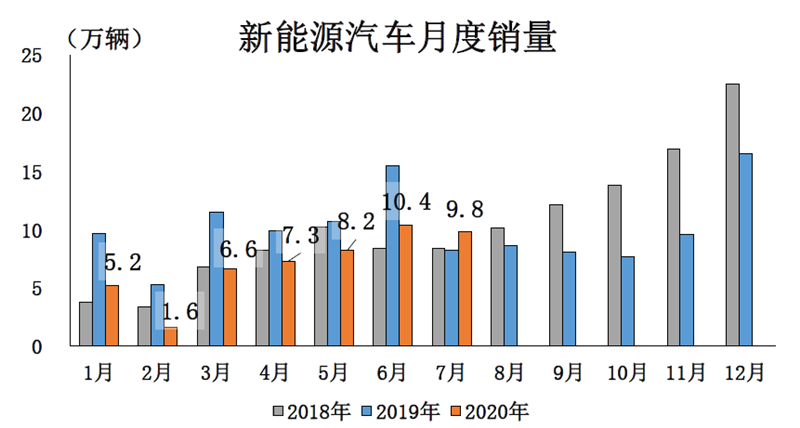
But the problem is that, unlike the previous round of cars going to the countryside, this one encourages the consumption of new energy vehicles. What is the potential of new energy vehicles in the township market?
The potential of township market is still there.
A set of data previously counted by SAIC GM Wuling is telling. In order to clarify the market space of its new electric vehicle, Hongguang MINI EV, SAIC GM Wuling just conducted a round of market research not long ago, aiming at the domestic low-speed electric vehicle market and two-wheeled scooter market (the target audiences of low-speed electric vehicles and two-wheeled electric scooters are mainly in fourth-and fifth-tier cities and township markets. Is to participate in new energy vehicles to the countryside enterprises need to grasp the biggest pain point). How big is the group of more than two types of users each year? Statistics from SAIC GM Wuling show that about 1 million low-speed electric vehicles are sold in the domestic market each year, while two-wheeled electric scooters are sold as high as 27 million. As long as it catches 1/10 of the consumers, the market size is close to 3 million vehicles, which is a huge potential market.
Chen Qingtai, chairman of the China Electric vehicle Association of 100, has previously released a set of data that A0 and A00 private cars in rural areas have entered a period of growth in the past decade, with the number of 100 cars growing from 9.9 in 2013 to 22.3 in 2018. According to the calculation that the disposable income of rural residents is growing at an average annual rate of 10%, the number of 1,000 rural cars is expected to reach 160 by 2030, with a total of more than 70 million. Chen Qingtai believes that the new products are likely to be directed to electric cars. According to its forecast, mainly small and economical electric vehicles, it is possible to form a market of tens of millions of electric vehicles in third-and fourth-tier cities and rural areas in the future, which will become an important driving force for sustained domestic economic growth.
It can be seen that the mainstream view is generally optimistic about the future scale of the township new energy vehicle market, which will be an urgent potential market, which has basically formed a consensus in the industry. However, the market potential is not the same as what kind of products can sell well in the rural market. New energy vehicles that are popular in the rural market must have some product characteristics.
Before car companies participate in the activities of new energy vehicles to the countryside, there is a question that needs to be fully considered: what kind of cars do rural consumers need? Wan Gang, vice chairman of the CPPCC National Committee and president of the China Association for Science and Technology, made relevant requirements at the launching ceremony of new energy vehicles going to the countryside. Car companies need to provide rural users with green, low-carbon, intelligent, efficient, safe and reliable products with comfortable driving, rich configuration and cost-effective products. Fu Yuwu, honorary chairman of the Chinese Society of Automotive Engineering, previously released more direct research results, and the answer to the above question is simply four words: cheap, electric.
Let's start with cheap. It is easy to understand that rural users need cheap cars. Although the domestic new rural construction has achieved remarkable results in recent years, it is an undeniable fact that in the rural market, price is still the most basic core competitiveness of products. Ma Chunsheng, director of the Automobile Development Department of the first equipment Industry Department of the Ministry of Industry and Information Technology, has drawn a red line for the price of new energy vehicles in the rural market. In his view, 50,000 yuan will be the golden point. For the vast number of domestic peasant users, the budget of 50,000 is a ceiling, and if new energy vehicles want to really take volume, they should try not to touch the ceiling of 50,000 yuan while meeting the basic needs of users. From this point of view, among the two batches of dozens of new energy models that have been announced to participate in cars going to the countryside, the products that are really suitable for the rural market are actually limited.
Let's take a look at the second point. It is estimated that the conclusion that rural users need electric cars will come as a surprise to many people. Analysts at the Geshi Automotive Research Institute said that there are three main reasons for the high acceptance of electric vehicles in the township market, one of which is that the daily travel range of township users is relatively controllable. the mileage, the biggest anxiety of urban electric vehicle users, is not a big problem in the township market, and the current performance of electric vehicles is highly matched with the daily travel needs of rural consumers. Second, agricultural electricity is cheap, and electric vehicles in township areas have obvious advantages in the cost of using vehicles; third, although the disorderly development of low-speed electric vehicles in township markets for many years has brought a lot of social problems, on the other hand, low-speed electric vehicles have also cultivated a large group of users in the township market, and they have formed the habit of driving electric car products. Although it still needs a popular process for the majority of farmers to choose formal electric vehicles, the acceptance of electric vehicles by rural users is actually not as low as people think.
The practical problems faced by New Energy vehicles going to the Countryside
From policy to corporate participation to market acceptance, the vision of new energy vehicles going to the countryside looks pretty good, but there are also many practical difficulties to achieve large-scale results.
First of all, the problems mentioned above, although there are many models involved in the activities of cars going to the countryside, there are few products that are really suitable for the needs of rural consumers. In fact, some car companies have reduced the prices of products that participate in the activities of new energy vehicles to the countryside, but the prices of new energy vehicles on the market at about 50,000 yuan are still limited. If there is no suitable product all the time, the car companies just regard the new energy vehicle going to the countryside as a new marketing opportunity, or simply drill into how to make a profit through the new energy vehicle to the countryside, this activity will not have much practical significance.
Secondly, the notice on the activities of new energy vehicles going to the countryside jointly issued by the Ministry of Industry and Information Technology, the Ministry of Agriculture and Village and the Ministry of Commerce requires that during the event, local governments should issue relevant policies in the region to support new energy vehicles to the countryside, and participating automobile companies will also issue active models and preferential measures. In other words, compared with the effective policy of going to the countryside in 2009, there is no clear financial support at the national level for the activities of new energy vehicles going to the countryside, only requiring local governments to issue relevant policies in the region. In this case, end-users may only enjoy the model discount given by the car company. If there is no big difference between the car model discount in the activity and the usual discount, it is difficult to mobilize the enthusiasm of rural users to buy cars.
In addition, although many car companies have gradually realized the importance of the township market, marketing activities have even been carried out in township areas, but the sales and after-sales channels of the vast majority of car companies have not sunk to townships or even county-level cities. Now through the activities of new energy vehicles to the countryside, car companies sell new energy products to rural areas, but do not bring supporting after-sales service to rural areas. It has really formed a sales scale in the rural market, and it is a big problem whether there will be mistakes in after-sales service.
Finally, although parking and charging are relatively convenient in rural areas, it does not mean that public facilities are not needed. The current weak supporting capacity in the township market may still limit the rapid popularization of new energy vehicles in these areas.
Encouraging new energy vehicles to go to the countryside is beneficial to revitalizing the national economy, expanding the automobile market and facilitating farmers' daily life, but in order to achieve results, governments at all levels and automobile enterprises need to cooperate with each other. from the rationality of policies, the convenience of matching, the richness of products, the goodness of services and other aspects to improve. Keep in mind that good policies must not be allowed to change their taste.
"Click to understand and sign up: 2020 China Automotive New Materials Application Summit Forum
Scan the QR code above to view the business cards of the participating companies and sign up online

Scan the code and apply to join the SMM Automotive Industry Exchange Group.