SMM7 March 24: at the 15th lead and Zinc Summit in 2020, Yin Ranqing, assistant general manager of Chaowei Group, delivered a keynote speech on "lead Battery Recycling Industry Analysis and Recycling Mode discussion".
Analysis of waste lead Battery Recycling Industry
China is a big country in the production and use of lead-acid batteries, accounting for nearly half of the world's output. It is widely used in automobile start-up, communication base stations, backup power sources, energy storage power stations, electric bicycles and other fields. About 5 million tons of lead-acid batteries are scrapped every year. The waste lead battery has high utilization rate and great reuse value, and the market scale is more than 40 billion yuan.
1. More than 5 million tons of waste lead-acid batteries are produced nationwide every year, and more than 80 percent of them flow into illegal channels.
The national standard for the transfer, utilization and disposal of waste lead-acid batteries is less than 20% of the production of waste lead-acid batteries.
2. Illegal recycling has been banned repeatedly, seriously polluting the environment.
There are about 20 to 300000 individual collectors across the country to buy waste lead-acid batteries through simple means of transportation. Individual collectors illegally pour about 300000 tons of acid every year.
3. The examination and approval procedures for the transfer of waste lead-acid batteries are cumbersome.
Waste lead battery is a kind of hazardous waste, the collection amount of waste lead battery in each province can not match the local regenerated lead production capacity, and most of the waste lead battery need to be transferred across provinces, while the existing system transfer examination and approval procedures are tedious and the cycle is long, which limits the standardized collection and transfer efficiency of lead battery. At present, Sichuan and Chongqing provinces and cities have simplified the examination and approval procedures, and signed on April 1, 2020 to establish a "whitelist" cooperation mechanism for the transfer of hazardous wastes across provinces and cities in Sichuan and Chongqing. In advance, three types of hazardous wastes, such as waste lead batteries, waste fluorescent tubes and waste circuit boards, were used to explore the establishment of a "whitelist" system for the transfer of hazardous wastes across provinces and cities, and the hazardous wastes and corresponding hazardous waste disposal enterprises included in the "whitelist". After consultation and confirmation by both parties, it can be examined and approved directly according to this "whitelist", which no longer needs to be confirmed by letters from the ecological and environmental departments of both sides.
4. The transportation cost of waste lead storage battery is high, and recycling enterprises cannot afford it.
Illegal recovery has raised the recycling price of waste lead battery. Regular recycling enterprises use dangerous waste transport vehicles to transport waste lead battery to disposal enterprises, and the transportation cost is generally twice that of ordinary truck transport. Some inter-provincial and municipal transport costs have reached 360,400 yuan / ton, recovery costs + transport costs have doubled, recovery enterprises are in a state of capital upside down, and many can not afford it.
At present, Jiangsu Province has implemented transport exemption for the transfer of waste lead storage batteries in the province, and the means of transport can meet the requirements of rain protection, anti-leakage and anti-spill, but can not be transported according to hazardous waste, thus reducing the burden of recycling enterprises and greatly increasing the amount of recovery and transfer.
5. Tax problems restrict the development of recycling enterprises
Social source waste lead battery recycling many do not have input tax bills, can not be issued, and recycling enterprises to sell waste batteries to recycled lead enterprises, need to issue 13% value-added tax invoice, tax problems restrict the development of recycling enterprises. In addition, illegal recycling, smelting vendors have long monopolized the market and vicious competition in society, and the loss of recycling per ton of waste lead battery is about 1500 yuan, so it is difficult to promote the recycling work smoothly.
II. Implementation of the extended producer responsibility system
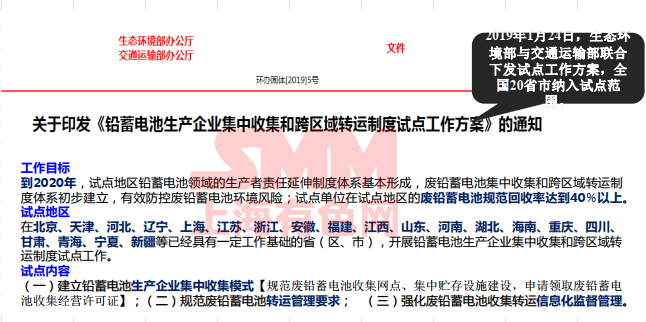
The State Council and relevant ministries and commissions pay close attention to the recycling of waste lead-acid batteries, and local provincial departments / bureaus actively carry out pilot work on lead-acid batteries. According to the data published by the provincial departments, 18 provinces and cities across the country have announced 318 pilot units of waste lead-acid batteries, 1146 centralized transfer points and 3435 collection sites.
Discussion on the recovery mode of waste lead-acid battery
In May, the National Development and Reform Commission issued the interim measures for the Administration of the Recycling of lead-acid batteries (draft for soliciting opinions), which pointed out that the country implements the target responsibility system for the recovery of lead-acid batteries, and the recovery rate of lead-acid batteries should reach more than 70% by the end of 2025. Lead-acid battery manufacturing enterprises (including imported enterprises) shall achieve the recycling targets set by the state by means of independent recovery, joint recycling, entrusted recycling, etc., and submit a report on the achievement of the previous annual target before the end of March each year. Relevant trade associations are encouraged to organize production enterprises to achieve the recycling target in the form of consortia.
The recycling mode includes independent recycling and cooperative recycling.
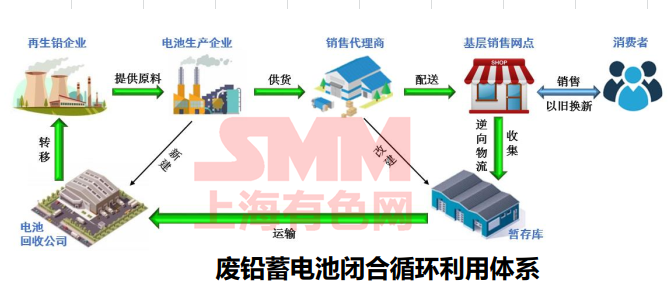
Independent recycling: battery production enterprises rely on battery sales channels, after-sales service network, motor vehicle maintenance outlets, scrapped motor vehicle recycling and disassembly enterprises to establish waste lead battery reverse recycling network system. Production is encouraged, and enterprises adopt the methods of "trade-in" and "sales and collection" to improve the recovery rate.
The early stage investment is large, the construction period is long, the vertical management is high, and the recovery efficiency is high.
Cooperative recovery: professional recycling enterprises, resource utilization enterprises and battery production enterprises sign joint recycling and entrusted recycling agreements, making use of the sales network of production enterprises, based on the local waste management qualifications of professional recycling enterprises and resource utilization enterprises, jointly build and share an organized and standardized waste lead battery recycling network.
Advantages of cooperative recycling:
1. Apportion the investment to avoid repeated construction and vicious competition;
2. Social source channels and battery sales channels complement each other to expand the coverage of the recycling system and improve the efficiency of recycling;
3. Resource utilization enterprises obtain a stable supply of raw materials.
Scan the code to apply to join the SMM industry communication group:
![추석 및 국경절이 다가오면서, 2026년 납축전지 기업의 휴가 일정은 어떻게 되나요? [SMM 분석]](https://imgqn.smm.cn/usercenter/mfCMp20251217171721.jpeg)
![폐배터리 재활용 업체들의 2026년 추석·국경절 연휴 기간 휴무 일정과 매입·판매 속도는 어떨까? [SMM 분석]](https://imgqn.smm.cn/usercenter/guTSZ20251217171722.jpg)