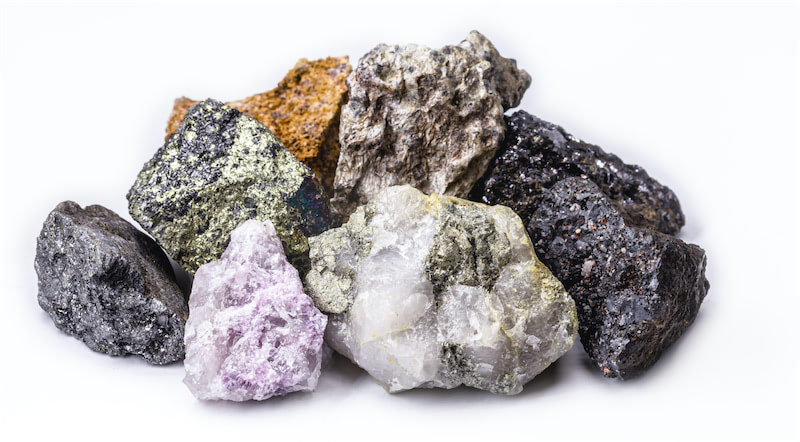
According to the latest news, Indonesia's Ministry of Energy and Mineral Resources confirmed that as 41 domestic smelters are about to complete construction and can be put into operation in the short term, Indonesia is expected to stop exporting raw ore in 2022. Earlier, in 2009, after the Indonesian government issued decree No. 4, Indonesia should have stopped the export of raw ore. But given the situation of smelters in Indonesia at the time, the ban had to be delayed. But now, as domestic smelters begin to operate on a large scale, superimposed downstream terminals can digest smelting products, so Indonesia has formed a complete supply chain. It is expected that 41 smelters will operate in 2022, including 22 nickel smelters, 6 bauxite smelters, 4 iron ore smelters, 4 zinc smelters, 2 copper smelters, 2 anode slime smelters and 1 manganese ore smelter. "Click to see: [important] Indonesia may stop exporting 41 smelters in 2022.
It is reported that as early as 2009, Indonesia promulgated the Mineral and Coal Law, which will completely ban the export of 65 raw mines from January 12, 2014, which must be smelted or refined locally before they can be exported. Among them, China relies heavily on bauxite and nickel mines. However, one hour before the 00:00 deadline on the 12th, Indonesian President Susilo announced that 66 mining companies could continue to export concentrate until 2017 without being affected by the ban. Only copper, manganese, lead, zinc and iron are allowed to be exported, but nickel and bauxite are still banned. On 6 May 2012, in order to implement the decree step by step, the Ministry of Energy Mining of Indonesia announced the implementation of mine restrictions on 14 varieties, including nickel mines, the implementation of an export quota system and the imposition of an export tariff of 20 per cent.
Before the ban on mining in Indonesia in 2014, the output of nickel mines in Indonesia showed a trend of growth, with a sharp increase in 2012 and 2013, with a maximum annual output of 810000 nickel tons. After the implementation of Indonesia's ban on mining in 2014, Indonesian mine production dropped significantly, and Indonesian nickel mine production began to increase after Indonesia gradually liberalized Indonesian nickel mine exports in 2017.
On January 12, 2017, Indonesia began to allow nickel ore exports, allowing the export of mines must meet two conditions, one is that 30% of the smelting capacity must be used to process low-grade ore, the rest can be used for export; the other is that the construction of smelting projects must be completed within five years and checked by the Indonesian government every six months, otherwise they will be disqualified. Since May 2017, Indonesia has reappeared on the list of importers of nickel mines in Chinese customs data.
SMM believes that since the original import license was issued for a maximum of five years, the Indonesian nickel mine itself is at risk of switching back to an export ban starting in 2022. Since 2017, there have also been several reports that Indonesian authorities have warned enterprises whether to set up smelting production in time will abolish quotas, although nickel mines are in sufficient supply at present, but in the long run, the major trend is to produce nickel pig iron in Indonesia and ship it back to China. For nickel pig iron or stainless steel companies that only have factories in China, the Philippines will be a relatively stable option.
According to SMM statistics, China imported 44.473 million tons of nickel ore (physical tons) in 2018, including 14.1571 million tons in Indonesia and 28.185 million tons in the Philippines.
Click to sign up for this summit

"Click to sign up for this summit

Scan QR code and apply to join SMM metal exchange group, please indicate company + name + main business
![[SMM 스테인리스 속보] 인도 스테인리스 스크랩 가격, 니켈 약세로 304 하락·316은 공급 부족으로 견조](https://imgqn.smm.cn/usercenter/PFIti20251217171734.jpg)