SHANGHAI, Nov 8 (SMM) – This is a roundup of China's base metals output in October. SMM surveyed major producers to obtain information for calculation.
Copper
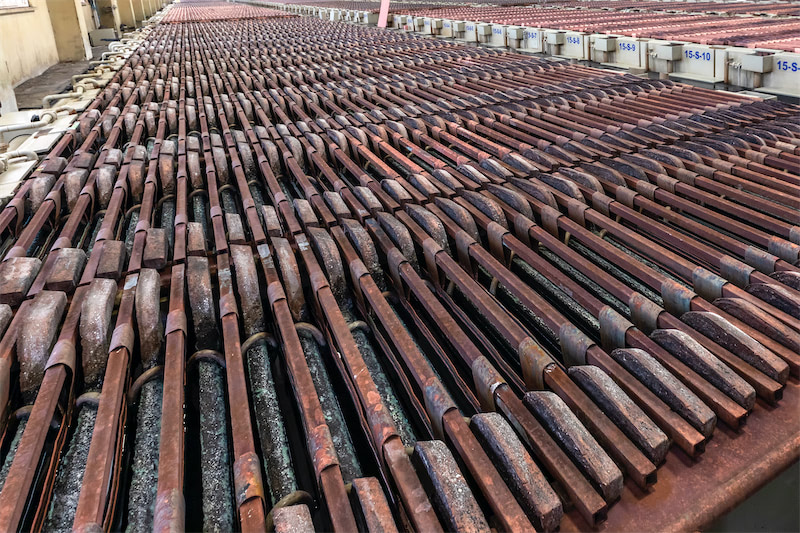
China's production of copper cathode in October gained 0.53% from September and stood at 720,600 mt, showed SMM data. This is down 0.26% from a year ago. This grew overall output in January-October from the corresponding period last year to 7.23 million mt.
Growth in October missed SMM's forecast of 731,600 mt due to production cuts across three major smelters Daye Nonferrous, Jinchuan Group, and Northern Copper Industry. At the end of September, Northern Copper Industry shut its smelter in Houma city of Shanxi province. The Houma smelter had an annual capacity of around 100,000 mt.
New capacity that commissioned at Chinalco Southeast Copper and SDIC Jincheng Metallurgy in the second half of the year did not produce copper cathode in October. Other copper smelters kept regular operation last month. Some smelters told SMM that they would maintain high operating rates as treatment charges (TCs) for spot concentrate remain at highs and as they attempt to meet annual production targets.
Copper output in China is likely to grow to 737,900 mt in November, some 2.78% higher from a year ago as new capacities ramp up. Output growth will be minimally limited by maintenance works at Jiangxi Copper and Huludao Hongyue Northern Copper.
In January-November, overall output is expected to amount to 7.96 million mt, up 9.6% from the same period in 2017, based on production schedules across smelters.
Alumina
China produced 6.039 million mt of alumina in October, up 0.3% from a year ago, with average daily output at 195,000 mt, 1.7% lower than September. In January-October, China’s alumina output totalled 58.144 million mt, standing 1.7% higher than the same period last year.
October’s alumina output expanded from September’s as new capacity at Shanxi Xinfa Chemical and East Hope’s Jinzhong Chemical generated more output.
Last month, Xinfa Group reduced output at its Shanxi Jiaokou alumina refinery due to maintenance at its power plant. Environmental probes affected production at some alumina refineries in Lvliang in Shanxi; bauxite shortages forced some alumina refineries in Guizhou to cut output. These factors capped gains in overall alumina output in October.
SMM expects average daily output alumina in November to increase to 201,000 mt in November as refineries in Shanxi recovered output. This is estimated to generate 6.025 million mt of alumina output for November.
An alert for heavy-pollution issued by Henan during November 1-5 impacted the operation at two alumina refineries in Zhengzhou, which have yet to return to normal.
Aluminium
China produced 3.114 million mt of primary aluminium in October, up 3.5% compared to a year earlier. This grew overall output in January-October to 30.166 million mt, standing 0.8% lower than the corresponding period last year.
As of the end of October, there is about 37.48 million mt of primary aluminium capacity in operation across China and about 4.82 million mt of idle capacity. Operating rates dipped 0.3 percentage point from a month ago to 88.6%.
New capacity continues to commission and old capacity continues to be cut. Operating capacity expanded since September after a steep contraction in July-August. SMM data showed that over 1.5 million mt of primary aluminium capacity has been cut thus far this year.
Newly-commissioned capacity did not significantly boost output of aluminium ingot as the process of starting primary aluminium production would deplete some molten aluminium supplies.
In November, aluminium producers who run in losses are likely to deepen their output cuts as they face higher costs in Gansu, Qinghai and Henan while new capacity will come online in Inner Mongolia, Guangxi and Yunnan.
SMM expects China’s output of primary aluminium to come in at 3.03 million mt in November, standing 4.3% higher compared to November 2017.
Nickel
Some 13,200 mt of nickel was produced across China in October, standing 4.62% higher from a year ago. However, overall output in January-October was 8.63% lower on the year, at 119,200 mt.
In October, China's nickel output surged 21.03% from September as two producers recovered from maintenance.
SMM expects November's output to increase 7.08%, or 936 mt from October, to 14,200 mt as nickel producers will step up operation to meet their annual targets.
Nickel pig iron (NPI)
In October, NPI output dipped 2.73% from September to stand at 40,200 mt in nickel content, down 0.93% on a yearly basis. Overall output in January-October came in at 373,800 mt in nickel content, 9.32% higher than the same period last year.
Environmental inspections in Liaoning province and restrictions on electricity use in Inner Mongolia weighed on the output of high-grade materials. There was about 36,300 mt in nickel content of high-grade NPI produced across China in October, down 1.5% from September, with 4,500 mt in nickel content of that produced in Inner Mongolia, down 13.73% on the month. In Liaoning, production of high-grade NPI also lost 20.57% to 2,200 mt in nickel content in October.
Output of low-grade NPI fell by 13.3% from September to 3,900 mt in nickel content as a producer in the south stopped producing such products from October.
SMM expects overall NPI output to inch up 0.86% to 40,600 mt in nickel content in November as affected output will resume as restrictions ease in Liaoning and Inner Mongolia. Output of high-grade NPI is expected to rise by 1.5% to 36,900 mt in nickel content while that of low-grade NPI is likely to decrease by 5% to 3,700 mt in nickel content.
Nickel sulphate
In October, China produced 8,100 mt, in metal content, of nickel sulphate, which translated to 37,000 mt in physical content. Overall production in January-October stood at 75,900 mt in nickel content, or 345,100 mt in physical content.
On a monthly basis, production rose 6.15% in October, driven by higher output in Guangxi and Hubei provinces. At a plant in Guangxi, eased environmental curbs and greater supplies of raw materials buoyed its capacity utilisation rate to 50%, from some 10% in September. In Hubei, higher demand from downstream precursor plants grew nickel sulphate production.
We expect output in November change little from October and stand at 8,200 mt in nickel content.
Zinc
Output of refined zinc in October gained 2.81% on the month and stood at 459,300 mt. This is down 8.29% from a year earlier, and brought the output in January-October to 4.426 million mt, standing 8.29% lower than the same period last year.
Treatment charges (TCs) for zinc concentrate extended their gains in October as inflows of seaborne materials ensured adequate supplies in China’s zinc concentrate market. This, together with relatively high zinc prices, expanded profit margins across smelters and fuelled production enthusiasm that bolstered zinc output.
In October, Western Mining recovered from maintenance, Baiyin Nonferrous Metals stepped up operation, and Luoping Zinc & Electricity also further recovered output. Meanwhile, maintenance continued at Hanzhong Zinc and Henan Yuguang Zinc and this capped gains in overall zinc output and slowed annual growth from last year.
Production schedules across smelters show that zinc output is expected to gain 0.65%, or 3,000 mt, in November, standing at 462,200 mt, down 9.25% compared to a year ago. This is likely to narrow the year-over-year contraction in year-to-date output to some 1.84%.
Maintenance at Yuguang is expected to extend into November while Hunan Xuanhua would recover partial output.
Lead
Output of primary lead in October inched down 0.45% from September and stood at 252,200 mt, in line with SMM’s expectations. This is down 12.69% from a year earlier.
In January-October, overall output of primary lead fell 10.52% from last year and came in at 2.44 million mt, showed SMM data.
Maintenance at smelters in Henan and Liaoning provinces, as well as suspension at a large smelter in Hunan province, dragged on overall output in October. The producer in Hunan suspended to upgrade its product structure. However, some smelters continued to raise operating rates in October in order to meet annual targets. Production resumed at Anhui Tongguan. Yunnan Chihong, and Western Mining last month and these limited the downward room in overall output.
SMM expects output of primary lead to climb to 253,300 mt in November as smelters in Liaoning, Henan, and Shandong provinces resume production after overhauls. Large smelters will maintain their high operating rates through the end of the year.
The impact of the upcoming winter cuts on primary smelters remains unclear. Environmental probes started to affect Henan and Hunan in November, and a large smelter in Henan planned to undergo maintenance in late November, SMM learned.
Tin
Tin output decreased by 11.6% from a month ago to stand at 12,311 mt in October, as maintenance works curtailed output at the Guangxi-based China Tin Group and the Inner Mongolia-based CNMC Chifeng Dajingzi Tin, and as insufficient procurement of tin ore impacted production at some smelters in Yunnan and Jiangxi.
The latest data from China Customs showed that China’s imports of tin ore fell from a year earlier in January-September, and stocks in Wa State stayed at relatively low levels, an indication of tight supplies of tin ore. This is set to weigh on output at large tin producers.
SMM expects tin output to grow to about 12,900 mt in November as China Tin Group and Dajingzi Tin have recovered their output. Meanwhile, some tin producers have to reduce output due to environmental checks and issues over raw materials.
![하류 재입고 수요 부진으로 공급업체들이 판매를 위해 가격을 인하해야 했고, 현물 프리미엄이 크게 하락했다 [SMM 화남 현물 구리]](https://imgqn.smm.cn/usercenter/CaDcj20251217171711.jpg)
![공급이 소폭 완화되고 하류 구매는 보통 수준 [SMM 화북 현물 구리]](https://imgqn.smm.cn/usercenter/arNnt20251217171714.jpeg)