I. Resource Endowment: World's Second-Largest Reserves and Development Potential
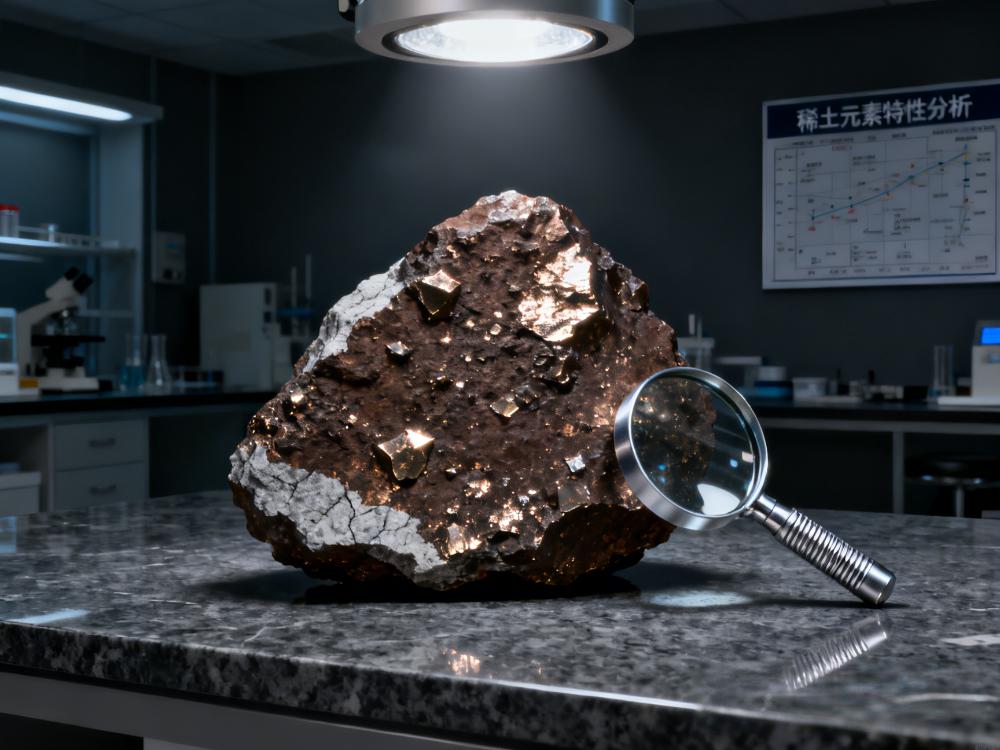
As a core holder of global rare earth resources, Brazil boasts proven reserves of 21-25 million tonnes, accounting for 23% of the global total—second only to China. This positions Brazil with the potential to reshape the global rare earth supply landscape. Its deposits are primarily ion-adsorption types, widely distributed across states like Minas Gerais and Goiás. Representative projects include:
Colossus Mine: With reserves of 493 million tonnes and an average grade of 0.251%, it is currently Brazil's largest disclosed ion-type rare earth project.
Caldeira Rare Earth Project: Holding 1.5 billion tonnes at a 0.2413% grade, it offers significant scale and commercial viability.
Tiros Titanium Rare Earth Project: Though smaller in reserve size (5.5 million tonnes), it stands out with a high average grade of 0.400%, making it one of the highest-grade projects in the country.
Notably, Brazilian rare earths often coexist with niobium, tantalum, and titanium. This nature adds complexity to processing but also opens avenues for comprehensive value recovery.
II. Industry Status: Shifting from "Raw Material Export" to "Domestic Processing"
Historically, Brazil's rare earth sector has been characterized by a "high reserves, low output" paradox. In 2024, national production was a mere 20 tonnes, a stark contrast to the global annual output of nearly 400,000 tonnes. The core bottleneck has been the lack of mid- and downstream capabilities in separation and refining. However, this is rapidly changing due to strategic national adjustments.
(I) Policy Drivers: Mandating Domestic Processing for a Closed-Loop Chain
The Brazilian government has designated rare earths as "strategic minerals." Under the National Policy for Critical and Strategic Minerals (PNMCE, Bill PL 4.443/2025), at least 80% of critical strategic minerals must be processed domestically, effectively banning raw ore exports. This policy aims to break the passive cycle of "mining-exporting raw materials-importing high-value products" and drive the construction of a full domestic value chain "from mine to magnet."
(II) Project Implementation: From Lab to Industrialization
In 2026, Brazil's rare earth development took a substantive leap:
MagBras Initiative: Led by CIT SENAI in Minas Gerais and coordinated by FIESC in Santa Catarina, this project united 28 companies and research bodies to deliver the first 20kg of rare earth carbonate. This marked Brazil's first autonomous, full-process production from mining to chemical compound.
LabFabITr Facility: Located in Lagoa Santa, Minas Gerais, this is the Southern Hemisphere's first lab-factory dedicated to rare earth magnet and alloy R&D, providing crucial technical support for local permanent magnet manufacturing.
III. Capital and Geopolitics: The $2.17 Billion Investment Gamble
Between 2025 and 2029, Brazil's rare earth sector is poised for $2.17 billion in investment—a 49% surge compared to the 2024-2028 forecast. This makes it the fastest-growing segment in Brazil's mining investment portfolio. This capital influx is underpinned by the geopolitical logic of global supply chain restructuring:
(I) External Demand: A "Diversified Option" Amidst US-China Tensions
As competition between the US and China intensifies, Brazil's strategic value as a "non-Chinese" supplier has skyrocketed. Its policy of "global openness" avoids picking sides while leveraging domestic processing mandates to attract technology transfer—requiring foreign investors to build local processing capabilities rather than just extracting ore.
(II) Internal Drive: From "Resource Nationalism" to "Technological Autonomy"
Brazil's strategy transcends simple resource protection; it is an upgrade centered on "technological autonomy." For instance, MagBras targets permanent magnet manufacturing—a sector currently monopolized by China, Japan, and Germany. Success would position Brazil among the few nations mastering the "ore-to-magnet" value chain, directly integrating into the core supply chains of EVs, wind energy, and industrial robotics.
IV. Challenges and Outlook: Technology, Cost, and Global Competition
Despite the upside, three core challenges remain:
(I) Technological Barriers
Rare earth separation and magnet manufacturing are high-threshold sectors. Brazil currently relies on international partnerships (e.g., European technical support for LabFabITr) to bridge this gap.
(II) Cost Pressures
Brazil's low-grade ion-adsorption ores entail higher beneficiation costs compared to some high-grade Chinese deposits. Additionally, the capital and operational expenditures for domestic processing could impact international price competitiveness.
(III) Global Competition
With Australia, the US, and various African nations also accelerating their rare earth developments, Brazil must carve out differentiated advantages in technology, cost efficiency, and policy stability to secure its market share.
V. Conclusion: Leaping from "Resource Holder" to "Supply Chain Player"
Brazil's rare earth transition represents a strategic leap from a "resource exporter" to a "technology-driven industrial player." While its 21 million tonnes of reserves provide the foundation, the true value lies in its policy-driven, capital-intensive push to build a complete industrial chain. If initiatives like MagBras achieve commercial success, Brazil is on track to become the "third pole" in the global rare earth supply chain by 2030, reshaping trade dynamics and offering a new paradigm for resource-based economies worldwide.