At the end of February, the escalation of conflict in the Middle East pushed oil prices sharply higher on the first trading day of March. Rising oil prices strengthened the electrification substitution logic, making electric vehicles and renewable energy more economically attractive. However, the macroeconomic uncertainty brought by war may simultaneously suppress consumer and investment confidence. If high oil prices drive inflation and slow economic growth, overall demand for automobiles and industrial activity could weaken, and new energy sectors would not remain immune. Therefore, the investment logic for renewables is no longer unidirectionally positive; it now depends on the balance between the substitution effect and the macroeconomic contraction effect.
The traditional oil and gas system is highly dependent on cross-border transportation and continuous fuel supply, making it vulnerable to shipping disruptions and geopolitical tensions. In contrast, wind and solar power do not require ongoing fuel input during operation, and energy storage enhances grid stability. This gives renewables strategic value in wartime conditions. They are no longer merely low-carbon tools, but pathways to reducing external dependence. As a result, the security attribute of renewable energy has been repriced. However, this security is not absolute. The manufacturing side of renewables is heavily reliant on critical minerals such as lithium, nickel, and cobalt, whose extraction and processing are geographically concentrated and dependent on global logistics. If upstream resource policies tighten or transportation is disrupted, risks will transmit along the value chain. Renewable security, therefore, is operational security rather than supply security.
In a wartime environment, the allocation of risk premiums changes. Transportation premiums, geopolitical premiums, and supply chain concentration premiums all rise simultaneously. Volatility in traditional energy intensifies; renewable generation assets gain security premiums; critical minerals and midstream processing capabilities become new strategic nodes. Efficiency is no longer the sole benchmark—redundancy and controllability become central to valuation frameworks. De-globalization and supply chain restructuring may raise the industry’s cost floor, but they also elevate the strategic value of assets.
Against this backdrop, the value of energy storage and grid infrastructure becomes particularly prominent. If conflict persists, the core objective of energy systems will shift from cost optimization to systemic resilience. Distributed energy, microgrids, and storage possess an insurance-like function; their value becomes more visible under extreme conditions. Even if elevated raw material prices increase project costs, higher policy priority may provide long-term support.
-
From Efficiency to Resilience: The Core Shift in Energy Systems
In peacetime, energy systems prioritize efficiency: lowest cost, highest utilization, optimal allocation. Cross-border trade and centralized generation have made global energy structures highly integrated and large-scale.
War exposes the fragility of this model. Maritime routes, gas pipelines, tanker insurance, critical ports, and major power plants can all become vulnerability points. The system’s priority shifts from efficiency to resilience—the ability to maintain basic operations under shock. Energy storage and grid infrastructure form the backbone of this resilient architecture.
-
Energy Storage: From Arbitrage Tool to System Insurance
Under normal conditions, the value of storage primarily lies in electricity arbitrage, ancillary services, and peak shaving, with returns driven by price spreads and subsidies.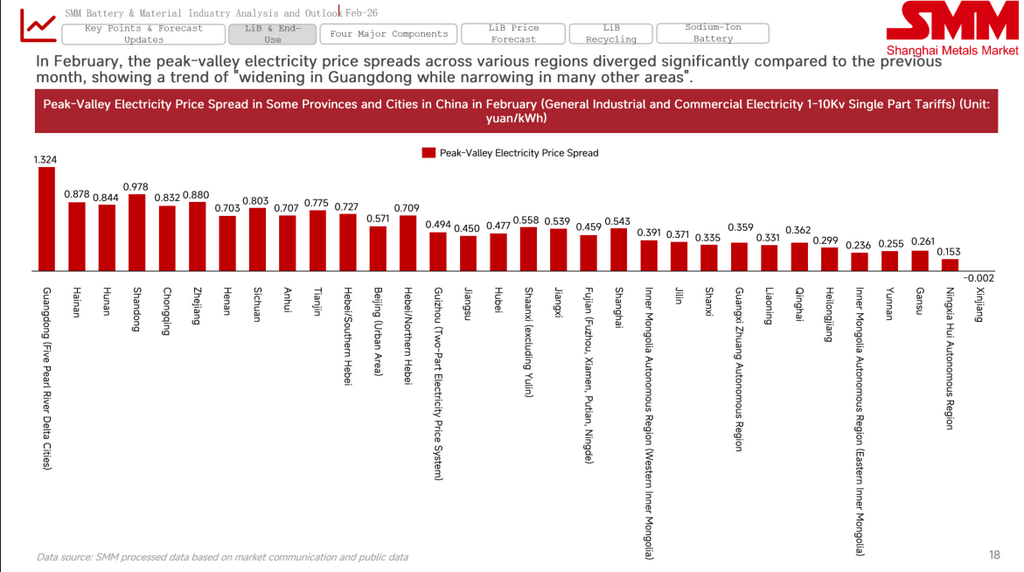
In wartime, however, the value proposition changes. Storage is no longer merely an economic optimization instrument but a safeguard for grid stability. It can provide emergency power during fuel supply disruptions or grid shocks, preventing cascading failures.
This gives storage assets an insurance-like attribute. As systemic risk rises, capital becomes more willing to allocate to such assets. Even if elevated material costs compress project IRR, policy support may strengthen because of rising strategic importance. Storage valuation logic thus shifts from IRR-driven to security-premium-driven.
-
The Grid: An Undervalued Strategic Nexus
The impact of war on energy systems often first manifests in transmission and distribution networks. Centralized energy systems rely on a limited number of key nodes; once damaged, the impact is widespread.
Therefore, grid upgrades and digitalization become priority investments. Smart grids, regional interconnection, redundancy, and distributed integration capacity significantly enhance shock resistance.
Under wartime conditions, the investment logic of grid assets becomes clearer: they are not just infrastructure but the structural backbone of national energy security. Over the long term, grid modernization will be a prerequisite for renewable expansion. The intermittency of renewable generation demands stronger transmission and dispatch capabilities. As geopolitical risk rises, countries are more likely to accelerate grid investment to reduce reliance on external fuel supplies.
-
Distributed Energy and Microgrids: The Strategic Value of Decentralization
Centralized systems are efficient but fragile. Distributed solar, community storage, and microgrids may be smaller in scale, but they possess independent operational capability.
In wartime, distributed systems offer two advantages: reducing single-point failure risk and lowering dependence on cross-border fuel transportation. These assets are repriced upward in high-risk environments.
-
Deep Changes in Investment Logic
The rising importance of storage and grids means renewable investment no longer revolves solely around capacity growth and cost decline. It increasingly centers on system security and supply chain control.
Key shifts include:
-
Greater focus on localized manufacturing and supply chain diversification
-
Higher weighting of security considerations in investment decisions
-
A potential upward shift in industry cost floors, accompanied by stronger strategic premiums
Valuation frameworks in the renewable sector are transitioning from growth premiums to strategic premiums.
Geopolitical Implications for China’s Renewable Industry
-
From Import Dependence to Electrification Advantage
China has long been one of the world’s largest crude oil importers, making energy security a persistent concern. In wartime, oil price volatility and transportation risks directly affect energy costs and macro expectations.
Unlike in the past, however, China now possesses the world’s most comprehensive renewable manufacturing ecosystem. Solar, wind, storage, batteries, and EV supply chains are deeply integrated. In wartime, this manufacturing strength translates into security attributes: greater electrification reduces dependence on imported fuels; higher renewable penetration increases system flexibility. China’s renewable system therefore holds potential for substitution-based security.
-
Storage and Grids: China’s Strategic Advantage
If conflict persists, system stability becomes more important than generation capacity alone. China’s positioning in storage and grid infrastructure provides relative strength.
China leads the world in battery manufacturing scale and cost efficiency. Under an energy security paradigm, storage becomes a system stabilizer rather than merely an economic instrument. Policy support for storage deployment in power systems may strengthen.
On the grid side, China operates the world’s largest ultra-high-voltage transmission network and possesses extensive grid construction capability. Greater redundancy and interconnection enhance renewable absorption and system resilience. In high-risk environments, grid investment may accelerate, granting China’s storage and grid assets structural strategic premiums.
-
Critical Minerals: Strengths and Vulnerabilities
While China dominates renewable manufacturing, upstream resources remain globally dispersed. Lithium, nickel, and cobalt supply chains are internationalized, and geopolitical tensions may amplify policy and logistics uncertainties.
The primary challenge lies not in manufacturing capacity, but in resource stability and cost volatility. De-globalization trends could raise cost floors and compress margins.
-
Electric Vehicles: Structural Strengths and Short-Term Volatility
Rising oil prices enhance the economic attractiveness of EVs, strengthening long-term penetration. China’s scale advantage in EV manufacturing reinforces this position.
However, prolonged conflict could weaken global economic growth and dampen overall vehicle demand. Although EVs benefit from substitution logic, they cannot entirely detach from macroeconomic cycles.
Conclusion
In an era where war reshapes the global energy order, stability becomes more important than growth.For China’s renewable industry, energy storage and grids form the foundation of system resilience. Critical minerals determine cost stability. EVs face both substitution tailwinds and macro headwinds.
As energy shifts from a cost variable to a security variable, the decisive factor will no longer be who grows fastest, but who maintains the most stable and controllable system.
SMM New Energy Analyst Lesley Yang
yangle@smm.cn
WhatsApp:+61 0451581533
![Cobalt Product Prices Largely Stable, Cobalt Intermediate Products Firm Amid Shipping Disruptions — What Are Expectations for Future Cobalt Prices? [Weekly Review]](https://imgqn.smm.cn/usercenter/MaxcL20251217171730.jpg)

![[SMM Survey] Weekly Review of the Hydrogen Energy Electrolysis Cell Industry, 0508-0515, 2026](https://imgqn.smm.cn/usercenter/yZfeI20251217171727.jpg)