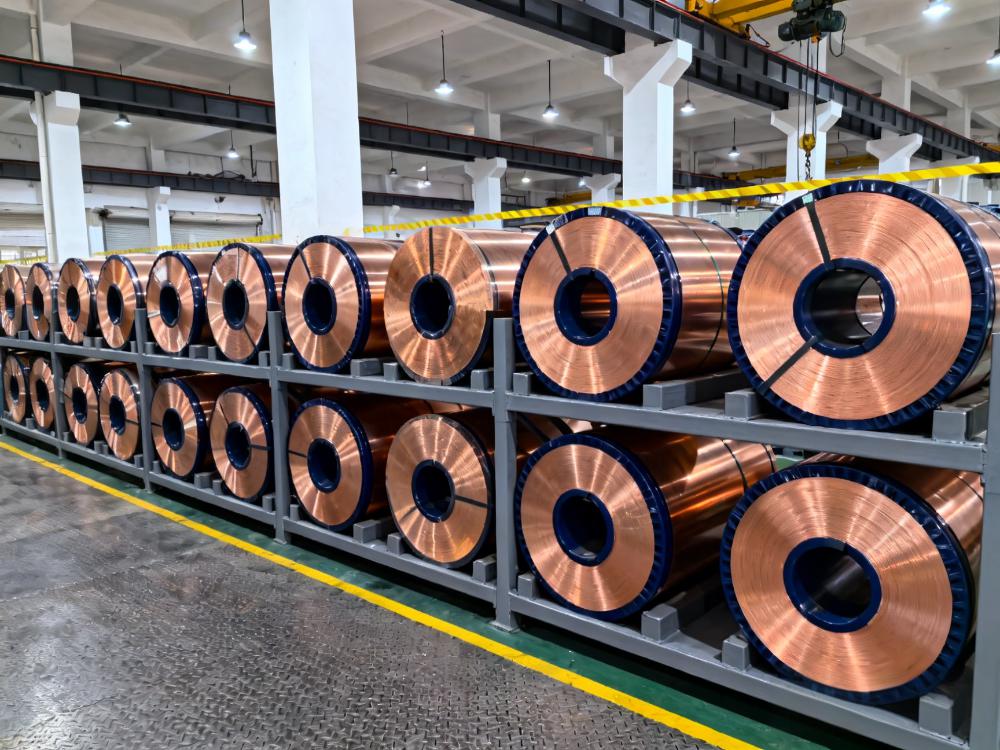
The operating rate for secondary copper rod was 20.17% in January 2026, exceeding the expected 18.56%, but decreased 0.25 percentage points MoM and 6.73 percentage points YoY. China's secondary copper rod market experienced a month of contradictions and stalemate amid unprecedented high copper prices and complex policy environments. Although copper prices repeatedly hit new highs driven by macro sentiment and capital flows, with the most-traded SHFE copper contract once breaking through 113,000 yuan/mt and showing huge monthly fluctuations, the actual market transactions starkly contrasted with the heated futures, revealing historically low industry production activity. Although the price difference between primary metal and scrap once widened to a historical high of over 6,000 yuan/mt, theoretically making secondary copper rod highly economically advantageous, neither the purchase willingness of downstream wire and cable enterprises nor the production enthusiasm of secondary copper rod plants was effectively stimulated. The market fell into a typical dilemma of "price surge without demand."
This deep "divergence between price and volume" is rooted in multiple structural contradictions. First, high and wildly swinging absolute copper prices have completely suppressed end-user physical demand. Downstream enterprises widely adopted a "demand postponement" strategy, believing copper prices are inflated with room for correction, thus limiting procurement to fulfilling unavoidable historical orders, and some even planned early Chinese New Year holidays, causing the traditional pre-holiday stockpiling trend to completely fail. Second, policy compliance pressure has become another constraint on market vitality. After New Year's Day, stricter tax audits on "reverse invoicing" businesses across regions forced most secondary copper rod and scrap anode plate enterprises to fully switch to purchasing higher-priced imported or domestic taxed copper scrap to avoid risks. This not only intensified periodic shortages of compliant raw materials and raised production costs but also led many small and medium-sized enterprises to suspend production and wait due to limited invoice quotas or inability to bear tax costs. Weakness on both supply and demand sides resulted in an awkward situation: secondary copper rod plants dared not quote prices for fear of "taking orders at low prices but purchasing at high prices," while suppliers held back sales due to bearish outlooks or policy risks, creating a huge psychological price gap between buyers and sellers and nearly drying up market liquidity.
Market speculation peaked in late January. Driven by factors such as overseas geopolitical tensions, copper prices surged violently by over 6,000 yuan/mt in a single Thursday session, reaching a historic peak of 113,880 yuan/mt during the night session. However, this extreme rally was primarily driven by traders’ futures arbitrage activities, while genuine orders from end-users nearly vanished, creating an extreme state of “speculative heat and physical coldness.” As prices retreated after the rapid rise, market sentiment cooled quickly, and the price difference between primary metal and scrap narrowed. In Jiangxi, the discount of secondary copper rod against copper futures sharply contracted from nearly 2,400 yuan/mt to below 1,100 yuan/mt, drastically compressing enterprises’ theoretical profit margins.
Looking ahead to February, the market stalemate is expected to see little fundamental improvement. As the Chinese New Year holiday approaches, logistics will gradually halt, downstream enterprises will suspend operations, and physical consumption demand will further shrink. Although copper prices may pull back from extreme highs, the lack of strong end-user orders and lingering policy risks will make it difficult to effectively stimulate substantial restocking demand from processors. The market is likely to enter a “holiday mode” ahead of schedule, with trading becoming increasingly sluggish. The secondary copper rod industry will continue operating at low rates, with enterprises focusing on clearing backlog orders and managing operational risks. The prospect of market recovery will depend on a genuine rebound in end-user orders after the holiday and whether the long-standing fiscal and tax policy uncertainties can be resolved with clear and stable arrangements, thereby rebuilding stable operational expectations and procurement mechanisms.
![Market Quotations Were Mixed on the Contract Rollover Day, and Overall Trading Was Relatively Subdued [SMM South China Spot Copper]](https://imgqn.smm.cn/usercenter/KTLHT20251217171714.jpeg)

![SHFE Copper Fell Below the 100,000 Mark, Boosting Downstream Buying Interest Intraday [SMM North China Spot Copper]](https://imgqn.smm.cn/usercenter/CaLPF20251217171713.jpg)