Key Takeaway from SMM 2023 Indonesia Nickel and Cobalt Industry Chain Conference: INSG Shares Insights on 2023 Global Nickel Market Outlook and Sees Supply Surplus  

Telah Terbit: May 31, 2023 17:01
Sumber: SMM
SHANGHAI, May 31 (SMM) – At the opening of the SMM 2023 Indonesia International Nickel and Cobalt Industry Chain Conference on May 30, SMM is honoured to have invited Luhut, Minister of the Coordinating Ministry of Maritime Affairs and Investment Republic Indonesia and several other important Indonesian government officials.

SHANGHAI, May 31 (SMM) – At the opening of the SMM 2023 Indonesia International Nickel and Cobalt Industry Chain Conference on May 30, SMM is honoured to have invited Luhut, Minister of the Coordinating Ministry of Maritime Affairs and Investment Republic Indonesia and several other important Indonesian government officials.

At the meeting, Ricardo Ferreira, director of market research and statistics of the International Nickel Study Group (INSG), has shared his views on the global nickel market outlook.
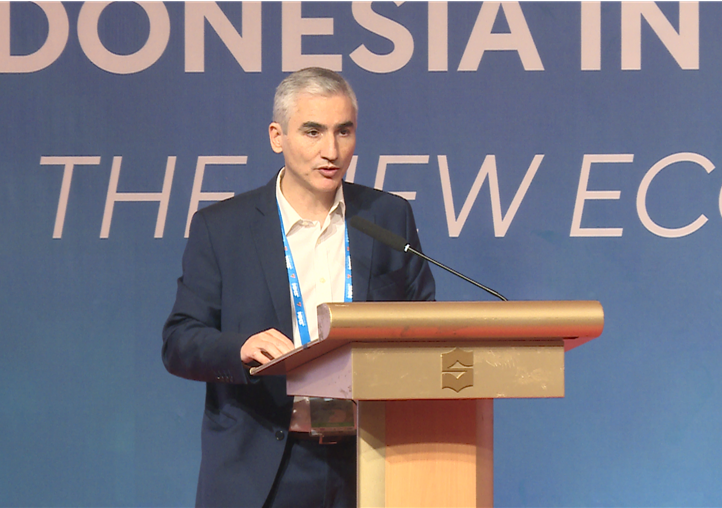


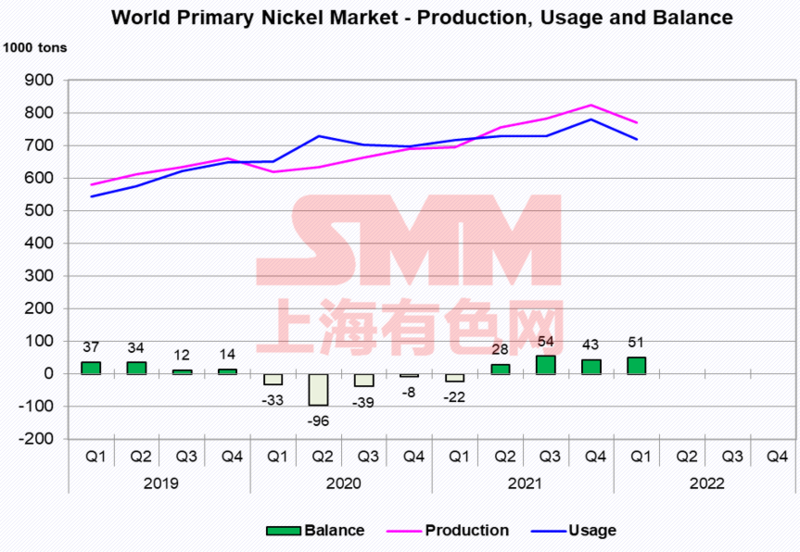
Ferreira said that due to the current economic environment, there is uncertainty in the commodity market. Nickel production will continue to grow strongly in 2023, but at a slower rate than in 2022. Nickel consumption will grow at a similar rate to 2022 in 2023 after being affected by the economic slowdown in 2022. After a deficit in 2021 and a surplus in 2022, the global nickel market is expected to be in surplus again in 2023.

Preliminary data show that there was a surplus of 51,000 mt in the primary nickel market in the first quarter of 2023, the fourth consecutive quarter of surplus. This suggests a substantial surplus in 2023.


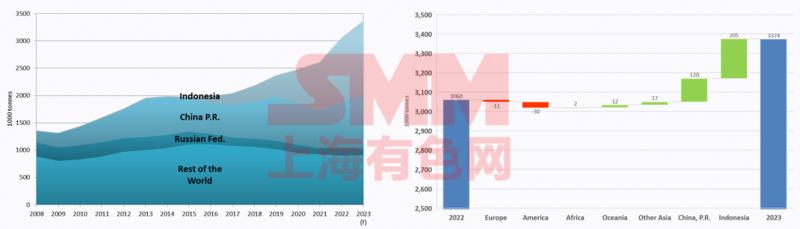
Global nickel mine production rose 10.9% and 18.6% respectively in 2021 and 2022, and is expected to grow 16.1% in 2023.

Indonesia is the world's largest nickel mining country and could account for 55% of global production by 2023 (49% in 2022). China-backed nickel pig iron (NPI) production and the HPAL projects are the main drivers for the increase in Indonesian output.

Preliminary data show that global nickel mine production increased 20% year-on-year in the first quarter of 2023, with Indonesia increasing by 41%.

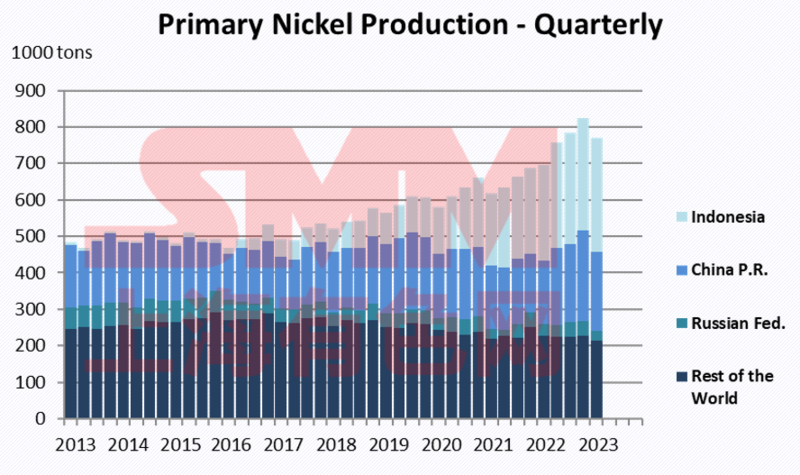
Global primary nickel production increased 5.1% and 17.3% respectively in 2021 and 2022, and is expected to grow 10.2% in 2023. Since 2021, Indonesia has been the world's largest producer, and will account for 41% of the world's share in 2023. China is now in second place. Most of the growth occurs in Asia, whereas European and US production is expected to decrease in 2023.


Preliminary data show that global primary nickel production increased 11% year-on-year in the first quarter of 2023, with Indonesian production growing 19%.


The construction of new projects in Indonesia is being stepped up and new production lines have been added. In China, the availability of ore is a key issue. Since 2020, NPI production in China has been lower than that in Indonesia.
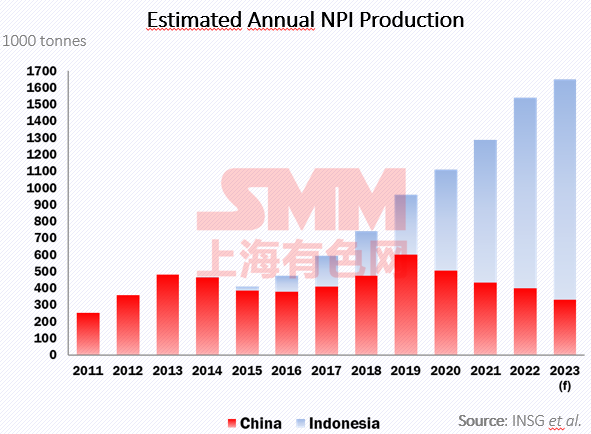
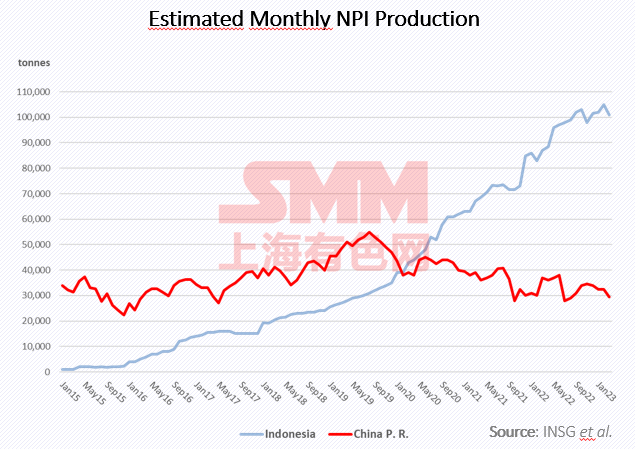

Indonesia has banned the export of nickel ore from January 2020, processing only part of its nickel production domestically (NPI for stainless steel production) while exporting the rest (NPI, MHP and matte). New NPI, MHP and matte (converted from NPI) projects will continue to increase or will be put into operation in the short term.

Global primary nickel demand rose 16.2% in 2021 and grew 6.3% in 2022, and is expected to climb 6.1% in 2023.

China is the world's largest nickel consumer, while Indonesia ranks second, with the two accounting for 61% and 12% of the global market respectively in 2023. In 2023, almost all growth will take place in Asia.

Preliminary data show that global primary nickel use increased by 0.4% year-on-year in the first quarter of 2023, with a growth of 8.9% in China.

Despite softening demand over the past few years, the stainless steel industry remains the most important market for nickel, and global nickel use in this industry has been increasing. The production of nickel-containing batteries for electric vehicles is increasing, both in terms of volume and market share.

Global light vehicle sales fell by 1% in 2022 (to about 80 million units), but are likely to recover to about 82 million units in 2023. Global sales of electric vehicles (EVs) were 6.46 million units (+93.6%) in 2021 and 10.31 million units (+59.6%) in 2022, and are forecast to grow 32% in 2023. The penetration rate of EV (BEV+PHEV) has been increasing continuously. By 2023, the penetration rates of BEVs and PHEVs may reach nearly 12% and close to 5%, respectively.

Summary
The global economy has gradually recovered from the impact of the COVID-19 pandemic and is starting to overcome some of the impact of the ongoing conflict in Ukraine. Chinese economy is bouncing back after being hit by the pandemic. Energy constraints are receding. Most global central banks have been raising interest rates to keep inflation in check, although this has also had some side effects on the financial sector. Overall, the forecast for global growth in 2023 is lower than that for 2022. It is expected that the global primary nickel market will continue to be in surplus in 2023. One of the hot topics is the demand for nickel used in the production of electric/new energy vehicle batteries is expected to grow significantly in the next few years.


Pernyataan Sumber Data: Kecuali informasi yang tersedia untuk publik, semua data lainnya diproses oleh SMM berdasarkan informasi publik, komunikasi pasar, dan mengandalkan model database internal SMM. Hanya untuk referensi dan tidak menjadi rekomendasi pengambilan keputusan.

Untuk pertanyaan atau informasi lebih lanjut, silakan hubungi: lemonzhao@smm.cn
Untuk informasi lebih lanjut tentang cara mengakses laporan penelitian kami, hubungi:service.en@smm.cn
Berita Terkait
[SMM Stainless Steel Flash] Reformasi EU ETS: Produsen Baja Raup Keuntungan, UKM yang Menanggung Beban
15 menit yang lalu
[SMM Stainless Steel Flash] Reformasi EU ETS: Produsen Baja Raup Keuntungan, UKM yang Menanggung Beban
Baca Selengkapnya
[SMM Stainless Steel Flash] Reformasi EU ETS: Produsen Baja Raup Keuntungan, UKM yang Menanggung Beban
[SMM Stainless Steel Flash] Reformasi EU ETS: Produsen Baja Raup Keuntungan, UKM yang Menanggung Beban
Komisi UE terus menampilkan CBAM sebagai mekanisme keadilan, tetapi para kritikus berpendapat bahwa kerangka kerja aktual menciptakan asimetri parah antara importir dan produsen baja domestik. Berdasarkan formula Pasal 31 CBAM, hanya hak alokasi normatif yang direfleksikan, bukan keringanan ekonomi aktual — pabrik domestik dengan alokasi patokan yang melebihi emisi aktual tetap memiliki surplus tunjangan yang dapat diperdagangkan, sementara importir paling baik hanya dapat mencapai kewajiban nol tanpa hak yang dapat dialihkan. Sejak 2005, produsen baja Eropa telah menerima lebih dari 3,4 miliar tunjangan ETS gratis, di mana sekitar 884 juta merupakan surplus — mewakili nilai bruto yang dihitung hampir €71 miliar pada harga karbon saat ini. Usulan reformasi ETS terbaru (COM(2026) 616) gagal mengatasi ketidakseimbangan ini, memperpanjang alokasi gratis untuk sektor CBAM hingga 2038 sembari mempertahankan surplus tunjangan historis sepenuhnya utuh. UKM dan pengolah hilir tidak memiliki cadangan tunjangan warisan dan harus mendanai sertifikat CBAM di muka, sementara perusahaan baja besar memanfaatkan surplus yang terakumulasi selama puluhan tahun — memperkuat alih-alih menyelesaikan asimetri struktural.
15 menit yang lalu
[SMM Stainless Steel Flash] Outokumpu Kembali Meraih Laba pada Q2 2026 di Tengah Peningkatan Pengiriman
19 menit yang lalu
[SMM Stainless Steel Flash] Outokumpu Kembali Meraih Laba pada Q2 2026 di Tengah Peningkatan Pengiriman
Baca Selengkapnya
[SMM Stainless Steel Flash] Outokumpu Kembali Meraih Laba pada Q2 2026 di Tengah Peningkatan Pengiriman
[SMM Stainless Steel Flash] Outokumpu Kembali Meraih Laba pada Q2 2026 di Tengah Peningkatan Pengiriman
Outokumpu melaporkan pendapatan penjualan Q2 2026 naik 6,5% YoY menjadi €1,58 miliar, dengan EBITDA yang disesuaikan naik 33,3% menjadi €100 juta, didorong oleh peningkatan kinerja di Eropa dan hasil yang tetap kuat di Amerika. Perusahaan membukukan laba bersih €25 juta, berbalik dari rugi bersih €19 juta pada Q2 2025. Pengiriman baja tahan karat naik 5% QoQ dan 1% YoY menjadi 488.000 ton, sementara pengiriman ferrokrom naik 4% QoQ dan 12,9% YoY menjadi 114.000 ton didorong permintaan kuat untuk ferrokrom Eropa rendah emisi. Untuk H1 2026, pendapatan penjualan naik tipis 0,8% YoY menjadi €3,03 miliar, EBITDA yang disesuaikan tumbuh 32,3% menjadi €164 juta, dan laba bersih mencapai €18 juta dibandingkan rugi bersih €37 juta pada H1 2025. Di bawah strategi EVOLVE, Outokumpu akan meluncurkan investasi tahap pertama senilai €30 juta di pabrik Avesta di Swedia untuk memperluas ke paduan nikel tinggi, dengan total investasi diperkirakan €150 juta. Untuk Q3, pengiriman baja tahan karat diperkirakan turun hingga 10% QoQ karena faktor musiman, dengan EBITDA yang disesuaikan diprakirakan tetap stabil secara umum.
19 menit yang lalu
[SMM Stainless Steel Flash] POSCO Siapkan Pengaduan Anti-Penghindaran terhadap Stainless CRC Malaysia
32 menit yang lalu
[SMM Stainless Steel Flash] POSCO Siapkan Pengaduan Anti-Penghindaran terhadap Stainless CRC Malaysia
Baca Selengkapnya
[SMM Stainless Steel Flash] POSCO Siapkan Pengaduan Anti-Penghindaran terhadap Stainless CRC Malaysia
[SMM Stainless Steel Flash] POSCO Siapkan Pengaduan Anti-Penghindaran terhadap Stainless CRC Malaysia
Raksasa baja Korea Selatan, POSCO, dikabarkan tengah mempersiapkan pengajuan keluhan antidumping terhadap impor baja tahan karat canai dingin (cold-rolled coil/CRC) dari Malaysia, dengan potensi pengajuan pada kuartal ketiga 2026. POSCO sedang meninjau sumber bahan baku serta struktur produksi dan ekspor produk baja tahan karat Malaysia, memeriksa apakah barang yang diproses di Malaysia menggunakan bahan dari negara yang sudah dikenai tindakan antidumping Korea Selatan, yaitu Tiongkok Daratan, Indonesia, dan Taiwan, Tiongkok, seharusnya termasuk dalam aturan antidumping. Kerangka antidumping Korea Selatan telah diperluas tahun ini untuk mencakup operasi pemrosesan dan perakitan di negara ketiga. Jika praktik penghindaran terbukti, tarif bea masuk yang berlaku adalah tarif dari pemasok bahan baku asli, bukan tarif baru yang dihitung untuk Malaysia. Importir dan pengguna akhir telah diperingatkan untuk menilai dengan cermat ketentuan kontrak dan pembayaran, karena produk yang diimpor setelah penyelidikan resmi dimulai dapat dikenai bea masuk antidumping retrospektif.
32 menit yang lalu