Be careful! New regulations on lithium battery transportation come into effect on April 1

Telah Terbit: Mar 25, 2022 13:27
Attention! According to the official (IATA) of the International Air Transport Association, IATA has revised the regulations governing the separate transportation of lithium batteries, which actually came into effect on January 1, 2022, but there will be a transition period before March 31, 2022 to comply with the new regulations, and the new rules will come into effect after April 1.

According to the official (IATA) of the International Air Transport Association, IATA has revised the regulations for the separate transportation of lithium batteries, which actually came into effect on January 1, 2022, but there will be a transitional period before March 31, 2022 to comply with the new rules, and the new rules will come into effect after April 1.

This regulatory change is mainly a revision of the multi-page packaging instructions PI 965 and PI 968 of the 63rd edition of the International Air Transport Association dangerous goods regulations. The most significant impact of this dangerous goods regulation change is the deletion of PI 965 as lithium-ion cells and batteries (including mobile power sources) and PI 968 as packaging instructions for lithium metal / primary cells and batteries. This change does not affect PI 966, PI 967, PI 969 or PI 970 for Section II lithium-containing battery products. According to the provisions of part II, neither lithium-ion batteries nor lithium-metal batteries can be transported.
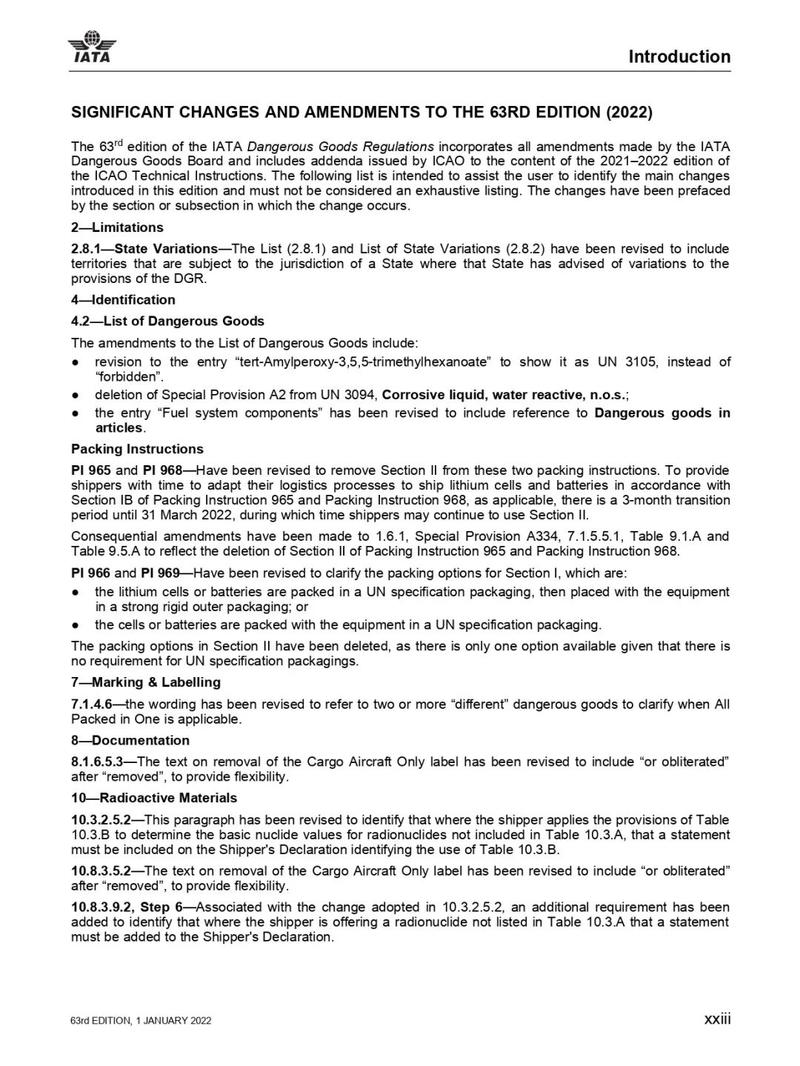
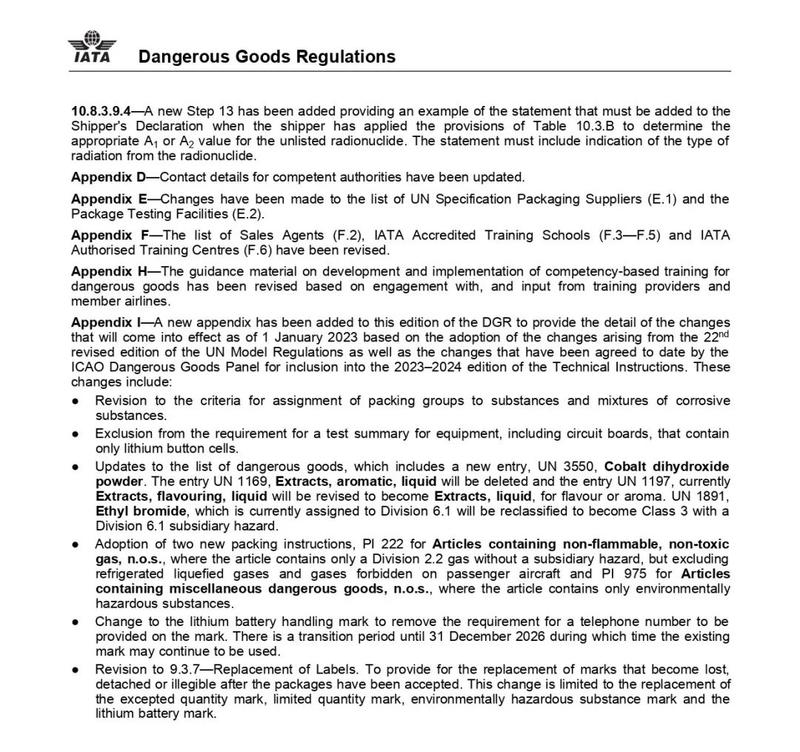
In this way, all shippers who ship lithium batteries themselves are required to complete the declaration, marking and labelling of dangerous goods, as well as complete training in the air transportation of dangerous goods.

Shippers of lithium batteries have become accustomed to annual changes in transport rules, while air transport rules seem to change more frequently than other modes of transport (rail, road, sea and inland waterways). The reasons for these changes include the increase in the transportation of lithium batteries. Lithium batteries are now available for everything from mobile phones to bicycles, motorcycles, drones, trucks and a variety of scientific, medical and industrial equipment.

In addition, lithium battery accidents continue to pose a threat to safety, as if the regulations are not fully met, the battery may rapidly heat up to 400 °C while releasing toxic gases. Some airlines have invested in sealing systems that can withstand lithium battery fires, but these systems are costly and add to the cost of the supply chain, which will inevitably be borne by the shipper.

From April 1st, both lithium-ion batteries and lithium-metal batteries must be declared in accordance with the terms of IA or IB. It should be noted that this rule change does not apply to lithium batteries included in equipment or lithium batteries packaged in air transportation equipment.

In addition, the ADR (Road), RID (Railway) or IMDG (Shipping) regulations remain unchanged, and special clause 188 does make it easier to use lithium-ion batteries below 100 Wh (watt-hours) and lithium-metal batteries with a total lithium metal content of less than 2 g. Differences in rules between different modes of transport reflect different risks but also increase the complexity faced by shippers many of whom use multiple modes of transport.

The practical effect of these changes is that many packages with only lithium batteries must become larger, if only to leave enough room for the hazards and handling labels and other information that must appear on each package. According to Section IA, the shipper needs two labels, and according to Section IB, two labels and one mark are required, and the labels and marks must comply with the minimum size standards stipulated in the IATA regulations.

The shipper also needs to prepare the shipper's statement for each shipment of self-shipped lithium batteries, which are subject to full acceptance by the ground handling agent, and then enter the Captain's notice, which lists the dangerous goods that have been loaded on the aircraft.

Shippers will face higher transport costs because airlines, handling agents, integrators and freight forwarders must do more to ensure compliance. Air freight rates for most aviation divisions have risen sharply as a result of the epidemic, rising fuel prices, high demand for freight capacity, and the recent Russian-Ukrainian crisis that led to the cancellation of some capacity. Sadly, more cost increases are just around the corner.

Over time, it will become increasingly clear whether this latest regulatory amendment will further improve security or cause obstacles and delays to legitimate shippers and distributors. For all participants in the supply chain, not changing lithium battery regulations for a few years will also be a welcome respite.

Pernyataan Sumber Data: Kecuali informasi yang tersedia untuk publik, semua data lainnya diproses oleh SMM berdasarkan informasi publik, komunikasi pasar, dan mengandalkan model database internal SMM. Hanya untuk referensi dan tidak menjadi rekomendasi pengambilan keputusan.

Untuk pertanyaan atau informasi lebih lanjut, silakan hubungi: lemonzhao@smm.cn
Untuk informasi lebih lanjut tentang cara mengakses laporan penelitian kami, hubungi:service.en@smm.cn
Berita Terkait
Hak Kobalt Voisey's Bay Ecora Naik 90% YoY pada Semester I seiring Ramp-Up Tambang Bawah Tanah Mendekati Penyelesaian
37 menit yang lalu
Hak Kobalt Voisey's Bay Ecora Naik 90% YoY pada Semester I seiring Ramp-Up Tambang Bawah Tanah Mendekati Penyelesaian
Baca Selengkapnya
Hak Kobalt Voisey's Bay Ecora Naik 90% YoY pada Semester I seiring Ramp-Up Tambang Bawah Tanah Mendekati Penyelesaian
Menurut hasil interim Ecora Royalties 2026 yang dirilis pada 2 September, perusahaan menerima 266 ton kobalt melalui aliran kobalt Voisey's Bay pada paruh pertama tahun ini, naik sekitar 90% dari 140 ton pada periode yang sama tahun 2025. Ecora menyatakan bahwa peningkatan operasi penambangan bawah tanah di Voisey's Bay kini hampir selesai. Didorong oleh volume kobalt yang lebih tinggi dan harga yang lebih kuat, kontribusi portofolio proyek setelah biaya aliran naik menjadi US$13,5 juta pada paruh pertama, naik 230% dari tahun ke tahun, sementara harga rata-rata kobalt yang direalisasikan meningkat menjadi US$28,4/lb dari US$16,5/lb setahun sebelumnya. Sementara itu, Vale Base Metals sedang mengkaji perluasan kapasitas pemrosesan konsentrator Voisey's Bay dari sekitar 2,8 juta ton per tahun menjadi 3,8 juta ton per tahun. Studi pra-kelayakan terkait masih berlangsung, dengan keputusan investasi akhir ditargetkan sekitar tahun 2028. Proyek ini juga merencanakan pengeboran bawah tanah dan permukaan pada tahun 2026 untuk mengoptimalkan rencana tambang, mendukung perluasan sumber daya, dan berpotensi memperpanjang umur tambang. Ecora juga menyatakan bahwa pemeliharaan terjadwal dijadwalkan di konsentrator Voisey's Bay pada kuartal ketiga dan di kilang Long Harbour pada kuartal keempat.
37 menit yang lalu
Tinjauan Harian SMM: Harga Spot Litium Karbonat Melemah pada 2 September
16 jam yang lalu
Tinjauan Harian SMM: Harga Spot Litium Karbonat Melemah pada 2 September
Baca Selengkapnya
Tinjauan Harian SMM: Harga Spot Litium Karbonat Melemah pada 2 September
Hari ini, harga spot baterai lithium karbonat SMM bergerak lebih rendah dibandingkan hari perdagangan sebelumnya. Kontrak lithium karbonat 2701 dibuka lebih rendah di 157.000 yuan/mt hari ini, kemudian berfluktuasi melemah setelah pembukaan. Pada sesi pagi, diperdagangkan lemah di kisaran 156.000-157.000 yuan, dengan tertinggi intraday 157.800 yuan/mt. Menjelang tengah hari, harga turun cepat ke 153.200 yuan/mt, mencapai titik terendah intraday baru. Sekitar tengah hari, harga bergerak naik turun berulang kali di kisaran 154.000-156.000 yuan. Pada sesi sore, pembeli sempat mendorong harga naik tetapi gagal menembus garis harga rata-rata. Harga melemah lagi di akhir perdagangan, akhirnya ditutup turun 3,2% di 154.800 yuan/mt, dengan open interest turun 9.123 lot. Di pasar spot, pembeli hilir melakukan pembelian saat harga turun sesuai kebutuhan. Pada level 155.000 yuan/mt ke bawah, minat beli pesanan spot dari hilir terus pulih. Di sisi pasokan, seiring harga yang bergerak lebih rendah, minat menjual pesanan spot tetap lemah, dengan beberapa pabrik kimia lithium menahan harga dan menahan penjualan. Secara keseluruhan, permintaan pasar dan transaksi aktual relatif aktif.
16 jam yang lalu
Analisis produksi litium sulfida kelas baterai Agustus: Akankah kuartal IV melonjak? [Analisis SMM]
17 jam yang lalu
Analisis produksi litium sulfida kelas baterai Agustus: Akankah kuartal IV melonjak? [Analisis SMM]
Baca Selengkapnya
Analisis produksi litium sulfida kelas baterai Agustus: Akankah kuartal IV melonjak? [Analisis SMM]
[SMM Analisis: Analisis Produksi Litium Sulfida Baterai Agustus: Akankah Kuartal IV Melonjak?] Pada Agustus, produksi litium sulfida Tiongkok mencapai 7,79 metrik ton, naik 3,6% MoM dan naik 143% YoY. Akankah produksi litium sulfida melonjak pada kuartal IV? Berdasarkan permintaan hilir, saat ini hal tersebut relatif tidak mungkin terjadi, tetapi ekspansi volume secara moderat akan terus berlanjut. Produksi bulanan rata-rata diperkirakan mencapai kisaran 9-10 metrik ton, sedikit meningkat dari kuartal III alih-alih melonjak secara eksplosif.
17 jam yang lalu