Imports increased by nearly 80%! South Korea still relies heavily on Japanese semiconductor equipment

Telah Terbit: Sep 8, 2020 14:10
Sumber: Integrated microgrid

SMM: according to BusinessKorea, the Korean Trade Association (KITA) announced on September 6th that in the first seven months of 2020, South Korea imported semiconductor devices and integrated circuit manufacturing equipment from Japan totaling 1.7 billion US dollars, an increase of 77.2 percent over the same period last year. In addition, imports of processors and controllers and photosensitive semiconductor devices increased by 8.6% and 3.7%, respectively.

Although South Korea's total imports from Japan fell by about 10% in the same period compared with the same period last year, the semiconductor sector, as a pillar industry, is still heavily dependent on Japan.

South Korean media pointed out that this data is related to the large-scale investment of Samsung Electronics. The company announced in May that it would build a NAND flash memory production line in Pingze and plans to start building a "P3" fab in September, which is expected to become Samsung's largest fab in Pingze.

In addition, the new factory needs advanced equipment and manufacturing machinery, but it is difficult for local enterprises to meet the technological needs of Samsung, SK Hynix and other enterprises. At present, Samsung Electronics and many other South Korean companies still rely on Japanese semiconductor devices as high as 25.7%, almost the same as last year's 27.4%. Even if equipment from other countries is used to reduce dependence on Japan, it will not be easy to maintain the same level of efficiency.

On the other hand, South Korea's dependence on Japanese semiconductor equipment directly leads to its dependence on Japanese engineers. Usually, new equipment imported from South Korea is installed by Japanese engineers sent by suppliers, which led to the exemption of Japanese engineers from self-isolation when they entered South Korea in July. Despite violating the principle of reciprocity and risking the spread of the epidemic, the South Korean government cannot ignore companies' concerns about production disruptions.

It can be said that since Japan imposed trade controls on semiconductor materials in South Korea, the Korean government and enterprises have been working hard to improve the competitiveness of the materials, parts and equipment industries, as well as increasing support for the semiconductor and display industries. But for now, it will take time to be self-sufficient.

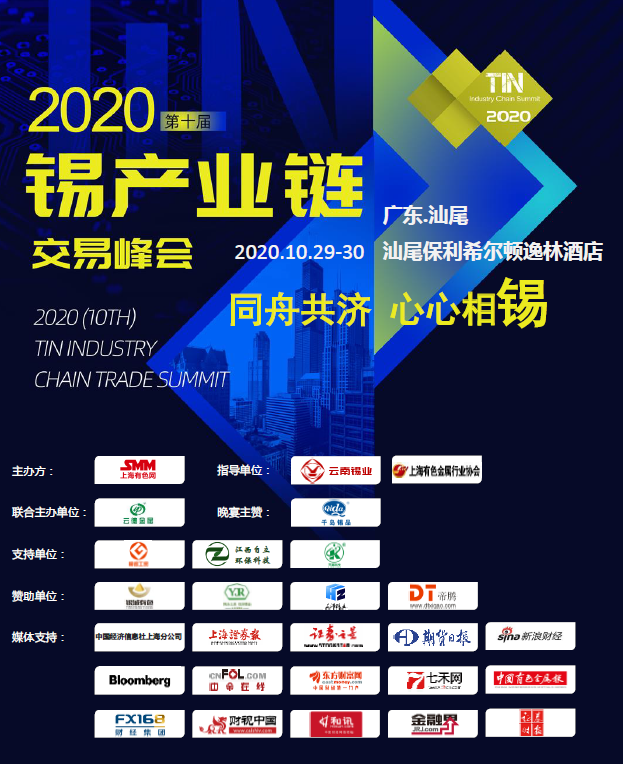
"Click to sign up: 2020 Tin Industry chain Trading Summit
Scan the code to participate in the meeting or apply to join the SMM tin industry exchange group
Pernyataan Sumber Data: Kecuali informasi yang tersedia untuk publik, semua data lainnya diproses oleh SMM berdasarkan informasi publik, komunikasi pasar, dan mengandalkan model database internal SMM. Hanya untuk referensi dan tidak menjadi rekomendasi pengambilan keputusan.

Untuk pertanyaan atau informasi lebih lanjut, silakan hubungi: lemonzhao@smm.cn
Untuk informasi lebih lanjut tentang cara mengakses laporan penelitian kami, hubungi:service.en@smm.cn
Berita Terkait
Pasokan ketat mendukung kenaikan harga germanium, sektor logam minor menguat, Yunnan Germanium dan China Tungsten High-Tech memimpin kenaikan [SMM Flash]
10 jam yang lalu
Pasokan ketat mendukung kenaikan harga germanium, sektor logam minor menguat, Yunnan Germanium dan China Tungsten High-Tech memimpin kenaikan [SMM Flash]
Baca Selengkapnya
Pasokan ketat mendukung kenaikan harga germanium, sektor logam minor menguat, Yunnan Germanium dan China Tungsten High-Tech memimpin kenaikan [SMM Flash]
10 jam yang lalu
Data: Pergerakan pasar SHFE, DCE (06 Agu)
14 jam yang lalu
Data: Pergerakan pasar SHFE, DCE (06 Agu)
Baca Selengkapnya
Data: Pergerakan pasar SHFE, DCE (06 Agu)
Tabel berikut menunjukkan pergerakan logam besi dan non-besi di SHFE dan DCE pada 6 Agustus 2026.
14 jam yang lalu
Titanium Energy Chemical: Laba Bersih Semester I Naik 61,93% YoY, Usulkan Dividen 0,2 Yuan per 10 Saham
15 jam yang lalu
Titanium Energy Chemical: Laba Bersih Semester I Naik 61,93% YoY, Usulkan Dividen 0,2 Yuan per 10 Saham
Baca Selengkapnya
Titanium Energy Chemical: Laba Bersih Semester I Naik 61,93% YoY, Usulkan Dividen 0,2 Yuan per 10 Saham
Titanium Energy Chemical mengumumkan laporan tengah tahun. Pada semester pertama 2026, perusahaan mencatat pendapatan operasional sebesar 4.557.336.219,66 yuan, naik 20,89% YoY; laba bersih yang diatribusikan kepada pemegang saham perusahaan publik sebesar 419.752.772,27 yuan, naik 61,93% YoY; laba per saham dasar senilai 0,1170 yuan. Rencana pembagian laba yang ditinjau dan disetujui oleh dewan direksi dalam rapat kali ini didasarkan pada total modal saham sebanyak 3.774.292.438 lembar, untuk membagikan dividen tunai sebesar 0,2 yuan (termasuk pajak) per 10 lembar saham kepada seluruh pemegang saham, tanpa adanya pembagian saham bonus dan tanpa pengalihan cadangan modal menjadi modal saham.
15 jam yang lalu