Utah Acquires Bankrupt Magnesium Plant: A Belated Environmental Reckoning
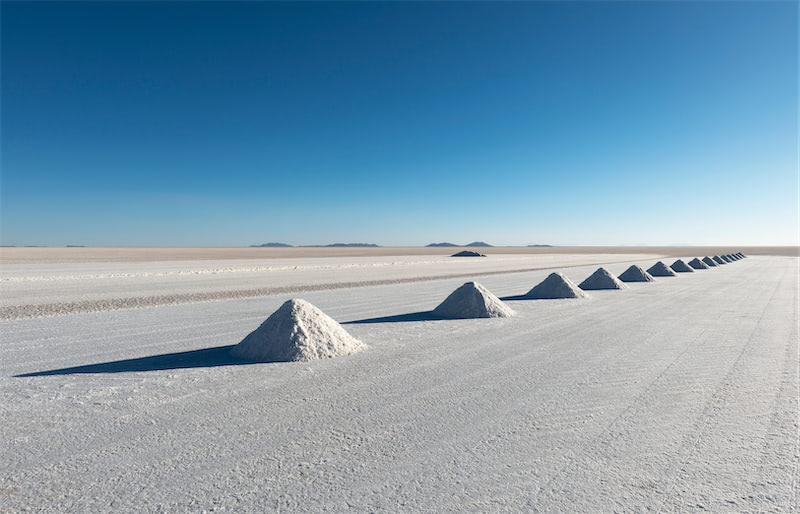
In early 2026, Utah paid $30 million from its rainy day fund to acquire US Magnesium's idled plant on the Great Salt Lake’s west shore. The bid wasn’t just about stopping water withdrawals—it was an attempt to seize control of a half-century of unchecked pollution.
Since 1972, the facility had been one of Utah’s largest polluters, at its peak responsible for 92% of the state’s toxic air emissions. For decades, unlined ponds leaked acidic waste toward the lake. In 2001, the company’s predecessor used bankruptcy to escape cleanup liability. History seemed poised to repeat itself.
This time, the state stepped in. The deal terminates the company’s water leases and secures land that could host low-water mineral extraction. Governor Cox called it “a common sense investment.”
But the real reckoning is just beginning. EPA estimates cleanup will cost “well over” $100 million. The parent company, Renco Group—owned by a billionaire with the nation’s largest private residence—claims it can’t pay. Meanwhile, arsenic and lead from the exposed lakebed blow east toward Salt Lake City.
Utah bought the plant. The true liability—for a dying lake and those downstream—remains unpaid.
Austria Develops New Magnesium Alloy Wire Technology, Solving Lightweight Material Processing Challenge
LKR Light Metal Competence Centre at AIT Austrian Institute of Technology is conducting an international research project aimed at overcoming the bottleneck of precision processing of magnesium alloys. The project focuses on the calcium-containing magnesium alloy ZAX210, which offers better formability than traditional magnesium alloys yet still faces challenges in industrial-scale wire production.
The research team has developed a novel process route: twin-roll casting to produce homogeneous feedstock, followed by continuous rotary extrusion and multiple drawing passes to form finished wire. The LKR team employs computer simulation to systematically analyze the evolution of grain structure during processing, identifying optimal parameter windows for key variables such as temperature and deformation rate.
This study marks the first time controllable processing of ZAX210 alloy from cast billet to fine wire has been achieved across the entire process chain, opening new application pathways for magnesium alloy wire in high-end fields such as medical devices and 3D printing. The project is jointly funded by Austrian and German research foundations.
![Gearing Up for 2026! Magnesium Market Ends January on a Stable Note, Nearly 300,000 mt of Demand Growth Boosts New Industry Prosperity [SMM Domestic Analysis]](https://imgqn.smm.cn/usercenter/FHiZE20251217171722.jpeg)
![The magnesium market closed steadily before the holiday, with trading activity turning quiet as participants await post-holiday resumption [SMM Magnesium Morning Meeting Summary]](https://imgqn.smm.cn/usercenter/tjmLW20251217171722.jpeg)