Key Takeaways
On June 5, 2026, Helios Horizon achieved the world’s first crewed fixed-wing flight powered by solid-state batteries. The test validated solid-state technology in real aviation conditions, showing a 60% energy density improvement (410 Wh/kg) and 15‑minute fast charging. While cost and certification remain challenges, the milestone recalibrates industry expectations and offers a clearer path forward for electric aviation.

On June 5, 2026, at Zephyrhills Municipal Airport in Florida, test pilot Miguel Iturmendi piloted the Helios Horizon aircraft to complete the first crewed fixed-wing flight powered entirely by solid-state batteries. The flight was conducted at low altitude (below 150 m) with a top speed of ~96 km/h. The test aircraft, about 7.6 m long with an 18.6‑m wingspan and a maximum takeoff weight of 600 kg, was modified from a Pipistrel Taurus motor glider. Though modest in range and duration, the flight marks a historic step for electric aviation.
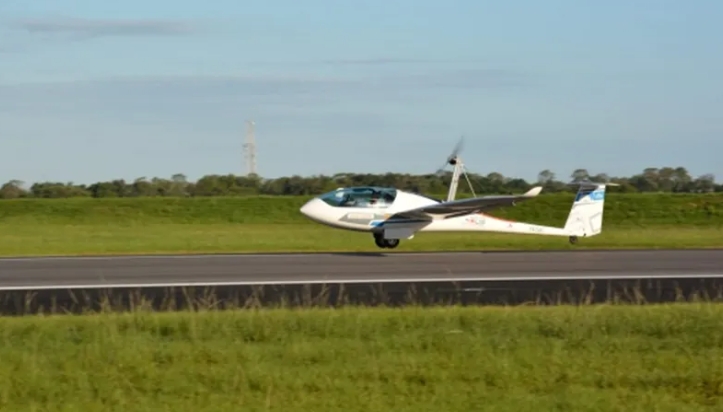
from:Helios Horizon
Energy Density Leap
The solid‑state battery pack, integrated by Helios Horizon using commercially sourced cells, achieved an energy density of 410 Wh/kg – a 60% increase over the previous 260 Wh/kg lithium‑ion pack. Solid electrolytes replace liquid ones, offering better resistance to puncture and overheating, and crucially, more energy per unit weight, which could double electric aircraft range. The pack supports standard AC charging and fast‑charging to 80% in 15 minutes; wing‑mounted solar panels and regenerative propeller braking also harvest energy during flight.
A Calibration Flight
The trial was not about range or speed records, but about validating solid‑state battery feasibility in a real flight environment. Prior ground tests included full‑power discharge and electrical load checks. The short flights assessed weight distribution and handling with the new battery pack. Iturmendi – a veteran of Perlan Project and Solar Impulse – leads a team that customized the Taurus with self‑developed battery management, thermal control, and extended wings incorporating solar cells.
Roadmap to Stratosphere
Helios Horizon had already set an electric aircraft altitude record of 24,000 ft (~7,315 m) in its class. The next target is 40,000 ft (~12,192 m), matching commercial jet cruising levels, with stratospheric tests planned for late 2026. Iturmendi expects energy density to rise another 40% within two years, and commercial certification for aviation solid‑state batteries is targeted in 2‑3 years.
Cost and Competition
Current pack cost is about $30,000 – 3‑4 times higher than lithium‑polymer equivalents – but is expected to drop with scale. Competitors include Chinese eVTOL maker EHang (with Xinjie Energy, 480 Wh/kg, 48‑minute flight), CATL’s condensed battery (500 Wh/kg), and Airbus‑Renault collaboration.
Project Background
Helios Horizon is a non‑profit U.S. project based in Florida, founded by Iturmendi, focused on proving high‑altitude electric flight.
Industry Perspective
As Iturmendi noted, “We now have a battery technology that offers both the range and the safety required for commercial electric aviation.” Yet full breakthrough depends on cost reduction, mass production, and certification – a process that will take years. The U.S. shows an early lead, but global supply chains and market support are equally essential.
Supplier Landscape
Current eVTOL battery suppliers include Chinese firms CATL, EVE, Gotion, CALB, Farasis, Sunwoda, Zenergy, BAK, REPT, Ganfeng (solid‑state), Xinjie (solid‑state lithium‑metal), Lishen, and Giga Power; international players include Amprius, Cuberg, SES AI, EaglePicher (U.S.), Lilium and CustomCells (Germany), H55 (Switzerland), and Molicel and ProLogium (Taiwan). Commercial launch timelines will determine who leads this race.
According to SMM forecasts, all-solid-state battery shipments will reach 13.5 GWh by 2028, while semi-solid-state battery shipments will reach 160 GWh. Global lithium-ion battery demand is projected to reach approximately 2,800 GWh by 2030, with the EV sector's lithium-ion battery demand showing a CAGR of around 11% from 2024 to 2030, ESS lithium-ion battery demand at a CAGR of about 27%, and consumer electronics lithium battery demand at a CAGR of roughly 10%. Global solid-state battery penetration is estimated at about 0.1% in 2025, with all-solid-state battery penetration expected to reach around 4% by 2030, and global solid-state battery penetration potentially approaching 10% by 2035.
**Note:** For further details or inquiries regarding solid-state battery development, please contact:
Phone: 021-20707860 (or WeChat: 13585549799)
Contact: Chaoxing Yang. Thank you!