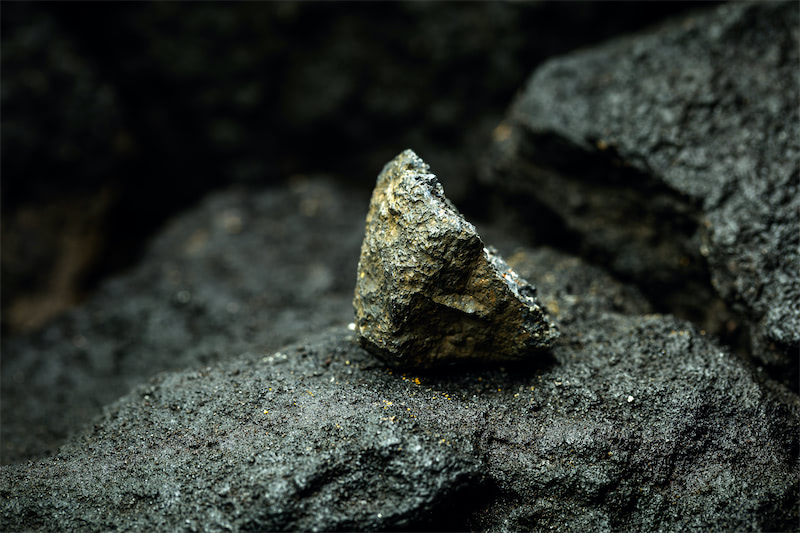
Indonesia holds one of the world's largest bauxite endowments. Whether that endowment can sustainably support the country's rapidly expanding alumina refinery pipeline is now a live question, and the answer carries meaningful consequences for every participant in the chain, from miners in West Kalimantan to refinery investors across the archipelago.
Two Camps, One Industry
In late March 2026, Inalum President Director Melati Sarnita appeared before Commission VI of the House of Representatives with a pointed warning. "These capacity expansions will put pressure on Indonesia's bauxite reserves because the demand intensity could potentially shorten the lifetime of the proven bauxite reserves to 10 years," she said. "As a national aluminium player, when we build a smelter we hope the bauxite reserves availability will last through the lifetime of our smelter, which is 30 years." Her proposed remedy was a moratorium on new alumina and aluminium plants.
The industry's response was measured but firm. ABI Chairman Ronald Sulistyanto characterised the moratorium proposal as premature, noting that Indonesia's bauxite processing industry remains in its early growth phase with only around three to four alumina refineries currently operational. "If you look at conditions now, a moratorium is too early. Our bauxite refinery industry is just starting to grow and downstreaming is still underway," he said.
Both positions carry internal logic. The more productive question is not which camp is correct, but how to structure growth so that both sides of the industry remain viable over the long term.
The Ore Math Behind the Alarm
Indonesia's headline reserve figures appear comfortable on the surface. PERHAPI puts bauxite resources at 6.2 billion tons and reserves at 3.2 billion tons, estimating reserve endurance could exceed 100 years at current demand levels. Inalum, however, is not planning against current demand. It is planning against the full refinery pipeline. Once all projects reach operation, Indonesia would have 29.8 million tons of alumina production capacity, up from around 9 million tons currently, requiring up to 94 million tons of bauxite annually. That is more than double the 36 million tons required by existing refineries.
This is where the distinction between resources and reserves becomes critical. Resources represent the broad geological estimate of what exists underground. Reserves are the technically and economically assessed subset considered viable for extraction. Within reserves, only a fraction currently holds active IUPs, completed feasibility studies, constructed haul roads, and operational jetties. Mapped against a demand scenario of 94 million tonnes per year, the proven mineable base looks materially different. Geological surveys alone cannot feed a refinery.
The Build Timeline Mismatch
The urgency of this issue is compounded by a structural asymmetry in development timelines between mines and refineries.
Bringing a new bauxite mine from greenfield to first shipment requires a geological survey, feasibility study, AMDAL, WIUP, IUP, annual RKAB approval, and then the construction of physical infrastructure including haul roads, washing facilities, and a jetty. RKAB approval is mandatory before companies can legally produce or sell minerals, and under the 2025 to 2026 regulatory update, annual submissions must be filed between October 1 and November 15. A missed window forfeits an entire year of production quota. In remote districts of West Kalimantan, infrastructure costs alone can rival the mine itself. A realistic timeline from exploration to first ore shipment is five to eight years, assuming no permitting delays.
An alumina refinery, by contrast, requires an IUI, port access, and a reliable power supply. Physical construction typically runs two to three years. The regulatory pathway for refining capacity is structurally faster than for mining, and investment has followed accordingly.
The supply and demand consequences of this asymmetry are already visible. Realised bauxite demand in 2025 was approximately 15.4 million tons. For 2026, demand is projected at around 25 million tons driven by new refinery ramp-ups, against an RKAB quota expected to remain in the 18 to 20 million ton range, implying a potential supply deficit of five to seven million tons. That gap is already forming, and the refinery pipeline has not stopped growing.
The Import Scenario and Its Pricing Implications
Should the gap between refinery demand and domestic supply widen beyond what quota calibration can absorb, Indonesian refiners would face a direct choice between operating below capacity or sourcing bauxite from overseas. The most accessible alternative is Malaysia, which is geographically proximate with ore quality broadly compatible with Indonesian refinery specifications. Malaysian bauxite currently trades at approximately USD 40 to 45 per tonne FOB. Adding USD 5 to 10 per tonne for freight places the CIF landed cost into Indonesian refinery ports at roughly USD 45 to 55 per tonne.
Inalum has warned that ramping up capacities would exhaust the country's bauxite reserves in approximately 10 years, falling well short of the 30-year lifespans for which these assets are being built, and that Indonesia would consequently be compelled to resort to imports and absorb the associated cost inflation.
Current prices in West Kalimantan range between USD 33 to 37 per tonne FOB, substantially below the government's HPM benchmark of USD 46 per tonne (Al2O3: 47%; SiO2: 5; MC: 10%). The persistent discount is driven primarily by structural oversupply relative to the limited intake capacity of existing refineries. As the supply balance tightens, market participants anticipate that domestic prices will trend higher through the second half of 2026 and into 2027, steadily narrowing the discount to the HPM benchmark. The direction is clear. The pace remains the key variable.
What Both Sides Actually Need
The bauxite miner and the alumina refinery are not natural adversaries, but the current market structure has placed them in an adversarial position. The mechanism sustaining below-HPM pricing is the refineries' structural monopsony power. Holding the only legal outlet for Indonesian bauxite gives refineries leverage that miners cannot meaningfully offset. That arrangement is not a sustainable foundation for either party.
For miners, a viable path forward requires price recovery toward HPM and ultimately toward import parity. Transaction prices are often reported below HPM in practice, and the combination of fiscal obligations, input cost inflation, and lower realised pricing continues to weigh on profitability across Indonesia's bauxite supply chain. At prevailing transaction levels, the economic incentive to convert geological resources into operationally mineable reserves through exploration, feasibility studies, and infrastructure investment is severely limited. Higher prices do not merely improve near-term margins. They fund the upstream development that sustains supply over time.
For refineries, long-term interest is more aligned with miner viability than current pricing behaviour might suggest. Excessive alumina refining capacity chasing a finite export market compresses refinery margins, gradually eroding refineries' ability to pay HPM and potentially reintroducing the same downward pricing pressure on feedstock that miners are currently attempting to escape. An oversupplied alumina market damages refinery economics in the same way that an undersupplied upstream damages miner economics. The interests are, structurally, more convergent than the current standoff implies.
The answer is neither a blanket moratorium nor unconstrained expansion. It is sequenced, calibrated growth, with new refinery capacity approved at a pace the upstream can realistically support and domestic bauxite prices allowed to recover to levels that incentivise continued mining investment. ABI is correct that the industry is nascent and retains meaningful room to grow. Inalum is correct that the full pipeline of planned capacity must be honestly assessed against the proven mineable ore base, not the broader geological resource figure. Both observations are valid and need not be in conflict.
The Nickel Precedent
The nickel sector offers a reference point the bauxite industry would do well to study. Following the 2020 export ban, investment flooded into smelters at a pace the upstream could not keep up with. Output expanded from 358,000 tons in 2017 to 2.2 million tons by 2023, exceeding half of global demand, and prices fell to a four-year low by the end of 2024. Then came the detail that captures the risk most plainly: despite holding the world's largest nickel reserves and being its largest producer, Indonesia imported a record volume of nickel ore from the Philippines, because permitting delays created a structural gap between smelter capacity and domestic ore throughput. The processing buildout had simply outrun the permitted mining supply, and the gap had to be filled from abroad.
Mapped against that timeline, bauxite today sits at approximately where nickel was in 2021 to 2022, roughly one to two years after the export ban, deep into the refinery construction wave but before the full consequences of oversupply had materialised. The difference is that the bauxite industry now has the benefit of watching what came next in nickel, and the government has the institutional memory of having managed, imperfectly, that earlier cycle.
The one meaningful distinction is geological. With nickel, the problem was primarily one of pace and permitting. With bauxite, there is a genuine question about whether the operationally mineable reserve base can sustain the full refinery pipeline over a 30-year asset horizon. That makes the correction, if it becomes necessary, considerably harder to engineer after the fact.
Conclusion
A moratorium is too blunt an instrument for an industry still in its formative stage. But approving the full refinery pipeline without reconciling aggregate demand against realistic mineable ore availability risks replicating the nickel experience, complete with the irony of importing the very raw material whose export was banned to promote domestic value-addition.
The more constructive path is sequenced, calibrated growth. Bauxite prices need to recover to commercially sustainable levels, restoring miner margins and funding the upstream exploration and infrastructure investment that sustains supply over time. Refineries need a stable feedstock cost against which long-term investment decisions can be made with confidence. Neither outcome is achievable if the refinery pipeline expands faster than the upstream can honestly support. Both are achievable if the pace is managed deliberately.
ABI is correct that the industry has room to grow. Inalum is correct that the ore math must be done honestly against the full pipeline. The window to act on both of those things at the same time is open now. It will not stay open indefinitely.
![China's Aluminum Wire Exports Rise in April, Stranded Wire Surges 94.5% MoM[SMM Analysis]](https://imgqn.smm.cn/usercenter/XfCZS20251217171655.jpg)