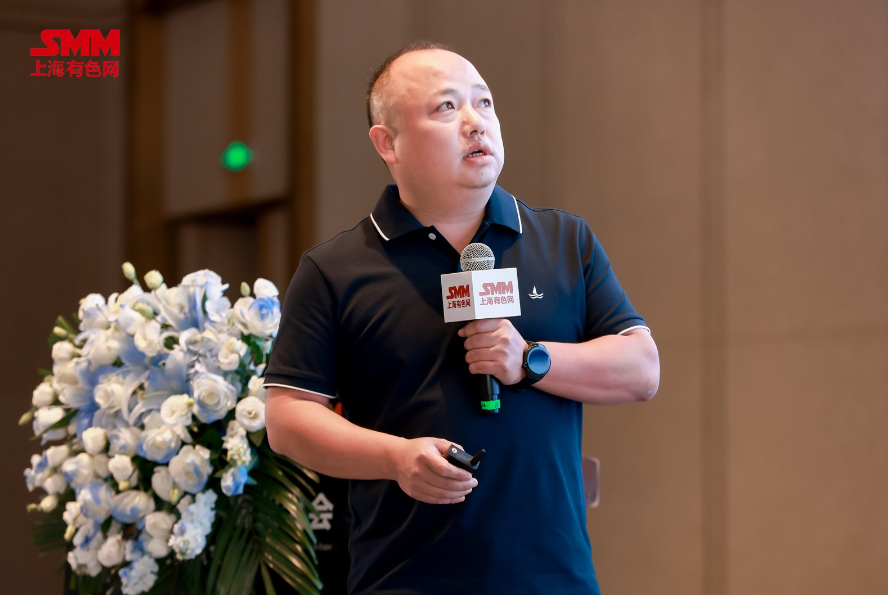
On April 22, at the CCIE 2025 SMM (20th) Copper Industry Conference & Copper Industry Expo – Copper Pipe and Billet Processing Industry Development Forum, hosted by SMM Information & Technology Co., Ltd., SMM Metal Trading Center, and Shandong Aisi Information Technology Co., Ltd., with Jiangxi Copper Corporation and Yingtan Land Port Holdings Co., Ltd. as the main sponsors, Shandong Humon Smelting Co., Ltd. as the special co-organizer, and Xinhuang Group and Zhongtiaoshan Nonferrous Metals Group Co., Ltd. as co-organizers, Zhang Guodong, Sales General Manager of Jiangxi Oudi Copper Co., Ltd., shared insights on the theme "Opportunities and Challenges of Copper Alloy Materials in the Bathroom and Refrigeration Industries."
I. Application Status
Household HVAC systems, dual-supply systems,
(1) Water Heating and Bathroom Industry
(2) Refrigeration Industry
1. Key Role in the Air Conditioning Sector: Mainly used in air conditioner evaporators, condensers, compressor coils, pipelines, functional valves, and accessories.
2. Wide Application in the Refrigerator Sector: Mainly used in evaporators, condensers, compressor coils, pipelines, joints, and other accessories.
3. Relatively Stable Market Demand: Taking household air conditioners as an example, 200 million units were produced globally in 2024, with a very large ownership base. Additionally, the replacement cycle for air conditioners is generally 10-15 years, creating a continuous loop.
II. Application Development Trends
(1) Technological Innovation Driving Performance Improvement
Alloy Composition and Process Optimization: By optimizing alloy composition and processing techniques.
Breakthrough in Nanotechnology Application: Preparing nano-coatings on the surface of copper materials to enhance the strength of bathroom products and improve their antibacterial, self-cleaning, and other special properties, meeting consumer health needs.
Technological Innovation Boosting Industry Upgrading: Technological innovation drives copper and copper alloy material producers to continuously upgrade and enhance their market competitiveness.
(2) Health and Green Environmental Protection Becoming Development Directions
1. Production Process Optimization
Companies continuously optimize production processes to reduce energy consumption and pollutant emissions, improving quality and efficiency.
2. Improving Internal and External Recycling Rates
Companies internally recycle water, waste heat, and waste materials, improving secondary copper recycling technology, effectively reducing costs.
3. Health and Green Development Driving Industry Transformation
Physical health is paramount, and energy saving and emission reduction are the directions.
(3) Customization Needs Promoting Product Diversification
Customization in the Bathroom Industry: With the continuous improvement of living standards and production processes, the differences in individual needs and aesthetics make personalized, intelligent, and modular customized products a trend.
Customization of Refrigeration Industry Products: In response to different usage scenarios and customer needs, the refrigeration industry has introduced various customized non-standard products to meet requirements, reduce waste, and save energy and reduce consumption.
Customization Drives Market Expansion: Customized products meet the diverse needs of consumers and clients, helping enterprises expand their market share and increase the market share of their products.
III. Development Trends of Alternative Materials
(1) The Rise of Plastic Materials in the Sanitary Ware Industry
It elaborates from perspectives such as cost and processing advantages, performance gaps and application limitations, competitive landscape, and market impact.
(2) Competition of Aluminum Alloy Materials in the Refrigeration Industry
01 Cost and Weight Advantages: Low price and light weight.
02 Performance Deficiencies and Application Limitations: Thermal conductivity is much lower than that of copper, limiting application scenarios.
03 Competitive Landscape and Industry Impact: Copper prices continue to rise, and usage continues to expand.
IV. Challenges Faced
(1) Unstable Raw Material Supply
Issues with Secondary Copper Supply: Supply is tight, with a large gap, reliance on imports, and frequent price inversions.
Issues with Copper Concentrates Resources: Copper ore resources are scarce, heavily influenced by the political and economic situations of major copper-producing countries.
High Supply Risks: Various unstable factors increase production costs and operational risks for enterprises.
(2) Increasing Cost Pressures
Impact of Copper Price Fluctuations: More funds and efforts are needed to manage risks arising from price instability.
Other Cost Factors: Increases in costs for energy, environmental protection, labour, etc., also add to the cost pressures on enterprises.
Cost Pressures and Enterprise Survival: Administrative expenses for enterprises continue to rise with the increase in copper prices, necessitating breakthroughs to find a way to survive.
(3) Rapid Changes in Market Demand
Changes in Demand in the Sanitary Ware Industry: With the continuous improvement of living standards, consumer demand in the sanitary ware industry has shifted from basic usage functions to diversified needs such as personalization, intelligence, health, and environmental protection.
Changes in Demand in the Refrigeration Industry: With the advancement of energy conservation and emission reduction policies in the refrigeration industry, consumers have higher energy efficiency requirements for refrigeration equipment. Enterprises need to adopt new technologies and materials to improve the energy efficiency of their products.
Market Demand Changes and Enterprise Adaptation: Market demand changes rapidly, and competition among enterprises is fierce. Enterprises need to identify their strengths and weaknesses and make timely adjustments accordingly.
V. Coping Strategies and Future Outlook
(I) Strengthen Supply Chain Management
Expand procurement channels, improve secondary copper recycling, hedge against risks, and enhance supply chain management to boost corporate competitiveness.
(II) Continuous Innovation and Technological Upgrades
(III) Expand into Emerging Markets
Seize opportunities in emerging economies: Actively explore emerging markets and use incremental growth to offset the decline in copper semis substitution.
Strengthen international cooperation: Enhance collaboration with international producers, leverage local resources abroad, and expand international market channels.
Reduce market dependency risks: Increase the diversity of customer groups and balance the proportion of major clients and markets within the enterprise.
Emerging markets and industry prospects: Rigid demand in new markets necessitates continuous attention to seize opportunities.
(IV) Future Outlook
The application development trend of copper and copper alloys in the sanitary ware, heating, and refrigeration industries will undoubtedly be the result of balancing production processes, material costs, and performance requirements.