Photovoltaics: With the "dual carbon" strategy, various national departments have introduced plans to configure energy storage, etc., and promote the complementarity of traditional energy sources such as gas and new energy sources such as photovoltaics and wind power.
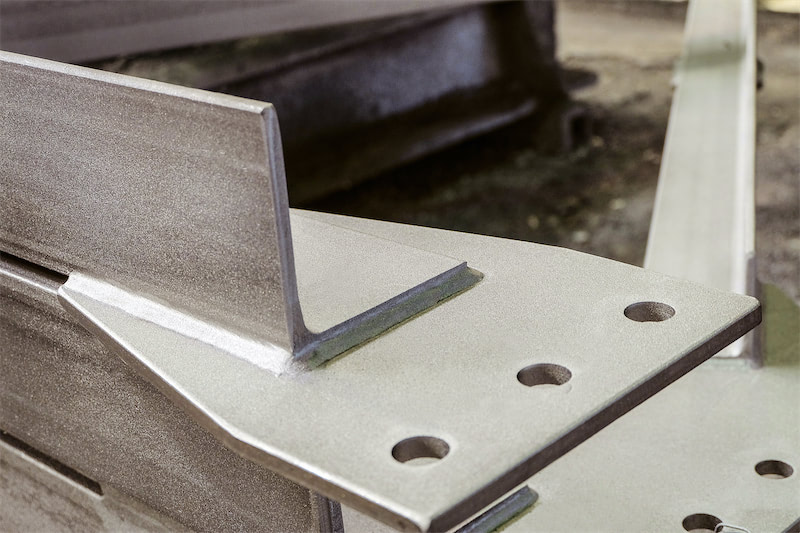
Photovoltaic bracket is a special bracket designed for placing, installing and fixing solar panels in solar photovoltaic power generation system. Common materials include aluminum alloy, carbon steel and stainless steel. The stainless steel bracket needs to be galvanized for corrosion protection. The quality and thickness of photovoltaic galvanizing are related to the safety and durability of the photovoltaic support structure.
( 1 ) Galvanized steel photovoltaic brackets generally use Q235 steel as the main material. The so-called steel refers to bar-shaped steel with a certain cross-sectional shape and size. Its main types include I-beam, channel steel, angle steel, square steel, and C -shaped steel . , H- shaped steel, etc. The weight of this material is generally about 7.85g/ ㎡, and it has high mechanical strength. The thickness of the plate used for main beams and columns should not be less than 2.5mm. When there is reliable basis, the plate thickness can be 2mm. The plate thickness used for secondary beams should not be less than 1.5mm. Anti-corrosion generally adopts hot-dip galvanizing treatment. The thickness of the galvanized layer is not less than 65um. Anti-corrosion maintenance is required for later use. Galvanized steel photovoltaic brackets have stable performance, mature manufacturing technology, and high bearing capacity. Therefore, they are mainly used in power stations with strength requirements, such as large ground power stations. Galvanized steel photovoltaic brackets are currently the most commonly used solar photovoltaic brackets.
( 2 ) The flexible photovoltaic support is a steel cable prestressed structure, which is composed of pile foundation, column components, end beam components, steel cable fasteners, and panel fixing components. Its photovoltaic support materials are mainly any one or a combination of steel strands, steel ropes, steel cables, steel ropes or steel chains. Its anti-corrosion generally adopts hot-dip galvanizing treatment measures. The thickness of the galvanized layer is not less than 65um. Anti-corrosion maintenance is required for later use. This photovoltaic support system can save engineering costs and save 30%-40% of steel compared to photovoltaic supports under the same conditions, and can withstand a level 16 typhoon. Flexible photovoltaic brackets are suitable for sewage treatment plants, mountainous areas with complex terrain, low load-bearing roofs, forest-solar complementary, water-solar complementary and other areas where span and height restrictions make traditional photovoltaic bracket structures unable to be installed. Flexible photovoltaic brackets have a wide range of applicability, are flexible to use, save project costs, and can realize secondary utilization of land. They have broad development prospects in the future.
According to the 2022 national electric power industry statistics released by the National Energy Administration , in 2023 , the newly installed photovoltaic capacity will be 216.88GW , of which 53GW was newly installed in December , a year-on-year increase of 144% . From January to February 2024, the newly installed photovoltaic capacity in China was 36.72GW , an increase of 80.3% year-on-year .
According to SMM research, zinc is currently mainly used in photovoltaic brackets and hot-dip galvanized ground piles, and is mainly used in centralized photovoltaic applications. Focusing on centralized photovoltaic applications, one ton of photovoltaic steel contains an average of about 50 kilograms of zinc.
Recently, the photovoltaic bidding has basically ended, and galvanized photovoltaic orders have improved, which has driven the operating rate of a small number of galvanized companies to increase, so we can continue to pay attention.

![Zinc de Tianjin : les prix du zinc rebondissent, l'aval reste prudent [Commentaire de midi SMM]](https://imgqn.smm.cn/usercenter/tAyyp20251217171754.jpg)