SMM Morning Comments (Feb 6): Base Metals Closed with Losses on Strong US Job Market

Publié: Feb 6, 2023 10:00
On the macro front, the U.S. Department of Labor announced last week that the non-farm sector added far more jobs than expected in January, and unemployment rate also fell, both supporting the US dollar. This weighed down metals prices.

SHANGHAI, Feb 6 (SMM) – SHFE and LME base metals closed mostly with losses last Friday. On the macro front, the U.S. Department of Labor announced last week that the non-farm sector added far more jobs than expected in January, and unemployment rate also fell, both supporting the US dollar. This weighed down metals prices.

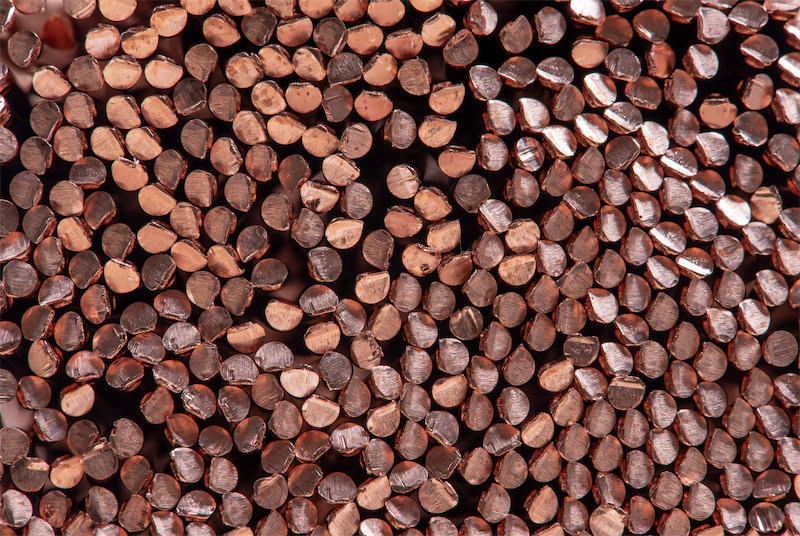
Copper: LME copper closed at $8,925.5/mt last Friday evening, a decline of 1.2%. Trading volume was 19,000 lots and open stood at 254,000 lots. The most active SHFE 2303 copper contract finished at 68,470 yuan/mt overnight, down 0.57%. Trading volume was 103,000 lots, and open interest stood at 198,000 lots.

On the macro front, the U.S. Department of Labor announced last week that the non-farm sector added far more jobs than expected in January, and unemployment rate also fell, both supporting the US dollar. This weighed down copper prices. On fundamentals, SMM data showed that copper inventories across mainstream areas in China increased 33,800 mt on Friday February 3 from Monday January 31, 86,600 mt above the same period last year. The main cause are increased shipments from smelters and poor downstream purchases. At present, the domestic market sees oversupply. In terms of consumption, the market will fully resume production after February 5, and the consumption is expected to pick up gradually. Copper prices will remain range-bound during the slow recovery of the market.

Aluminium: The most-traded SHFE 2303 aluminium contract opened at 19,080 yuan/mt at last Friday’s night session and moved around 19,000 yuan/mt before closing at 19,015 yuan/mt, down 0.42%.

LME aluminium fell to around $2,570/mt after opening at $2,607/mt last Friday, and closed at $2,566/mt, down 1.48%.

Major overseas central banks raised interest rates one after another. The market is interpreting the interest rate meeting of US Fed as a dovish signal. Investors are expecting the US Fed to suspend interest rate hikes. In China, there are a series of favourable policies to boost the economy. The macro environment is bullish for commodities. The domestic aluminium production declined in January and may drop further amid expectations for production cuts in Yunnan. However, the substantial accumulation of aluminium ingot inventory and slow recovery of downstream production will cap the upside room of aluminium prices. It is expected that aluminium price will fluctuate rangebound this week, and attention should be focused on the implementation of production reduction in Yunnan.

Lead: Last Friday, LME lead opened at $2,134.5/mt the transactions in the morning session were light as the prices fluctuated between $2,140-2,155/mt. During the European trading hours, LME lead declined sharply to $2,092/mt as the US employment data was released beyond expectations and finally closed at $2,103.5/mt, down 2.16%.

The most-traded SHFE 2303 lead contract opened at 15,260 yuan/mt last Friday and fluctuated at 15,300 amid the declining social inventory, but then decreased 0.52% to close the ession at 15,230 yuan/mt in light of the falling LME prices, with open interest decreasing 2,065 lots to 72,180 lots.

Zinc: Overnight, the US claimed to shoot down a Chinese unmanned airship. In response, the Chinese Ministry of Foreign Affairs expressed strong discontent and firm opposition in its statement, and the spokesperson of the Ministry of National Defence also made a speech on the US military’s attack on the Chinese civilian unmanned airship. In the US stock market and bond market, the Fear & Greed Index both surged.

Last Friday, LME zinc tumbled and dropped below the middle of the Bollinger Band before finding support at the 40-day moving average. LME zinc inventory reduced by 100 mt to 16,375 mt.

Last Friday, SHFE zinc fell and neared the middle of the Bollinger Band. On the macro level, the zinc prices faced downward pressure from rallying US dollar index. With regards to the fundamentals, the domestic social inventory is still in an accumulation cycle. The specific follow-up consumption recovery is yet to be measured based on the change in the inventory.

Tin: SHFE tin prices plunged sharply after the opening yesterday night, and then fluctuated at 223,500 yuan/mt. The trading volume of the most-traded contract increased significantly while the open position of SHFE 2303 tin contract continued to decrease.

Domestic tin inventory under SHFE warrants continued to increase. Trades in the spot market improved slightly due to the low premiums and the resumption of production. LME inventory remained stable as the expected import profits were limited. But the imported tin prices were lower than the domestic ones.

In terms of futures prices, the SHFE tin prices plunged after opening last Friday and closed at 223,500 yuan/mt. The open interest of the most-traded contract decreased slightly. The open interest of distant-month contract increased slightly and the positions remained stable.

To sum up, the supply and demand was temporarily balanced. As the market sentiment is stable, tin prices may fluctuated widely.

Nickel: Nickel prices continued to grow last week because of the production resumption of companies post-Chinese New Year holiday. On February 2, the US Fed announced that it would raise the interest rate by 25 basis points to 4.50%-4.75%, which was in line with market expectations. On the supply side, the upstream companies were more willing to ship as the SHFE nickel prices remained high. The spot prices were low, and the transactions picked up slightly in the early trading yesterday. In terms of NPI, according to SMM research, a steel mill in south China once bought high-grade NPI at 1,385 yuan/mtu (tax included, delivery to factory), and the prices of thousands of mt of NPI purchased by a mill in east China were 1,390 yuan/mtu (tax included, delivery to factory). On the demand side, recent market transactions have been weak, and it will take some time for downstream demand to be released. Spot prices remained low under inventory pressure. The #316L stainless steel witnessed no transactions, and some traders suspended quotations. The guide price of steel mills continues to rise amid the rising raw material prices, and there are few transactions in the market. Alloy enterprises were reluctant to purchase as the nickel prices stood high.

[Disclaimer: The above representation and data is based on market information SMM believes to be reliable at the time of acquiring as well as the comprehensive assessment by SMM research team, and any and all information provided in this article is for reference only. This article does not constitute a direct recommendation for investment or any decisions in any form and clients shall act on their own discreet and any decisions made by clients are not within the responsibility of SMM.]


Déclaration sur la source des données : À l'exception des informations publiques, toutes les autres données sont traitées par SMM sur la base d'informations publiques, d'échanges avec le marché et en s'appuyant sur le modèle de base de données interne de SMM. Ils sont fournis à titre indicatif uniquement et ne constituent pas des recommandations décisionnelles.

Pour toute demande d'information ou pour en savoir plus, veuillez contacter : lemonzhao@smm.cn
Pour plus d'informations sur l'accès à nos rapports de recherche, veuillez contacter :service.en@smm.cn
Actualités Connexes
Bezant vise un premier concentré à Hope & Gorob, en Namibie, en septembre
il y a 3 heures
Bezant vise un premier concentré à Hope & Gorob, en Namibie, en septembre
Lire la suite
Bezant vise un premier concentré à Hope & Gorob, en Namibie, en septembre
Bezant Resources a indiqué que le développement du projet de cuivre-or Hope & Gorob en Namibie et de l'usine de traitement des métaux associée de Tsoaxaub reste conforme au calendrier actuel du projet, le premier minerai tout-venant devant être traité en septembre 2026. Sous réserve de l'achèvement des activités de mise en service restantes, le traitement du premier minerai tout-venant devrait générer le premier concentré du projet. Le minerai issu des deux premiers tirs de mine a déjà été stocké et est prêt à être transporté vers l'usine de traitement, tandis que Bezant a précisé que le tonnage stocké dépassait les projections initiales en raison de la récupération supplémentaire de minerai enregistrée dans l'inventaire minéral de la société. Les travaux de développement progressent à la fois sur la mine et sur l'usine de traitement. La construction du camp sur le site minier est achevée à environ 75 %, environ 75 % des infrastructures de surface ont été livrées et sont en cours d'installation, et l'ensemble des flottes d'exploitation minière et de transport d'Unitrans sont désormais sur place. À l'usine de Tsoaxaub, Bezant a reçu le certificat d'achèvement des travaux de génie civil et de structure C1, confirmant l'achèvement des principaux travaux de charpente métallique et de génie civil, tandis que le certificat d'achèvement mécanique C2 devrait être délivré en septembre. Les entraînements électriques et l'instrumentation sont achevés à environ 90 %, le concasseur à cône, l'équipement de flottation, les infrastructures de résidus et les autres composants de traitement faisant l'objet d'une préparation finale avant la mise en service. Bezant a également accéléré son examen d'un plan d'expansion de phase II, en tenant compte des prix actuels et projetés du cuivre, de l'or et de l'argent ainsi que de l'inclusion potentielle de minéralisations à plus faible teneur précédemment considérées comme sous-économiques. La société évalue une stratégie d'exploitation à taux de masse extraite plus élevé pour le trieur de minerai, qui pourrait augmenter les récupérations de cuivre, bien que potentiellement à une teneur de pré-concentré plus faible. Sur la base de l'inventaire minéral actuel, de la ressource minérale JORC (2012) existante, de la capacité prévue de l'usine de flottation et du scénario de taux de masse extraite plus élevé à l'étude, la direction estime que Hope & Gorob a le potentiel de soutenir une durée de vie de mine d'environ 35 ans. Bezant n'a pas encore publié de modèle économique révisé intégrant ce scénario de durée de vie prolongée. Analyse SMM : L'objectif de traitement de septembre place Hope & Gorob à proximité de la transition entre le développement minier et la production initiale de concentré, le minerai tout-venant étant déjà stocké et les principales infrastructures de traitement approchant de l'achèvement mécanique. La durée de vie potentielle de 35 ans et l'expansion de phase II restent soumises à un examen technique et économique et ne doivent pas encore être considérées comme un plan de développement révisé confirmé. À court terme, le jalon clé à surveiller sera l'achèvement de la mise en service de l'usine et la confirmation de la première production de concentré en septembre.
il y a 3 heures
SMM s'attend à ce que le taux d'exploitation global des anodes de cuivre augmente légèrement en glissement mensuel en septembre
il y a 3 heures
SMM s'attend à ce que le taux d'exploitation global des anodes de cuivre augmente légèrement en glissement mensuel en septembre
Lire la suite
SMM s'attend à ce que le taux d'exploitation global des anodes de cuivre augmente légèrement en glissement mensuel en septembre
[SMM Flash anode de cuivre] SMM prévoit que le taux d'exploitation global des entreprises chinoises d'anodes de cuivre rebondira de 1,30 point de pourcentage en glissement mensuel pour atteindre 44,11 % en septembre 2026. Parmi elles, le taux d'exploitation des entreprises d'anodes de cuivre primaire devrait reculer de 7,19 points de pourcentage en glissement mensuel à 57,88 %, en raison de maintenances dans certaines entreprises et de la montée en puissance des capacités de raffinage ; le taux d'exploitation des entreprises d'anodes de cuivre secondaire devrait rebondir de 4,76 points de pourcentage en glissement mensuel à 38,48 %. (Anodes de cuivre non captives uniquement)
il y a 3 heures
Le taux d'exploitation des anodes de cuivre de SMM en Chine a chuté à 42,81 % en août, en baisse par rapport au mois précédent.
il y a 3 heures
Le taux d'exploitation des anodes de cuivre de SMM en Chine a chuté à 42,81 % en août, en baisse par rapport au mois précédent.
Lire la suite
Le taux d'exploitation des anodes de cuivre de SMM en Chine a chuté à 42,81 % en août, en baisse par rapport au mois précédent.
[SMM Éclair sur l'anode de cuivre] En août 2026, le taux d'exploitation des entreprises chinoises d'anodes de cuivre de SMM s'établissait à 42,81 %, en baisse de 1,85 point de pourcentage en glissement mensuel. Par matière première, le taux d'exploitation des entreprises d'anodes de cuivre primaire a augmenté de 1,54 point de pourcentage en glissement mensuel pour atteindre 65,07 % ; le taux d'exploitation des entreprises d'anodes de cuivre secondaire a reculé de 3,23 points de pourcentage en glissement mensuel pour s'établir à 33,72 %, en raison de l'offre restreinte de déchets de cuivre toutes taxes comprises. (Anodes de cuivre non captives uniquement)
il y a 3 heures